Kirjojen hintavertailu – 12 859 824 kirjaa ja 27 kauppaa

Kirjailija

Sarah Pink

Kirjat ja teokset yhdessä paikassa: 32 kirjaa, julkaisuja vuosilta 1997–2026, suosituimpiin kuuluu Autowork. Vertaile teosten hintoja ja tarkista saatavuus suomalaisista kirjakaupoista.

32 kirjaa

Kirjojen julkaisuvuodet: 1997–2026.

Digital Ethnography

Digital Ethnography

Sarah Pink; Heather Horst; John Postill; Larissa Hjorth; Tania Lewis; Jo Tacchi

SAGE Publications Ltd
2015
sidottu
This sharp, innovative book champions the rising significance of ethnographic research on the use of digital resources around the world. It contextualises digital and pre-digital ethnographic research and demonstrates how the methodological, practical and theoretical dimensions are increasingly intertwined. Digital ethnography is central to our understanding of the social world; it can shape methodology and methods, and provides the technological tools needed to research society. The authoritative team of authors clearly set out how to research localities, objects and events as well as providing insights into exploring individuals’ or communities’ lived experiences, practices and relationships. The book: Defines a series of central concepts in this new branch of social and cultural researchChallenges existing conceptual and analytical categoriesShowcases new and innovative methodsTheorises the digital world in new waysEncourages us to rethink pre-digital practices, media and environments This is the ideal introduction for anyone intending to conduct ethnographic research in today’s digital society.
Digital Ethnography

Digital Ethnography

Sarah Pink; Heather Horst; John Postill; Larissa Hjorth; Tania Lewis; Jo Tacchi

SAGE Publications Ltd
2015
nidottu

Halvin toimitettuna 50,80 €

This sharp, innovative book champions the rising significance of ethnographic research on the use of digital resources around the world. It contextualises digital and pre-digital ethnographic research and demonstrates how the methodological, practical and theoretical dimensions are increasingly intertwined. Digital ethnography is central to our understanding of the social world; it can shape methodology and methods, and provides the technological tools needed to research society. The authoritative team of authors clearly set out how to research localities, objects and events as well as providing insights into exploring individuals’ or communities’ lived experiences, practices and relationships. The book: Defines a series of central concepts in this new branch of social and cultural researchChallenges existing conceptual and analytical categoriesShowcases new and innovative methodsTheorises the digital world in new waysEncourages us to rethink pre-digital practices, media and environments This is the ideal introduction for anyone intending to conduct ethnographic research in today’s digital society.
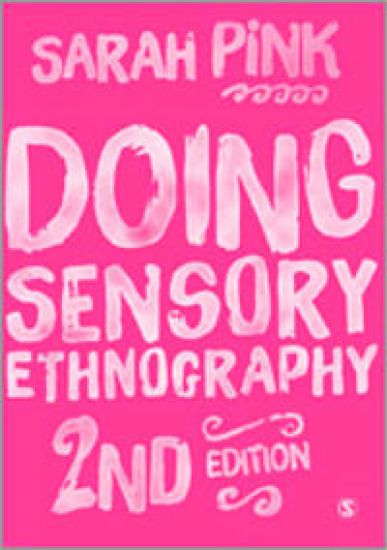
Doing Sensory Ethnography

Doing Sensory Ethnography

Sarah Pink

SAGE Publications Ltd
2015
nidottu

Halvin toimitettuna 58,60 €

This bold agenda-setting title continues to spearhead interdisciplinary, multisensory research into experience, knowledge and practice. Drawing on an explosion of new, cutting edge research Sarah Pink uses real world examples to bring this innovative area of study to life. She encourages us to challenge, revise and rethink core components of ethnography including interviews, participant observation and doing research in a digital world. The book provides an important framework for thinking about sensory ethnography stressing the numerous ways that smell, taste, touch and vision can be interconnected and interrelated within research. Bursting with practical advice on how to effectively conduct and share sensory ethnography this is an important, original book, relevant to all branches of social sciences and humanities.
Doing Sensory Ethnography

Doing Sensory Ethnography

Sarah Pink

SAGE Publications Ltd
2015
sidottu
This bold agenda-setting title continues to spearhead interdisciplinary, multisensory research into experience, knowledge and practice. Drawing on an explosion of new, cutting edge research Sarah Pink uses real world examples to bring this innovative area of study to life. She encourages us to challenge, revise and rethink core components of ethnography including interviews, participant observation and doing research in a digital world. The book provides an important framework for thinking about sensory ethnography stressing the numerous ways that smell, taste, touch and vision can be interconnected and interrelated within research. Bursting with practical advice on how to effectively conduct and share sensory ethnography this is an important, original book, relevant to all branches of social sciences and humanities.
Situating Everyday Life

Situating Everyday Life

Sarah Pink

SAGE Publications Ltd
2012
nidottu
The study of everyday life is fundamental to our understanding of modern society. This agenda-setting book provides a coherent, interdisciplinary way to engage with everyday activities and environments. Arguing for an innovative, ethnographic approach, it uses detailed examples, based in real world and digital research, to bring its theories to life. The book focuses on the sensory, embodied, mobile and mediated elements of practice and place as a route to understanding wider issues. By doing so, it convincingly outlines a robust theoretical and methodological approach to understanding contemporary everyday life and activism. A fresh, timely book, this is an excellent resource for students and researchers of everyday life, activism and sustainability across the social sciences.
Situating Everyday Life

Situating Everyday Life

Sarah Pink

SAGE Publications Ltd
2012
sidottu
The study of everyday life is fundamental to our understanding of modern society. This agenda-setting book provides a coherent, interdisciplinary way to engage with everyday activities and environments. Arguing for an innovative, ethnographic approach, it uses detailed examples, based in real world and digital research, to bring its theories to life. The book focuses on the sensory, embodied, mobile and mediated elements of practice and place as a route to understanding wider issues. By doing so, it convincingly outlines a robust theoretical and methodological approach to understanding contemporary everyday life and activism. A fresh, timely book, this is an excellent resource for students and researchers of everyday life, activism and sustainability across the social sciences.
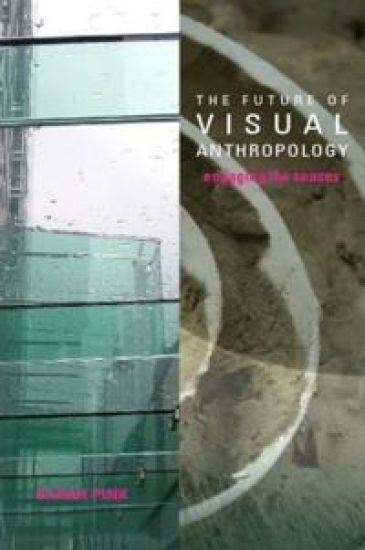
The Future of Visual Anthropology
From an eminent author in the field, The Future of Visual Anthropology develops a new approach to visual anthropology and presents a groundbreaking examination of developments within the field and the way forward for the subdiscipline in the twenty-first century. The explosion of visual media in recent years has generated a wide range of visual and digital technologies which have transformed visual research and analysis. The result is an exciting new interdisciplinary approach of great potential influence for the future of social/cultural anthropology. Sarah Pink argues that this potential can be harnessed by engaging visual anthropology with its wider contexts, including:the increasing use of visual research methods across the social sciences and humanities the growth in popularity of the visual as methodology and object of analysis within mainstream anthropology and applied anthropology the growing interest in 'anthropology of the senses' and media anthropologythe development of new visual technologies that allow anthropologists to work in new ways. This book has immense interdisciplinary potential, and is essential reading for students, researchers and practitioners of visual anthropology, media anthropology, visual cultural studies, media studies and sociology.
Home Truths

Home Truths

Sarah Pink

Berg Publishers
2004
sidottu
Homes are powerfully defined by smells, sounds, textures and objects, all of which reflect how people live their everyday lives. From spray-painting the toilet wall to relaxing in the bath, the products we use speak volumes about who we are, how we relate to others and who we want to be. Based on extensive fieldwork, this fascinating book explores the intimate, material and sensory spaces of the home to uncover how gender roles are performed within our personal, private worlds. Pink shows how everyday items ranging from perfumes to soap powder imprint and reinforce daily experiences and a sense of identity. How has the home been affected by the fact that more and more women now go to work and increasingly more men spend time engaged in domestic tasks? How do more traditional family-centred homes compare with those belonging to diverse family forms and people living alone? What does a study of domestic gender tell us about how change occurs? Answering these questions and many more, Pink combines the most recent approaches in gender studies and material culture to show how everyday activities can be deeply revealing of gender roles in the 21st century.
Home Truths

Home Truths

Sarah Pink

Berg Publishers
2004
nidottu
Homes are powerfully defined by smells, sounds, textures and objects, all of which reflect how people live their everyday lives. From spray-painting the toilet wall to relaxing in the bath, the products we use speak volumes about who we are, how we relate to others and who we want to be. Based on extensive fieldwork, this fascinating book explores the intimate, material and sensory spaces of the home to uncover how gender roles are performed within our personal, private worlds. Pink shows how everyday items ranging from perfumes to soap powder imprint and reinforce daily experiences and a sense of identity. How has the home been affected by the fact that more and more women now go to work and increasingly more men spend time engaged in domestic tasks? How do more traditional family-centred homes compare with those belonging to diverse family forms and people living alone? What does a study of domestic gender tell us about how change occurs? Answering these questions and many more, Pink combines the most recent approaches in gender studies and material culture to show how everyday activities can be deeply revealing of gender roles in the 21st century.
Women and Bullfighting

Women and Bullfighting

Sarah Pink

Berg Publishers
1997
nidottu
This book investigates the popularity and success of contemporary women performers in bullfighting culture, which has been framed by a discourse of 'traditionalist' masculinity. This examination of the changing situation of women in the bullfighting world is used to explore the ways in which gender is represented, enacted and negotiated in contemporary Spain. The bullfight in the 1990s is in an ambiguous position: it is a 'traditional' performance in a changing consumer society. In order to survive, it needs to adapt itself to a wider social context and, in particular, to international media coverage. It is in this context that the current success of women performers is located. However, women performers are a contested phenomenon in the bullfighting world: there is heated debate over their acceptability, much of which focuses on the body. Moreover, the entry of women into the bullfight questions existing definitions of the sport's ritual structure and of gender relations in Spain. Thoroughly researched and compelling to read, Women and Bullfighting addresses these issues and argues that existing traditionalist approaches to gender, bullfighting and ritual in Spain need to be revised in order to locate women bullfighters in the context of a richly varied culture which is increasingly affected by the media and contemporary patterns of consumption. This provocative book will be of interest to researchers and students of anthropology, gender studies, sociology, cultural studies, media studies and Spanish studies.
Women and Bullfighting

Women and Bullfighting

Sarah Pink

Berg Publishers
1997
sidottu
This book investigates the popularity and success of contemporary women performers in bullfighting culture, which has been framed by a discourse of 'traditionalist' masculinity. This examination of the changing situation of women in the bullfighting world is used to explore the ways in which gender is represented, enacted and negotiated in contemporary Spain. The bullfight in the 1990s is in an ambiguous position: it is a 'traditional' performance in a changing consumer society. In order to survive, it needs to adapt itself to a wider social context and, in particular, to international media coverage. It is in this context that the current success of women performers is located. However, women performers are a contested phenomenon in the bullfighting world: there is heated debate over their acceptability, much of which focuses on the body. Moreover, the entry of women into the bullfight questions existing definitions of the sport's ritual structure and of gender relations in Spain. Thoroughly researched and compelling to read, Women and Bullfighting addresses these issues and argues that existing traditionalist approaches to gender, bullfighting and ritual in Spain need to be revised in order to locate women bullfighters in the context of a richly varied culture which is increasingly affected by the media and contemporary patterns of consumption. This provocative book will be of interest to researchers and students of anthropology, gender studies, sociology, cultural studies, media studies and Spanish studies.