Kirjojen hintavertailu – 12 903 725 kirjaa ja 27 kauppaa
Kirjailija
Sarah Stickney Ellis
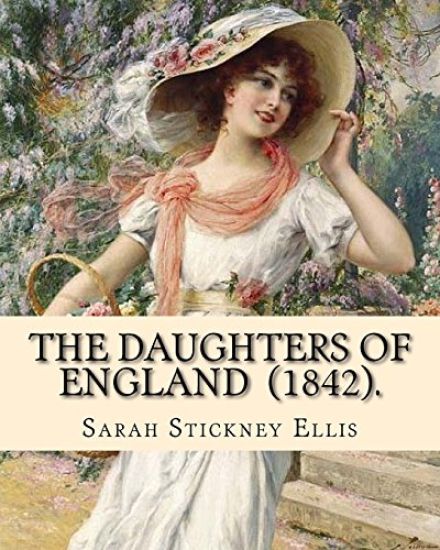
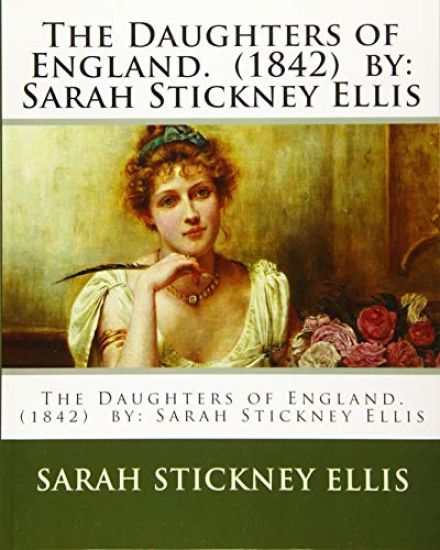
Kirjat ja teokset yhdessä paikassa: 57 kirjaa, julkaisuja vuosilta 2004–2025, suosituimpiin kuuluu Ellis, S: Daughters of England: Their position in society, c. Vertaile teosten hintoja ja tarkista saatavuus suomalaisista kirjakaupoista.
Reprint of the original, first published in 1859. The publishing house Anatiposi publishes historical books as reprints. Due to their age, these books may have missing pages or inferior quality. Our aim is to preserve these books and make them available to the public so that they do not get lost.
Reprint of the original, first published in 1859. The publishing house Anatiposi publishes historical books as reprints. Due to their age, these books may have missing pages or inferior quality. Our aim is to preserve these books and make them available to the public so that they do not get lost.
This book has been considered by academicians and scholars of great significance and value to literature. This forms a part of the knowledge base for future generations. So that the book is never forgotten we have represented this book in a print format as the same form as it was originally first published. Hence any marks or annotations seen are left intentionally to preserve its true nature.
Sarah Stickney Ellis, born Sarah Stickney (1799 - 16 June 1872), also known as Sarah Ellis, was a Quaker turned Congregationalist who was the author of numerous books, mostly written about women's roles in society. She argued that it was the religious duty of women, as daughters, wives, and mothers, to provide the influence for good that would improve society. Conduct novels: Particularly well-known are The Wives of England (1843), The Women of England, The Mothers of England, and The Daughters of England, also her more directly educational works such as Rawdon House and Education of the Heart: Women's Best Work. Related to her principal literary theme of moral education for women, she established Rawdon House in Hertfordshire; a school for young ladies intended to apply the principles illustrated in her books to the "moral training, the formation of character, and in some degree the domestic duties of young ladies." Unusually for the time, the school was non-denominational and included cookery and house management in the curriculum. With few exceptions, boys and girls were educated separately in 19th-century England, and the question of how to educate women was a subject of debate. It was common for women, as well as men, to believe that the former should not be educated in the full range of subjects, but should focus on domestic skills. Elizabeth Sandford wrote for women in support of this view, whilst others such as Susanna Corder ran a novel Quaker girls' school at Abney Park instituted by the philanthropist William Allen, which dissented from convention by teaching all the latest sciences as early as the 1820s. In Education of the Heart: Women's Best Work (1869) Sarah Ellis accepted the importance of intellectual education for women as well as training in domestic duties, but stressed that because women were the earliest educators of the men who predominantly ran and decided upon education in Victorian society, women primarily needed a system of education that developed sound moral character in their offspring. Ellis aimed much of her prescriptive writing in the 1840s and 1850s at the expanding lower middle-class in the suburbs. Her readers were women who might be the first in their family to employ a domestic servant, striving to adapt to an exclusively domestic role. Understandably, historians have focused on Ellis's education of these women in domestic duties, together with appropriate submission to their husbands, in the famous phrase, to 'suffer and be still'. But there was another side to her writing. She insisted that women should remain single if they could not find a 'reasonable' husband; she was conscious of the widespread incidence of marital disharmony in middle-class marriages as women struggled to submit to husbands whom Ellis calls, ambiguously, 'the lords of creation'; and she wrote of the need for wives to 'humour', or manipulate, their husbands in their own interests and in the interests of marital harmony. In private correspondence she spoke of tensions in her own marriage with Wiliam Ellis and of friends who had left their husbands. In 1837, Sarah married the Rev. William Ellis, who held a prominent position in the London Missionary Society, and with whom she worked for the missionary cause and to promote their common interest in temperance. After thirty-five years of marriage they died within a week of each other. Of independent mind, she was buried in the countryside near their home, whilst her husband was laid to rest in the Congregationalists' non-denominational Abney Park Cemetery in the outskirts of Victorian London.
Sarah Stickney Ellis (1799-16 June 1872) was a Quaker turned Congregationalist who was the author of numerous books, mostly written about women's role(s) in society. She argued that it was the religious duty of women, as daughters, wives, and mothers, to provide the influence for good that would improve society. Particularly well-known are The Wives of England, The Women of England, The Mothers of England, and The Daughters of England, also her more directly educational works such as Rawdon House and Education of the Heart: Women's Best Work. Related to her principal literary theme of moral education for women, she established Rawdon House in Hertfordshire; a school for young ladies intended to apply the principles illustrated in her books to the "moral training, the formation of character, and in some degree the domestic duties of young ladies.", With few exceptions, boys and girls were educated separately in nineteenth century England, and the question of how to educate women was a subject of great debate. It was quite common for women, as well as men, to believe that they should not be educated in the full range of subjects, but should focus on domestic skills. Elizabeth Sandford wrote for women in support of this view, whilst others such as Susanna Corder ran a novel Quaker girls' school at Abney Park instituted by the philanthropist William Allen that dissented from convention by teaching all the latest sciences as early as the 1820s. In Education of the Heart: Women's Best Work (1869) Sarah Ellis accepted the importance of intellectual education for women as well as training in domestic duties, but stressed that because women were the earliest educators of the men who predominantly ran and decided upon education in Victorian society, women primarily needed a system of education that developed sound moral character in their offspring.
Sarah Stickney Ellis (1799-16 June 1872) was a Quaker turned Congregationalist who was the author of numerous books, mostly written about women's role(s) in society. She argued that it was the religious duty of women, as daughters, wives, and mothers, to provide the influence for good that would improve society. Particularly well-known are The Wives of England, The Women of England, The Mothers of England, and The Daughters of England, also her more directly educational works such as Rawdon House and Education of the Heart: Women's Best Work. Related to her principal literary theme of moral education for women, she established Rawdon House in Hertfordshire; a school for young ladies intended to apply the principles illustrated in her books to the "moral training, the formation of character, and in some degree the domestic duties of young ladies.",
Sarah Stickney Ellis (1799–1872) was a prolific writer on female education and women's role in the world. She established a school at Rawdon House, Hertfordshire, to give girls an intellectual and moral training, as well as purely domestic skills, since as future mothers they would be the primary teachers and moulders of the next generation of society. The Women of England, published in 1839, was one of her most successful works, and was an important contribution to the debate on the position of women in society, particularly for the middle classes. Although she argues that women were equal to men, and morally superior, she does not question their legal and social subordination, but intends them to use their influence in their own sphere, and subtly, for the good of the family and society in general. For more information on this author, see http://orlando.cambridge.org/public/svPeople?person_id=ellisa





![The Mother's Mistake. [A Tale.]](/covers/9781241240776.jpg)