

Kirjailija
Sarah Wood
Kirjat ja teokset yhdessä paikassa: 13 kirjaa, julkaisuja vuosilta 2009–2026, suosituimpiin kuuluu Willow & Pip. Vertaile teosten hintoja ja tarkista saatavuus suomalaisista kirjakaupoista.
13 kirjaa
Kirjojen julkaisuvuodet: 2009–2026.

Chuckle away with this amusing compilation of 101 limericks that are bound to make you grin. A limerick, a rhyming five-line poem with a lively beat, takes centre stage in this book. Delight in a variety of themes, spanning from Suspicious Sport to 21st Century Problems and Workplace Shenanigans. Dive into tongue twisters and creative misspellings that add a twist of peculiar. With timeless gems and contemporary verses, this anthology offers something for everyone, whether you're a humour fan, a poetry connoisseur or people-watching
Trappist Beer Travels, Second Edition
Caroline Wallace; Sarah Wood; Jessica Deahl
SCHIFFER PUBLISHING LTD
2023
sidottu
While beer drinkers around the world scour market shelves for Trappist beers, few understand the enigmatic lives of the monks behind these illustrious brews. Now in its second edition, Trappist Beer Travels takes readers inside monastery walls for an in-depth look at the legendary breweries of Trappist monks. From the expansive production facilities at Chimay, to the coveted gates of Westvleteren, to the ancient sun-baked walls of Rome’s Tre Fontane, join three American beer writers as they travel the globe gaining rare access to the world's authentic Trappist breweries. This updated and expanded edition includes vibrant new and historical photographs and original artwork, as well as a brand-new chapter focused on the latest brothers to take up the craft of brewing, the monks of England's Mount Saint Bernard Abbey. Explore the histories of each abbey, their brewing traditions, details about the lives of the monks, and helpful travel tips so you, too, can plan a journey of your own.
The first full survey of crucial witnesses to the reception of Piers Plowman. The fifty-plus surviving manuscripts of William Langland's Piers Plowman cast important light on the early public life of this central Middle English work, but they have been relatively neglected by scholarship. This first full study of the subject examines the textual variants, marginal rubrics and companion texts in the manuscripts. It illuminates a reception quite distinct from the reformist poems written by Langland's imitators in "the Piers Plowman tradition". It reveals how the earliest scribes devised various traditional forms of presentation that proved remarkably durable in the poem's subsequent reception, even surviving into the age of print. Exploring Piers Plowman's appearances in the manuscripts, paired unexpectedly with such genres as romance, hagiography and travel literature, the book demonstrates the surprisingly affective responses of medieval readers to the represented lives of the narrator Will and the title figure Piers the Plowman. At the same time, it shows that the evidence for individual scribal agendas in particular copies is more ambiguous than often assumed, with each book reflecting the activities of an unknown number of hands and an uncertain mixture of design and accident. By drawing on evidence from textual scholarship as well as codicological and literary approaches, the author offers fresh insight into Piers Plowman's place in literary history and proposes new ways of understanding the late medieval manuscript as a multi-layered, collaborative product. Sarah Wood is Associate Professor of Medieval English Literature at the University of Warwick

What would you do if you discovered you were the royal heir to an entire season? For Ian, the discovery that he is Prince of Winter is less than thrilling, especially because it comes with a price. Specifically, a price on his head. Lillie, the Witch Princess has taken over Winter and she will do anything to keep Ian from claiming his throne. The journey to save his kingdom doesn't seem to be going well for Ian either. Not only is there a murderous witch trying to track him down, he also has to deal with the three heirs to the other seasons. Sweet and slightly mothering Chloe is from Spring, bouncy but irritating Tristan from Summer, and impulsive and fiery Alexa from Autumn. As the four of them try to get to Winter Castle, Ian finds it's strangely easy to trust people once you've faced a rather unusual assassin, talking wolves, and freaky ice puppet creatures together. Unfortunately, looming on the horizons is their biggest challenge. Ian needs to regain Winter's throne and magic, before Lilith destroys the fragile balance between the four Seasons permanently. But Lilith isn't going anywhere without a fight, and she has all of the stolen magic of Winter at her disposal. Ian only has a small group of mostly inexperienced teenagers with underdeveloped magic along with his own newly found ice powers. He just hopes it will be enough. The Kingdom of Winter is a YA fantasy novel that was previously published under the title Falling Into Winter.
Ever felt like you need an inspired action plan on how to step up? Stepping up could be about taking on your first leadership or management role. It could be about changing your career, or leaving employment to start up on your own. It could be about changing the way you run a team already under your management. Whatever your circumstances, you will face the same issues we all do: changing attitudes, changing technology and our fast-moving rollercoaster of a world. Stepping Up will inspire and equip you to understand and respond to that change and develop your ability to lead yourself and others through it. Follow the practical five point framework on how to step up and fulfil your ambitions: 1. Vision – How to reset your rules in a complex and changing landscape 2. Values – Develop your leadership mission by understanding why you want to lead 3. Velocity – Invest in yourself and build the skills and capabilities of a great leader 4. Votes – Invest in your team and bring together a fantastic team of people to take you on your journey 5. Victories – Deliver brilliant results and ensure you can deliver on your promises Accelerate your skills and potential, and take charge of your leadership career. “This book is so needed. A manual for the leadership generation that want to create their own future.” Kathryn Parsons. Co-Founder & Co-CEO, Decoded. ““Leadership can be practised at all levels. Step up or step out of the way.” Thales Teixeira, Professor at Harvard University "Sarah is one of the most inspiring leaders I know, anyone wanting to become one too should read this book." Baroness Martha Lane Fox, founder of lastminute.com, Chancellor of The Open University, Board Member of Twitter.
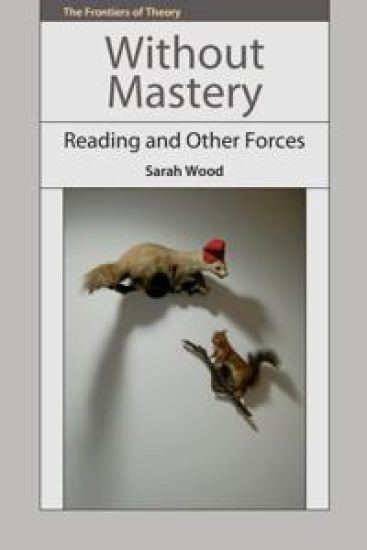
This is an exploration of the possibilities of letting go of our inner desire for control. Without Mastery constantly engages the pleasure, rigour and strangeness of reading, invoking the forcefulness of the Weird Sisters, Plato's Lady Necessity and assorted literary animals, angels, ghosts and children to explore the inner workings of our desire for mastery, and especially the omnipotence of thoughts. For Sarah Wood the thought of Derrida, Freud, Cixous, Plato and others is a kind of dramatic interaction, a message to be received emotionally and responded to inventively in writing that is both critical and creative. The destructiveness of masterful thinking has brought the planet into environmental crisis and continues to deny the facts. Reading, this book makes clear, teaches us to engage with the unthinkable. It provides a challenge and an alternative to 'masterful' or technical approaches to theory. It demonstrates that writing and power can work productively together. It draws on the power of poetry and fiction to help us think and puts this to work in the book's own practice of creative critical writing. It presents original new readings of canonical literary writers.
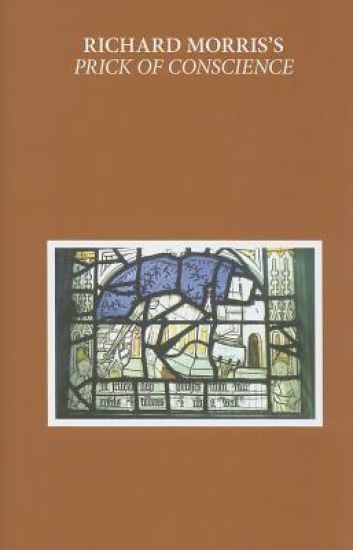
This mid fourteenth-century poem, a discussion of the 'contempt of the world' and the 'Four Last Things', was one of the most popular Middle English texts in its time, as indicated by the large number of extant copies, and illustrations of it in the windows of All Saints, North Street, in York. It was a widely influential compendium of religious instruction, originating in Yorkshire, but more widely disseminated, and thus representing this important regional culture, as well as its absorption into a nationwide religious culture. The only edition, by Richard Morris (1863), is now generally unavailable outside research libraries. The present edition revises Morris's text extensively and offers full modern annotation, including extensive discussion of the poem's sources. Morris's text, although based on an exceptionally good manuscript copy, has been fully collated with the principal early manuscripts; this information is presented in a separate textual commentary. There is an introduction presenting the poem in its context and a Glossary.
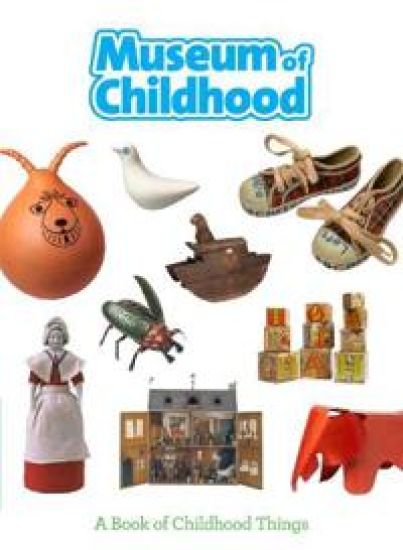
The Museum of Childhood traces the history of childhood through some of the museum's most cherished objects. The book reveals how children have played, dressed, learned and grown through the ages, by turns intriguing, poignant and nostalgic. Sarah Wood also tells the story of how one of the world's best collections related to childhood came to reside in Bethnal Green, London. From the oldest surviving English rocking horse, to costume fit for royalty, to toys children of today love, and their parents remember, this book will delight the child in us all.
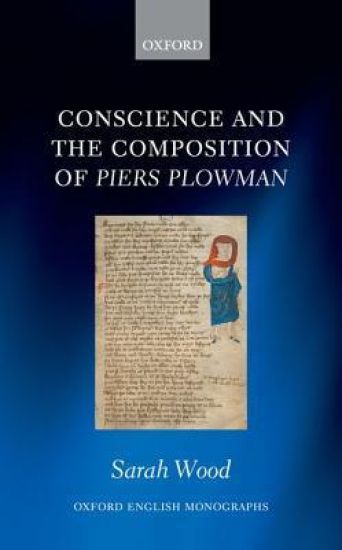
Conscience and the Composition of Piers Plowman provides a detailed account of one of the central personified figures in William Langland's Piers Plowman. Previous critical accounts of Conscience either focus on discussions of the faculty conscience in scholastic discourse, or eschew personification allegory as a useful category in order to argue for the figure's development or education as a character during the poem. But Conscience only appears to develop as he is re-presented, in the course of Piers Plowman, within a series of different literary modes. And he changes not only during the composition of the various episodes in different modes that make up the single version, but also during the composition of the poem as a series of three different versions. The versions of Piers Plowman form, this book argues, a single continuous narrative or argument, in which revisions to Conscience's role in one version are predicated upon his cumulative 'experiences' in the earlier versions. Drawing on a variety of materials in both Middle English and Latin, Sarah Wood illustrates the wide range of contemporary discourses Langland employed as he composed Conscience in the three versions of the poem. By showing how Langland transformed Conscience as he composed the A, B and C texts, Conscience and the Composition of Piers Plowman offers a new approach to reading the serial versions of the poem. While the versions of Piers Plowman have customarily been presented and read in parallel-text formats, Wood shows that Langland's revisions are newly comprehensible if the three versions are read in sequence.
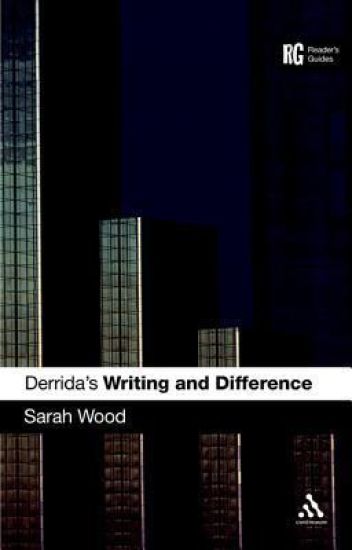
Derrida's 'Writing and Difference'
Sarah Wood
Continuum International Publishing Group Ltd.
2009
nidottu
"Writing and Difference" is widely perceived to be an excellent starting place for those new to Derrida and this "Reader's Guide" is the perfect accompaniment to the study of one of the most important philosophical works of the 20th Century." Writing and Difference" is one of Jacques Derrida's most widely read and studied books. In a collection of essays that engage with literature, history, poetry, dramaturgy, psychoanalysis, ethnology and structuralism, Derrida demonstrates how philosophy and literature might be read, and revolutionises our understanding of writing, difference and life itself. This introduction is the ideal companion to an unprecedented and influential group of texts. Sarah Wood reengages with the original French text and offers guidance on: philosophical and historical context; key themes; reading the text; reception and influence; and, further reading." Continuum Reader's Guides" are clear, concise and accessible introductions to key texts in literature and philosophy. Each book explores the themes, context, criticism and influence of key works, providing a practical introduction to close reading, guiding students towards a thorough understanding of the text. They provide an essential, up-to-date resource, ideal for undergraduate students.
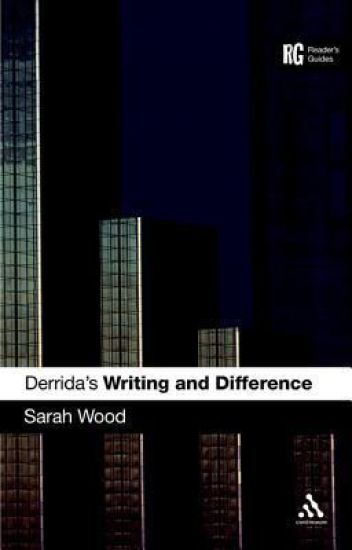
Derrida's 'Writing and Difference'
Sarah Wood
Continuum International Publishing Group Ltd.
2009
sidottu
"Writing and Difference" is widely perceived to be an excellent starting place for those new to Derrida and this "Reader's Guide" is the perfect accompaniment to the study of one of the most important philosophical works of the 20th Century." Writing and Difference" is one of Jacques Derrida's most widely read and studied books. In a collection of essays that engage with literature, history, poetry, dramaturgy, psychoanalysis, ethnology and structuralism, Derrida demonstrates how philosophy and literature might be read, and revolutionises our understanding of writing, difference and life itself. This introduction is the ideal companion to an unprecedented and influential group of texts. Sarah Wood reengages with the original French text and offers guidance on: philosophical and historical context; key themes; reading the text; reception and influence; and, further reading." Continuum Reader's Guides" are clear, concise and accessible introductions to key texts in literature and philosophy. Each book explores the themes, context, criticism and influence of key works, providing a practical introduction to close reading, guiding students towards a thorough understanding of the text. They provide an essential, up-to-date resource, ideal for undergraduate students.