Kirjojen hintavertailu – 12 903 725 kirjaa ja 27 kauppaa

Kirjailija

Sardar M. N. Islam

Kirjat ja teokset yhdessä paikassa: 32 kirjaa, julkaisuja vuosilta 1899–2026, suosituimpiin kuuluu Cybersecurity in Robotic Autonomous Vehicles. Vertaile teosten hintoja ja tarkista saatavuus suomalaisista kirjakaupoista.

Nimi esiintyy myös muodoissa: Sardar M.N. Islam, Sardar M N Islam

32 kirjaa

Kirjojen julkaisuvuodet: 1899–2026.

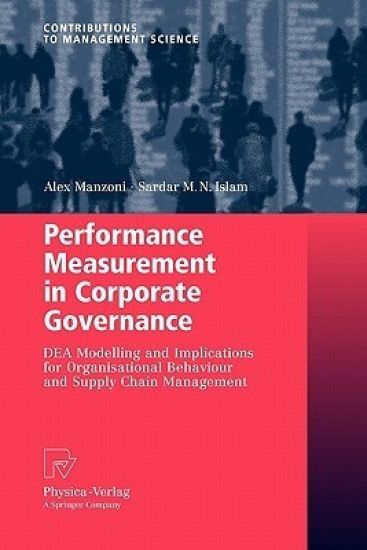
Performance Measurement in Corporate Governance

Performance Measurement in Corporate Governance

Alex Manzoni; Sardar M. N. Islam

Physica-Verlag GmbH Co
2010
nidottu
In the global knowledge economy, corporate governance, organisational behaviour and performance of the supply chain are becoming increasingly important aspects of the evaluation of an enterprise. The subject of this book is the development of a contemporary organisation behaviour performance measurement (OBPM) model for enterprises in the modern economy. The fields of organisation behaviour and supply chain management are integrated with an Open Socio-Technical Systems theory of management and the application of Operations Research to corporate governance for the measurement of organisation performance. This book thereby offers a new and innovative quantitative approach to qualitative concepts of corporate performance measurement and makes a significant contribution to the fields of management theory, supply chain management as well as operations research.
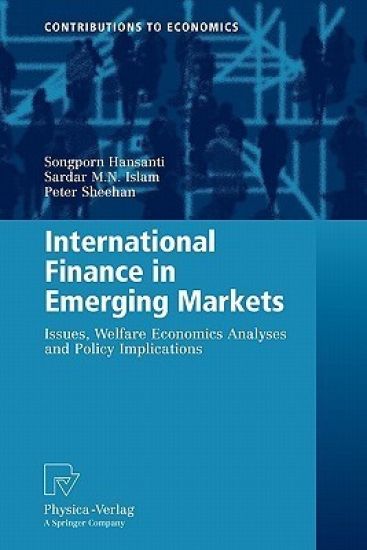
International Finance in Emerging Markets

International Finance in Emerging Markets

Songporn Hansanti; Sardar M. N. Islam; Peter Sheehan

Physica-Verlag GmbH Co
2010
nidottu
This book reviews the contemporary issues in international monetary and financial economics (such as financial liberalisation, crisis, exchange rate determination, capital control, domestic capital market reform, etc.) in an emerging financial market such as Thailand from a welfare economic p- spective, highlighting the social welfare implications of these issues. This 3 book also suggests a normative social approach (as formalised in the new welfare economics paradigm) (see Islam 2001a,b for a discussion of this ; concept) for analysing and addressing these issues and formulating appr- riate policies. Undertaking the above tasks, the asymmetric information paradigm 3 and other elements of the new welfare economics paradigm are adapted in analysing the international financial issues of Thailand, their causes and economic and social welfare consequences. The last two decades have been a critical period for Thailand’s dev- opment. From the mid-1980s to the beginning of the 1990s, the Thai economy performed remarkably well and was a showcase for the world economy. Having achieved a double-digit growth rate for a brief period, Thailand in the late 1980s was regarded as the fastest growing economy in the world by the World Bank and the IMF. With prospects of further rapid economic growth, the Thai government accepted Article VIII of the IMF, which required Thailand to liberalise and deregulate its financial system.
Formulation of Appropriate Laws: A New Integrated Multidisciplinary Approach and an Application to Electronic Funds Transfer Regulation
Formulation of Appropriate Laws: A New Multidisciplinary Modelling Approach and an Application to Electronic Funds Transfer Regulation. Efficient laws have profound positive social, economic, political and welfare effects. As a consequence, the formulation of efficient laws is a central issue in the study, practice and implementation of laws. Fragmented approaches to the formulation of laws such as ‘comparative law analysis’ and ‘welfare economic analysis of laws’ exist in the current literature; they even occasionally rear their heads in the practice and implementation of laws. However, what these authors offer and what is needed, is an integrated approach to help formulate efficient and socially desirable laws – an approach that not only incorporates ‘comparative law analysis’ and ‘welfare economic analysis of laws,’ but also takes into consid- ation other various dimensions of human welfare that are affected by new laws and legal reform. This book presents such an approach using the Electronic Funds Transfer (EFT) regulation in Australia as its vehicle of analysis. The two-pronged approach offered in this book can be applied to formulate efficient laws that maximise the social welfare of the country, irrespective of social, political and economic organisations of the country under study. As such, this book makes several distinct contributions to the literature in law as it: 1. develops a new integrated multi-disciplinary approach using quantitative methods to formulate appropriate laws; 2. applies recent developments in welfare economics; 3.
Designing an Efficient Management System

Designing an Efficient Management System

Tanachart Raoprasert; Sardar M. N. Islam

Physica-Verlag GmbH Co
2010
sidottu
1. 1 Background of the Study: Ef?ciency in Cross-Cultural International Business Management Ef?cient business management is crucial in achieving corporate (national or int- national/multinational) goals such as higher value, comprehensiveness, corporate governance, etc. Ef?cient business management can be achieved by resolving agency problems existing among different stakeholders in corporations. In inter- tional business, agency problems may exist between managers, owners, staff, and other stakeholders who come from different cultures. Therefore, there is a need in designing ef?cient management of international business by in?uencing the factors (the convergence factors) which cause differences in the interests and cultures of different stakeholders. International business refers to all commercial transactions between two or more nations. Because it comprises a large and growing portion of current world business practice, international business has received considerable attention in academic research (Daniels and Radebaugh 1998). International bu- ness differs in important ways from business conducted within national borders, and poses additional challenges to managers and investors in foreign countries (Mahoney et al. 1998). In this context, Black et al. (1999) state that effective management is increasingly recognized as a key determinant of success or failure, arguing that the success of international business in multinational companies depends most signi?cantly on the quality of management systems (Stroh and Caligiuri 1998). As international business involves people from different cultures, every business function including managing a workforce, marketing output, and dealing with regulators, has the potential to involve cross-cultural problems (Zineldin2007).
Financial Liberalization in Developing Countries

Financial Liberalization in Developing Countries

Abdullahi Dahir Ahmed; Sardar M. N. Islam

Physica-Verlag GmbH Co
2009
sidottu
The recent global ?nancial crisis has made ?nancial liberalization a topic of great academic and practical interest. This book makes new contributions to the topic by combining fact-?nding, empirical analysis, and theory to examine the relationship between ?nancial liberalization and economic growth. Among its contributions, the book provides detailed country assessments on the effects of ?nancial liberalization, including its striking impact on the banking sector. Although an important goal of ?nancial deregulation has been to help ?nancial institutions better perform their role in intermediating resources, the book models how deregulation may fail to achieve that goal in countries with underdeveloped ?nancial markets and institutions. For that purpose, the book draws on actual experience in Kenya, Malawi, Botswana, and Thailand. This book should constitute important reading for students of ?nancial economics, researchers and general academics, ?nancial practitioners, policymakers, and teachers of economics. North Carolina, USA Steven L. Schwarcz December 2008 Stanley A. Star Professor of Law & Business, Duke University Founding Director, Duke Global Capital Markets Center Durham vii Abstract and Preface The latest global ?nancial and economic crisis of 2008 shows the need to - examine the desirability of ?nancial liberalization and the basis for the view that ?nancial deregulation by itself cannot be considered as a substitute for better economic management. The literature on ?nancial liberalization has identi?ed various mechanisms through which removing controls on interest rates may impact economic growth.
Performance Measurement in Corporate Governance

Performance Measurement in Corporate Governance

Alex Manzoni; Sardar M. N. Islam

Physica-Verlag GmbH Co
2009
sidottu
In the global knowledge economy, corporate governance, organisational behaviour and performance of the supply chain are becoming increasingly important aspects of the evaluation of an enterprise. The subject of this book is the development of a contemporary organisation behaviour performance measurement (OBPM) model for enterprises in the modern economy. The fields of organisation behaviour and supply chain management are integrated with an Open Socio-Technical Systems theory of management and the application of Operations Research to corporate governance for the measurement of organisation performance. This book thereby offers a new and innovative quantitative approach to qualitative concepts of corporate performance measurement and makes a significant contribution to the fields of management theory, supply chain management as well as operations research.

International Finance in Emerging Markets

International Finance in Emerging Markets

Songporn Hansanti; Sardar M. N. Islam; Peter Sheehan

Physica-Verlag GmbH Co
2008
sidottu
This book reviews the contemporary issues in international monetary and financial economics (such as financial liberalisation, crisis, exchange rate determination, capital control, domestic capital market reform, etc.) in an emerging financial market such as Thailand from a welfare economic p- spective, highlighting the social welfare implications of these issues. This 3 book also suggests a normative social approach (as formalised in the new welfare economics paradigm) (see Islam 2001a,b for a discussion of this ; concept) for analysing and addressing these issues and formulating appr- riate policies. Undertaking the above tasks, the asymmetric information paradigm 3 and other elements of the new welfare economics paradigm are adapted in analysing the international financial issues of Thailand, their causes and economic and social welfare consequences. The last two decades have been a critical period for Thailand’s dev- opment. From the mid-1980s to the beginning of the 1990s, the Thai economy performed remarkably well and was a showcase for the world economy. Having achieved a double-digit growth rate for a brief period, Thailand in the late 1980s was regarded as the fastest growing economy in the world by the World Bank and the IMF. With prospects of further rapid economic growth, the Thai government accepted Article VIII of the IMF, which required Thailand to liberalise and deregulate its financial system.
Formulation of Appropriate Laws: A New Integrated Multidisciplinary Approach and an Application to Electronic Funds Transfer Regulation
Formulation of Appropriate Laws: A New Multidisciplinary Modelling Approach and an Application to Electronic Funds Transfer Regulation. Efficient laws have profound positive social, economic, political and welfare effects. As a consequence, the formulation of efficient laws is a central issue in the study, practice and implementation of laws. Fragmented approaches to the formulation of laws such as ‘comparative law analysis’ and ‘welfare economic analysis of laws’ exist in the current literature; they even occasionally rear their heads in the practice and implementation of laws. However, what these authors offer and what is needed, is an integrated approach to help formulate efficient and socially desirable laws – an approach that not only incorporates ‘comparative law analysis’ and ‘welfare economic analysis of laws,’ but also takes into consid- ation other various dimensions of human welfare that are affected by new laws and legal reform. This book presents such an approach using the Electronic Funds Transfer (EFT) regulation in Australia as its vehicle of analysis. The two-pronged approach offered in this book can be applied to formulate efficient laws that maximise the social welfare of the country, irrespective of social, political and economic organisations of the country under study. As such, this book makes several distinct contributions to the literature in law as it: 1. develops a new integrated multi-disciplinary approach using quantitative methods to formulate appropriate laws; 2. applies recent developments in welfare economics; 3.
Optimal Control Models in Finance

Optimal Control Models in Finance

Ping Chen; Sardar M. N. Islam

Springer-Verlag New York Inc.
2004
sidottu
This book reports initial efforts in providing some useful extensions in - nancial modeling; further work is necessary to complete the research agenda. The demonstrated extensions in this book in the computation and modeling of optimal control in finance have shown the need and potential for further areas of study in financial modeling. Potentials are in both the mathematical structure and computational aspects of dynamic optimization. There are needs for more organized and coordinated computational approaches. These ext- sions will make dynamic financial optimization models relatively more stable for applications to academic and practical exercises in the areas of financial optimization, forecasting, planning and optimal social choice. This book will be useful to graduate students and academics in finance, mathematical economics, operations research and computer science. Prof- sional practitioners in the above areas will find the book interesting and inf- mative. The authors thank Professor B. D. Craven for providing extensive guidance and assistance in undertaking this research. This work owes significantly to him, which will be evident throughout the whole book. The differential eq- tion solver “nqq” used in this book was first developed by Professor Craven. Editorial assistance provided by Matthew Clarke, Margarita Kumnick and Tom Lun is also highly appreciated. Ping Chen also wants to thank her parents for their constant support and love during the past four years.
Empirical Finance

Empirical Finance

Sardar M. N. Islam; Sethapong Watanapalachaikul

Physica-Verlag GmbH Co
2004
nidottu
This book makes two key contributions to empirical finance. First it provides a comprehensive analysis of the Thai stock market. Second it presents an excellent exposition ofhow modem econometric techniques can be utilised to understand a market. The increasing globalisation of the world's financial markets has made our un­ derstanding of the risk-return relationship in a broader range of markets critical. This is particularly so in emerging markets where market depth and liquidity are major issues. One such emerging market is Thailand. The Thai capital market isof particular interest given that it was the market in which the Asian financial crises commenced. As such an understanding ofthe Thai capital market via study of the pre and post-crisis periods enables one to shed light on one of the major financial markets events of recent times. This book provides a quantitative analysis of the Thai capital market using some very useful and recent econometric techniques. The book provides an over­ view of the Thai stock market in chapter 2. Descriptive statistics and time series models (moving average, exponential smoothing, ARIMA) are presented in chap­ ter 3 followed by market efficiency tests based on autocorrelations in chapter 4. A richer set of models is then considered in chapters 5 through 8. Chapter 5 finds a cointegrating relationship between macroeconomic factors and stock returns.
Mathematical Economics of Multi-Level Optimisation

Mathematical Economics of Multi-Level Optimisation

Sardar M.N. Islam

Physica-Verlag GmbH Co
1997
nidottu
Since there exists a multi-level policy making system in the market economies, choices of decision makers at different levels should be considered explicitly in the formulation of sectoral plans and policies. To support the hypothesis, a theoretical energy planning approach is developed within the framework of the theory of economic policy planning, policy systems analysis and multi-level programming. The Parametric Programming Search Algorithm has been developed. On the basis of this theoretical model, an Australian Energy Policy System Optimisation Model (AEPSOM) has been developed and is used to formulate an Australian multi-level energy plan.
Optimization in Economics and Finance

Optimization in Economics and Finance

Bruce D. Craven; Sardar M. N. Islam

Springer-Verlag New York Inc.
1899
sidottu
Many optimization questions arise in economics and finance; an important example of this is the society's choice of the optimum state of the economy (the social choice problem). Optimization in Economics and Finance extends and improves the usual optimization techniques, in a form that may be adopted for modeling social choice problems. Problems discussed include: when is an optimum reached; when is it unique; relaxation of the conventional convex (or concave) assumptions on an economic model; associated mathematical concepts such as invex and quasimax; multiobjective optimal control models; and related computational methods and programs. These techniques are applied to economic growth models (including small stochastic perturbations), finance and financial investment models (and the interaction between financial and production variables), modeling sustainability over long time horizons, boundary (transversality) conditions, and models with several conflicting objectives. Although the applications are general and illustrative, the models in this book provide examples of possible models for a society's social choice for an allocation that maximizes welfare and utilization of resources. As well as using existing computer programs for optimization of models, a new computer program, named SCOM, is presented in this book for computing social choice models by optimal control.