Kirjojen hintavertailu – 12 903 725 kirjaa ja 27 kauppaa
Kirjailija
Sareen Duseja
Kirjat ja teokset yhdessä paikassa: 96 kirjaa, julkaisuja vuosilta 2019–2026, suosituimpiin kuuluu Digital Scanning in Prosthodontics. Vertaile teosten hintoja ja tarkista saatavuus suomalaisista kirjakaupoista.
A common axiom in conventional prosthodontics for partial edentulism is a fixed partial denture. Fewer the natural teeth missing better the indication for fixed partial denture. Unfortunately every case is different in relation to anatomical variations, patient's desires and medical condition. There is no iron clad rule for a particular design. A subtle modification in designing is required to suit a given particular case. Dentistry is an ever changing branch. Over the period of time many types of bridges have come up ranging from the traditional to resin retained to the implant retained bridges. Apart from conventional fixed partial denture modem dentistry involves implants to restore patient to normal contour, function, comfort, esthetics, speech, and health regardless of atrophy, disease or injury of stomatognathic system. With the treatment options available today, a dentist's knowledge and vigilance, adequate skilled lab support and patient's cooperation can help to achieve the only goal of a prosthodontist that is meticulous replacement with maximum preservation.
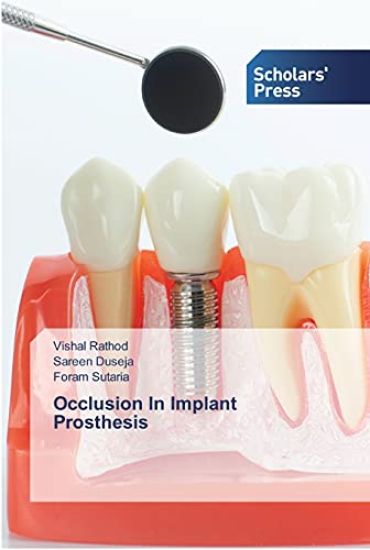
The implant body should be loaded in an axial direction. In a division A maxillary ridge the implant can be placed between the central fossa region and buccal cusp of the natural teeth. The buccal cusp of the natural tooth in the mandibular arch is the dominant occluding cusp. The palatal contour of the maxillary posterior implant crown is reduced to eliminate offset loads. The position of the maxillary buccal cusp should remain similar to that of the original tooth for proper esthetics and should remain out of occlusion in CR and all mandibular excursions. When further resorption occurs and the ridge evolves into division B to C bone, the maxillary palatal cusp may become the primary contact area, situated directly over the implant body. The palatal cusp angle is reduced, and a contact area is created directly over the implant abutment. Hence, the occlusal contacts differ from those of a natural tooth.
La professione odontoiatrica sempre stata alla ricerca di restauri che abbiano un aspetto "naturale" ma che siano, allo stesso tempo, duraturi. In passato, la mancanza di materiali dentali appropriati ha reso tutto ci impossibile. Tuttavia, i progressi nel campo delle faccette in porcellana e dei materiali adesivi offrono oggi una variet di selezioni nel trattamento, con restauri di lunga durata e una migliore qualit dei risultati estetici. Le faccette in porcellana sono da considerarsi lo "stato dell'arte" dell'odontoiatria estetica, fornendo abbondanti vantaggi rispetto a qualsiasi sistema di faccette precedente. Sono eccellenti in termini di aspetto e durata, e la procedura vera e propria non disturba i tessuti molli o il parodonto adiacente. Dalla loro introduzione quasi 20 anni fa, le faccette in porcellana sono diventate il fiore all'occhiello della maggior parte delle pratiche basate sull'estetica.
Temporomandibular joint (TMJ) and mandibular anatomy and function have long been topics of great interest to dental scientists and clinicians. Temporomandibular joints are load bearing and susceptible to overload. Temporomandibular disorders (TMD) are a collective term embracing a number of clinical problems that involve the masticatory musculature, the temporomandibular joints and associated structures, or both. The treatment must be based on a correct diagnosis, established from information on possible etiologic factors, signs and symptoms of each patient. The clinical protocol for TMD patients varies according to the level of damage of muscle and TMJ structures, clinical symptoms and duration of the problem.
Dental implant failure has led to continuous innovations of various implants systems and to different interceptive treatment modalities. These concerns have also led to selection of implant designs that best suit the various types of bone. There are a variety of reasons for the failure of endosseous implants. Different reasons for the implant failure and their contributing factors have been discussed. The various studies done on each of these failures and how to prevent these failures have been discussed too. Failure of implants has a multifactorial dimension. Often many factors come together to cause the ultimate failure of the implant. One needs to identify the cause not just to treat the present condition but also as a learning experience for future treatments. Proper data collection, patient feedback, and accurate diagnostic tool will help point out the reason for failure. An early intervention is always possible if regular check-ups are undertaken.
Dental Implants have been used in a variety of different forms for many years. Since the mid-twentieth century, there has been an increase in interest in the implant process for the replacement of missing teeth. Branemark applied scientifically based research techniques to develop an endosseous implant that forms an immobile connection with bone. Patient selection is critical to achieve success. Appropriate implant use ensures the achievement of predictable success for the procedure. When considering implant applications, the use of all appropriate diagnostic data is imperative. Physical and emotional health must be optimal to enhance the placement of a foreign body into bone. Medical consultations are use to determine any systemic problems that may interfere with healing or with the patient's ability to accept the proposed treatment and maintain adequate oral hygiene. Radiographic evaluation must be thorough and appropriate. The routine use of sophisticated radiographic techniques, such as CT, is no better than the underuse of standard less elaborate techniques. Articulated diagnostic casts and surgical guides are invaluable in such a determination.