Kirjojen hintavertailu – 12 903 724 kirjaa ja 27 kauppaa

Kirjailija

Sarvepalli Radhakrishnan

Kirjat ja teokset yhdessä paikassa: 8 kirjaa, julkaisuja vuosilta 1967–2022, suosituimpiin kuuluu The Philosophy Of Rabindranath Tagore. Vertaile teosten hintoja ja tarkista saatavuus suomalaisista kirjakaupoista.

8 kirjaa

Kirjojen julkaisuvuodet: 1967–2022.

The Philosophy of Rabindranath Tagore

The Philosophy of Rabindranath Tagore

Sarvepalli Radhakrishnan

West Margin Press
2022
sidottu
The Philosophy of Rabindranath Tagore (1918) is an academic study by Sarvepalli Radhakrishnan. Published at the beginning of his career as one of India’s leading professors of comparative religion, the work is a masterful investigation of the teachings of poet-philosopher Rabindranath Tagore. In 1913, Tagore was awarded the Nobel Prize in Literature, making him the first lyricist and non-European to be awarded the distinction. Over the next several decades, Tagore wrote his influential novel The Home and the World (1916), toured dozens of countries, and advocated on behalf of Dalits and other oppressed peoples. “Rabindranath’s teaching, with its vital faith in the redeeming power of the spiritual forces and their up-building energy, has a particular value at the present moment, when the civilized world is passing through the crucible of a ghastly war which, whether or not it purges the nations of their pride and hate, lust for gold and greed of land, at least proclaims, in no uncertain tones, the utter bankruptcy of materialism.” In this masterwork of twentieth century criticism, Sarvepalli Radhakrishnan explores the philosophical teachings of Rabindranath Tagore, a leading artist and intellectual of modern India. Divided into five chapters, the book explores the interrelation of poetry and philosophy in Tagore’s work, his influence on Indian culture, and the meaning of his contribution to the nations of the world. With a beautifully designed cover and professionally typeset manuscript, this edition of Sarvepalli Radhakrishnan’s The Philosophy of Rabindranath Tagore is a classic of Indian literature reimagined for modern readers.
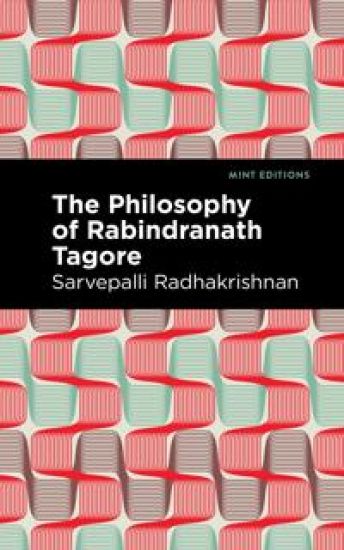
The Philosophy of Rabindranath Tagore

The Philosophy of Rabindranath Tagore

Sarvepalli Radhakrishnan

Mint Editions
2021
pokkari
The Philosophy of Rabindranath Tagore (1918) is an academic study by Sarvepalli Radhakrishnan. Published at the beginning of his career as one of India’s leading professors of comparative religion, the work is a masterful investigation of the teachings of poet-philosopher Rabindranath Tagore. In 1913, Tagore was awarded the Nobel Prize in Literature, making him the first lyricist and non-European to be awarded the distinction. Over the next several decades, Tagore wrote his influential novel The Home and the World (1916), toured dozens of countries, and advocated on behalf of Dalits and other oppressed peoples. “Rabindranath’s teaching, with its vital faith in the redeeming power of the spiritual forces and their up-building energy, has a particular value at the present moment, when the civilized world is passing through the crucible of a ghastly war which, whether or not it purges the nations of their pride and hate, lust for gold and greed of land, at least proclaims, in no uncertain tones, the utter bankruptcy of materialism.” In this masterwork of twentieth century criticism, Sarvepalli Radhakrishnan explores the philosophical teachings of Rabindranath Tagore, a leading artist and intellectual of modern India. Divided into five chapters, the book explores the interrelation of poetry and philosophy in Tagore’s work, his influence on Indian culture, and the meaning of his contribution to the nations of the world. With a beautifully designed cover and professionally typeset manuscript, this edition of Sarvepalli Radhakrishnan’s The Philosophy of Rabindranath Tagore is a classic of Indian literature reimagined for modern readers.
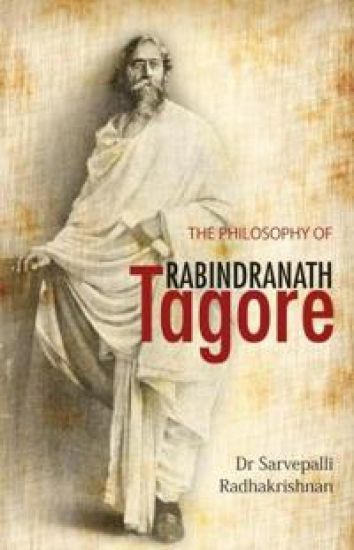
The Philosophy Of Rabindranath Tagore

The Philosophy Of Rabindranath Tagore

Sarvepalli Radhakrishnan

Niyogi Books
2016
nidottu
In interpreting the philosophy and message of Rabindranath Tagore, the book interprets the Indian ideal of philosophy, religion, and art, of which his work is the outcome and expression. It is not known whether it is Rabindranath's own heart or the heart of India that is beating here. In his work, India finds the lost word she was seeking. The familiar truths of Indian philosophy and religion, the value of which it has become fashionable to belittle even in the land of their birth, are here handled with such rare reverence and deep feeling that they seem to be almost new. Dr Radhakrishnan's acquaintance with the soul of India, from which Rabindranath draws his inspiration, has helped him in this expository work. Contents: Introduction; Preface to First Edition; Chapter 1-The Philosophy of Rabindranath Tagore-I; Chapter II -The Philosophy of Rabindranath Tagore-II; Chapter III - Poetry and Philosophy; Chapter IV -The Message of Rabindranath Tagore to India; Chapter V -The Message of Rabindranath Tagore to the World.
The Concept of Man: A Study in Comparative Philosophy

The Concept of Man: A Study in Comparative Philosophy

Sarvepalli Radhakrishnan; Poola Tirupati Raju

Literary Licensing, LLC
2011
sidottu
The Concept of Man: A Study in Comparative Philosophy by Sarvepalli Radhakrishnan is a comprehensive exploration of the concept of man in different philosophical traditions. The book delves into the ideas of prominent philosophers such as Plato, Aristotle, Kant, Hegel, and Nietzsche, among others, and compares their views on the nature, purpose, and destiny of man. Radhakrishnan presents a nuanced analysis of the different philosophical approaches to understanding man, including the metaphysical, ethical, and social dimensions of humanity. He also examines the influence of religion and culture on the concept of man, exploring the role of spirituality and morality in shaping our understanding of human nature. The book is divided into three parts, each focusing on a different aspect of the concept of man. The first part deals with the metaphysical and ontological aspects of man, exploring questions such as the nature of the soul, the relationship between mind and body, and the concept of free will. The second part examines the ethical and moral dimensions of humanity, exploring questions such as the nature of good and evil, the role of virtue in human life, and the relationship between morality and religion. The third and final part explores the social and political dimensions of humanity, examining questions such as the nature of justice, the role of the state in society, and the relationship between individual freedom and social responsibility. Overall, The Concept of Man is a thought-provoking and insightful exploration of one of the most fundamental questions of human existence. Radhakrishnan's comparative approach and comprehensive analysis make this book an invaluable resource for students and scholars of philosophy, religion, and the humanities. This scarce antiquarian book is a facsimile reprint of the old original and may contain some imperfections such as library marks and notations. Because we believe this work is culturally important, we have made it available as part of our commitment for protecting, preserving, and promoting the world's literature in affordable, high quality, modern editions, that are true to their original work.
The Philosophy of Sarvepalli Radhadkrishnan, Volume 8

The Philosophy of Sarvepalli Radhadkrishnan, Volume 8

Sarvepalli Radhakrishnan; Paul Arthur Schilpp

Open Court Publishing Co ,U.S.
1999
pokkari
Sarvepalli Radhakrishnan, colleague of Gandhi, Nehru and Tagore, former Ambassador to the Soviet Union and now Vice-President of India, is regarded as the greatest living thinker of the East; the ablest representative of its rich philosophic tradition and its leading spokesman for a reconciliation of Eastern and Western spiritual values. In this volume, twenty-three world-renowned scholars have contributed a series of brilliant critical essays covering every aspect of Radhakrishnan's thought; his contributions to social philosophy and political philosophy, to modern religion and mysticism, to his influence on contemporary Hinduism, and his place in the main currents of twentieth century philosophy.
A Sourcebook in Indian Philosophy

A Sourcebook in Indian Philosophy

Sarvepalli Radhakrishnan; Charles A. Moore

Princeton University Press
1967
pokkari
Here are the chief riches of more than 3,000 years of Indian philosophical thought-the ancient Vedas, the Upanisads, the epics, the treatises of the heterodox and orthodox systems, the commentaries of the scholastic period, and the contemporary writings. Introductions and interpretive commentaries are provided.