Kirjojen hintavertailu – 12 859 819 kirjaa ja 27 kauppaa
Kirjailija
Saskia Praamsma
Kirjat ja teokset yhdessä paikassa: 7 kirjaa, julkaisuja vuosilta 2014–2019, suosituimpiin kuuluu The Urantia Diaries of Harold and Martha Sherman: Volume Two: 1942. Vertaile teosten hintoja ja tarkista saatavuus suomalaisista kirjakaupoista.
This book contains 367 accounts of how early readers found the Urantia Book and what it means to them. The Urantia Book is a superhuman revelation of truth given to the peoples of our planet, which they call Urantia. It teaches us about God, the structure of the universe and its divinely planned development, angels, life after death, the origin and history of our planet, the life and teachings of Jesus, and our eternal destiny as perfected citizens of a friendly universe. It provides an enlightening picture of reality in which science, religion, and philosophy are unified. The authors are a corps of celestial beings who were authorized to reveal this information to us, which was mysteriously transmitted through the mind of a "sleeping subject." When the 2097-page Urantia Book was first published in 1955 it was decided not to advertise it, to let the message spread from one reader to another. This book of testimonies traces how 367 readers discovered the revelation, from pre-publication days in 1924 to the coming of the popular Internet in the late 1990s.
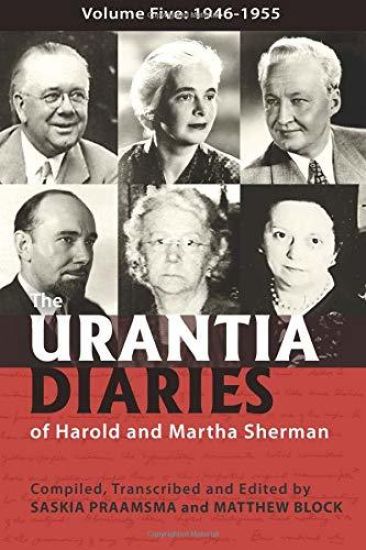
This volume documents the years 1946 to 1955, spanning Harold and Martha Sherman's last year and a half as Forumites and the period leading up to the long-awaited publication of the Urantia Book. In the summer of 1947, their younger daughter having graduated high school, the Shermans decided to move to their cottage in the Arkansas Ozarks. Finding little inspiration in the Jesus papers and frustrated by the stalemate in their relationship with the Forum leaders, the Shermans made their last appearance at 533 Diversey Parkway in December of 1947. With Arkansas as his home base, Harold continued a busy career as a writer and traveling lecturer. After gaining entree into the New Thought movement as a speaker and teacher in the early 1950s, he became nationally known, but he continually sought to reach the wider public through film, television and radio. During his respites in Arkansas, he was active in community development projects, campaigning for paved roads, electrification and tourist attractions. But, as the Cold War developed and the threat of atomic war loomed, and as UFO sightings were gaining international attention, Harold was most concerned with trying to help people realize their "higher powers of mind" so as to forestall disaster and steer the world in a better direction. During these years the Shermans kept in regular contact with a few Forumites, including Elsie Baumgartner, Rachel Gusler, and Sir Hubert Wilkins. Their letters-touching on matters personal, political, philosophical, and spiritual-provide a glimpse into the concerns and perspectives of members of the first generation of serious students of the Urantia papers. In their travels Harold and/or Martha met or renewed their acquaintance with a number of other Forumites and former Forumites, recording their experiences in letters and diary entries. Further, Harold was instrumental in sparking San Diego businessman Webster Stafford's enthusiasm for the Urantia papers and other purported revelations. Stafford's documents, reproduced in this volume, represent the first known attempt to appreciate the Urantia papers in the broader context of comparative analysis.
In this volume Harold and Martha Sherman report their Urantia-related experiences for the years 1944 and 1945. During this period the Forum hears the papers that became Part III of the Urantia Book, and the Shermans record their impressions of each paper as well as their discussions with Forum friends on these and other subjects. No longer in the forefront of controversy, the Shermans quietly maintain their criticisms of Dr. Sadler's handling of the papers. In late 1945 a frank meeting with Harry Loose's close friend, Reverend Williams, causes the Shermans to reflect anew on their involvement with the Urantia project, resulting in a turning point of sorts.
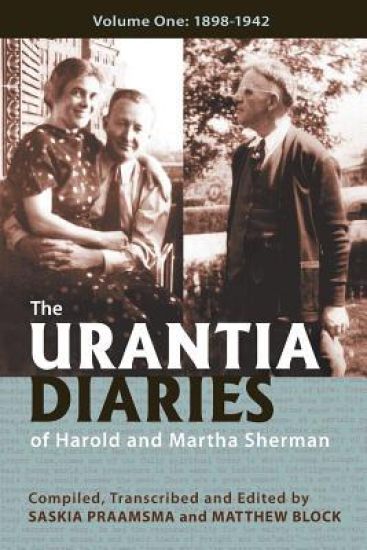
The years from approximately 1924 to 1955, in which the evolving manuscript of the Urantia revelation was shared with a small group in Chicago called the Forum, is an intriguing period in the history of the Urantia Book and its readership. Only one source of extensive and detailed information about this period has come to light: the diaries and letters of bestselling author Harold M. Sherman and his wife Martha. During their stay in Chicago, from 1942 to 1947, the Shermans recorded what was said and done at every Forum meeting they attended. They also recorded their conversations with their Forum friends outside Forum meetings. Their diligent documenting resulted in close to two thousand pages of eyewitness accounts which portray Forum life with unmatched vividness and immediacy. What makes their story especially piquant is that Harold was a controversial figure. Outspokenly critical of some of the plans of the Forum leaders, he was accused by the main leader, Dr. William S. Sadler, of disrupting the superhumanly authorized running of the Forum. Sadler allowed the Shermans to continue to attend Forum meetings, but they became estranged from most of their fellow Forumites. Feeling unjustly blamed, the Shermans wrote sharp, critical reports of the ensuing Forum activities, which contrast with the vague, rosy accounts given decades later by non-Forumites. Volume One presents the correspondence Sherman had with Sadler and two other notable Forumites in 1941 and early 1942, before the Shermans came to Chicago in May 1942 and began attending the Forum. Volume Two, covering May to December 1942, records the Shermans' first flush of enthusiasm for the Urantia revelation as well as the events that culminated in the first major conflict among Urantia believers. The volume opens as the Shermans arrive in Chicago, begin reading the Urantia papers and attend the Sunday Forum meetings. Together with the renowned Arctic explorer Sir Hubert Wilkins, the three become favored Forumites. But, as Harold reads the manuscript and learns of Sadler's plans to set up a foundation for publishing the Urantia Book and to form an official membership organization for Urantia believers, he is besieged by questions and concerns. Not satisfied with Sadler's responses to these concerns, Harold helps write a petition, signed by almost fifty Forumites, asking Sadler to allow a free and open discussion of the planned organizations. Upon receiving the petition, Sadler orchestrates a reaction which, in the course of a few days, succeeds in quashing virtually all sympathy for Harold and his proposals. In the space of less than a month, the Shermans go from being favored Forum members to being largely shunned. The few Forumites who approach the Shermans confide in them their confoundment at Sadler's actions, which have revealed to them an unexpected, dark side to their long-respected leader's character.
The years from approximately 1924 to 1955, in which the evolving manuscript of the Urantia revelation was shared with a small group in Chicago called the Forum, is an intriguing period in the history of the Urantia Book and its readership. Only one source of extensive and detailed information about this period has come to light: the diaries and letters of bestselling author Harold M. Sherman and his wife Martha. During their stay in Chicago, from 1942 to 1947, the Shermans recorded what was said and done at every Forum meeting they attended. They also recorded their conversations with their Forum friends outside Forum meetings. Their diligent documenting resulted in close to two thousand pages of eyewitness accounts which portray Forum life with unmatched vividness and immediacy. What makes their story especially piquant is that Harold was a controversial figure. Outspokenly critical of some of the plans of the Forum leaders, he was accused by the main leader, Dr. William S. Sadler, of disrupting the superhumanly authorized running of the Forum. Sadler allowed the Shermans to continue to attend Forum meetings, but they became estranged from most of their fellow Forumites. Feeling unjustly blamed, the Shermans wrote sharp, critical reports of the ensuing Forum activities, which contrast with the vague, rosy accounts given decades later by non-Forumites. In this and successive volumes of The Urantia Diaries of Harold and Martha Sherman, we present the Shermans' Urantia-related experiences, as reported by themselves in their letters and diaries. This volume contains the correspondence Sherman had with Sadler and two other notable Forumites in 1941 and early 1942, before the Shermans arrived in Chicago in May 1942 and began attending the Forum. One of these was Sherman's friend Sir Hubert Wilkins, the famous Australian polar explorer who joined the Forum shortly after the Shermans did. The other was the mysterious detective Harry J. Loose, an old acquaintance with whom Sherman reconnected in February 1941 and formed a fateful bond. Through letters and in person Loose introduced the Shermans to the Urantia revelation and thrilled Harold with the assurance that he was to play a leading role in its presentation to the world. Harry Loose to Harold Sherman, February 4, 1941: Remember to watch for a tremendous book the Book of Urantia] which will be published in about two years. It has been now 35 years in the building. It is not mine but I had something to do with it. You will recognize it when it appears. It will be world shocking. It will clarify so very much that is cloudy in our present-day Bible. It is a true spiritual revelation to this age written by intelligences that have never been earthbound and who have to do with the governing of this tiny earth in this very limited universe. Please believe every astonishing word. It is the TRUTH. I KNOW. . . . Harold Sherman to William Sadler, October 12, 1941: This Story of our First Life Planet, Urantia, possesses great dramatic possibilities when adapted to radio, stage and screen. There are perhaps 20 to 30 great dramas in it, maybe more. And these must be culled out and developed in direct relation to the spiritual value and need represented by the phase of the book dramatized. . . . IF I am correct in my belief that my life has been lived to enable me to serve your Group as the DRAMATIST, then it will be my task, in association with a directorial board from your Group, to take complete charge and have all business offers referred to me. . . . I am not meaning to suggest that any ONE MAN is capable of standing up under such a mission of service. But, given the support of higher intelligences, fleshed and unfleshed, he may draw the power and the wisdom to see it through. . . .
A posthumous collection of early communications Harold Sherman received from his Higher Self, whom he named "Ara". HAROLD SHERMAN (1898-1987) was an ESP investigator and a lifelong student of the mysteries of the mind. He published a number of bestselling self-help books, beginning with Your Key to Happiness in 1935. A popular lecturer, he traveled across the United States spreading the message that man needs to learn to utilize the powers of his own mind in order to live life to the fullest. Sherman's wife Martha shared in these studies. In 1941, while living in New York, they began corresponding with a man named Harry Loose in California, who quickly became their spiritual mentor. Loose told them about the Urantia manuscript, a voluminous document reporting to be a revelation from higher universe beings. He believed that this work, which was finally published in 1955 as The Urantia Book, would change the thinking of the world. Loose described to the Shermans much of the manuscript's contents, including its portrayal of a universe teeming with spiritual beings and influences. Sherman was particularly struck by the manuscript's teaching that a fragment of God lived in each human being. The manuscript called this fragment of God the "Thought Adjuster" and said that a Thought Adjuster indwells each of us, to guide and inspire us. Harold believed that he was becoming aware of this inner voice, which identified itself as "Ara". Ara began to communicate messages of various lengths, which Harold copied down as they presented themselves in his mind. Many messages had to do with the role Harold believed he was destined to play in the eventual presentation of the Urantia revelation to the world. The Ara messages were recorded, neatly typed, in a loose-leaf binder, together with accounts of dreams, psychic impressions, and Urantia-related poems. These writings span the years 1938-1952, with the bulk of the material recorded in 1941-42.
THE URANTIA REVELATION was presented by celestial authors through an anonymous human receiver. It was published in 1955 as The Urantia Book, a 2097-page volume divided into 196 papers. These papers describe God, the grand universe and its many inhabitants, the origin and history of our planet, the life and teachings of Jesus, and the glorious destiny God has planned for every creature throughout his vast domains-an endless life of boundless opportunity and unlimited progress. The Inhabited Universe consists of sixteen papers from the Urantia revelation. It focuses on the many worlds we will encounter as we journey through the universe, worlds teeming with life, both human and superhuman."* 'God is spirit, ' but Paradise is not. The material universe is always the arena wherein take place all spiritual activities; spirit beings and spirit ascenders live and work on physical spheres of material reality." (Paper 12, "The Universe of Universes")* "Spirit beings do not dwell in nebulous space; they do not inhabit ethereal worlds; they are domiciled on actual spheres of a material nature, worlds just as real as those on which mortals live. The Havona worlds are actual and literal, albeit their literal substance differs from the material organization of the planets of the seven superuniverses." (Paper 14, "The Central and Divine Universe")* "There is a great and glorious purpose in the march of the universes through space. All of your mortal struggling is not in vain. We are all part of an immense plan, a gigantic enterprise, and it is the vastness of the undertaking that renders it impossible to see very much of it at any one time and during any one life. We are all a part of an eternal project which the Gods are supervising and outworking. The whole marvelous and universal mechanism moves on majestically through space to the music of the meter of the infinite thought and the eternal purpose of the First Great Source and Center." (Paper 32, "The Evolution of Local Universes")