Kirjojen hintavertailu – 12 903 724 kirjaa ja 27 kauppaa
Kirjailija
Satya Prakash
Kirjat ja teokset yhdessä paikassa: 39 kirjaa, julkaisuja vuosilta 1967–2026, suosituimpiin kuuluu Satya. Vertaile teosten hintoja ja tarkista saatavuus suomalaisista kirjakaupoista.
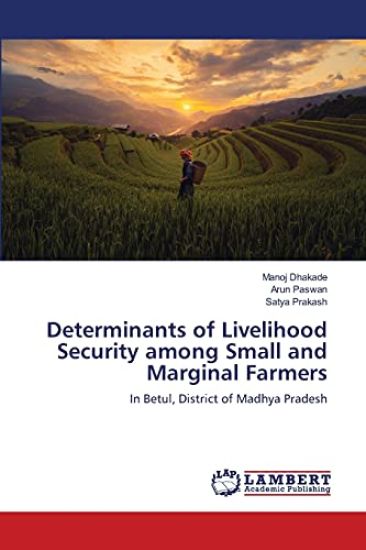
The study entitled "Determinants of livelihood security among Small and Marginal farmers in Betul district of Madhya Pradesh". The study was carried out with the specific objectives to measure the livelihood security among small and marginal farmers along with the factors associated with livelihood security among the selected farmers. An attempt was also made to find out the constraints in attaining livelihood security. The present research enterprise was carried out in Multai and Betul blocks of Betul district of Madhya Pradesh. From each block, two villages were randomly selected. From each selected village, 10 small and 10 marginal farmers were identified. Thus, a total 80 farmers of the four villages were finally constructed as sample for the study purposes.
Cauliflower and Cabbage comes under Cole crops. It contains good amount of vitamins like vitamin A, vitamin C and fair amount of proteins and fibers. The cauliflower is also a good source of minerals like Ca, Mg, P, Fe, Na, and S. In this book the gap in the technology in relation to the various components and subcomponents of Cauliflower and Cabbage production technology has been assessed. This book will be useful for students, teachers, and research scholars in the discipline of agriculture Extension Education, and Govt. Extension functionaries.
Spinach (Spinacia oleracea) is an edible flowering plant in the family Amaranthaceae. It is native to central and southwestern Asia. It is an annual plant (rarely biennial) which grows to a height up to 30 cm. Spinach may survive over winter in temperate regions. Spinach is a good source of vitamins riboflavin, B6 and E, calcium, potassium, and dietary fiber, etc. Growth hormones play a pivotal role in regulating seed germination and plant growth. These hormones play a more important role in activating or inactivating the gene expression in plants. Now a day plant growth regulators are playing a very important role in increasing yield, growth, and improving the quality of crops. GA3, IAA, and NAA are important constituents of the plant, in which the redox system plays an important role in increasing the yield of mature plants as well as germination and growth of plants.
The main objective of this book is to provide the knowledge about mushroom growers of Bihar and enhancing the production and productivity of this crop. The crop is very beneficial for diabetic patients and reduce cholesterol that's why selected this type of topic. Specially Bihar's people are suffering from different types of disease so for the completion of his/her rich food mushroom is one of the best.
Musroom Production is very important for those farmers who have no land, so the cultivation of mousroom without land play a vital role to improve their socio-economic status. The standard for the name "mushroom" is the cultivated white button mushroom, Agaricus bisporus; hence the word "mushroom" is most often applied to those fungi (Basidiomycota, Agaricomycetes) that have a stem (stipe), a cap (pileus), and gills (lamellae, sing. lamella) on the underside of the cap. "Mushroom" also describes a variety of other gilled fungi, with or without stems; therefore the term is used to describe the fleshy fruiting bodies of some Ascomycota. These gills produce microscopic spores that help the fungus spread across the ground or its occupant surface. In coming days due to the importance of products in various for will be substitute of Meat, fish and eggs.
The objectives of the book is to enhancing the research area and production of the Milk & milk products. Historically, India is the largest producer, consumer and importer of milk Although it is the world's largest milk producer, there is still a huge shortage of milk and also, the prices are not affordable to a large section of consumers. An immediate need is the development and dissemination of low-cost technologies in milk production, so that they can be affordable to the common man. In India requirement of milk is more and more so that's why research is completely based on demand driven research.
The objective of the book is We known well that farmers are not getting good return of the cultivation with traditional cropping system and there is an increasing demand of off-season horticulture crop. Hence at this juncture, protected cultivation technology has emerged as an appropriate solution. Tireless effort of scientist and research will amount to waste of time and resources when proper and long term adoption is not achieved at the farmers' end. The study therefore unravel the determinants of plan to use protected cultivation technology as well as shedding more light into the constraints faced by the farmers in adopting the technology. The study will also generate useful and meaningful information about protected cultivation technology in terms of crop diversification as well as extent of adoption. Behind taking up this study is to evaluate protected cultivation technology and see to its profitability and suitability to developing countries .
CONTENTS - PART I. ATOMS, MOLECULES AND CHEMICAL BONDING - I. Atom: Wave Nature and Configuration - II. Electron Clouds, Covalent and Ionic Radii - III. Molecular Orbitals - IV. Valence Bond Theory of Chemical Bonding - V. Hybridization - VI. Chemical Bonding and its Molecular Orbital Theory - VII. Coupling of Angular Momenta and Magnetic Moments - VIII. Transitional Elements - IX. Complexes, Ligands and Molecular Orbital Field Theory - PART II. NON-TRANSITIONAL ELEMENTS - X. Inert Gases of the Zero Group - Rare Elements of the Alkali Group - XI. Lithium - XII. Rubidium, Caesium and Francium - Rare Elements of the Alkaline Earth Group - XIII. Beryllium - XIV. Radium and Radon - Rare Elements of Boron-Aluminium Group - XV. Gallium - XVI. Indium - XVII. Thallium - Rare Elements of Carbon Group - XVIII. Germanium - Rare Elements of Oxygen-Sulphur Group - XIX. Selenium - XX. Tellurium and Polonium - XXI. Element 85, Alabamine or Astatine of Halogen Group - PART III. TRANSITIONAL ELEMENTS - XXII. Scandium - XXIII. Lathanide Series or Rare Earths - Rare Elements of the Titanium Sub-Group - XXIV. Titanium - XXV. Zirconium - XXVI. Hafnium - XXVII. Thorium - Rare Elements of the Vanadium Sub-Group - XXVIII. Vanadium - XXIX. Columbium or Niobium - XXX. Tantalum - Rare Elements of the Chromium Sub-Group - XXXI. Molybdenum - XXXII. Tungsten or Wolfram - XXXIII. Uranium - Rare Elements of the Manganese Sub-Group - XXXIV. Rhenium and Technetium - Platinum Metals - XXXV. Ruthenium - XXXVI. Rhodium - XXXVII. Palladium - XXX VIII. Osmium - XXXIX. Iridium - XL. Platinum - XLI. Actinium and Protoactinium - XLII. Trans-Uranium Elements - Rare Earth Homologues in the Actinide Series - Index -