Kirjojen hintavertailu – 12 903 724 kirjaa ja 27 kauppaa

Kirjailija

Saul Dubow

Kirjat ja teokset yhdessä paikassa: 10 kirjaa, julkaisuja vuosilta 1989–2021, suosituimpiin kuuluu The Scientific Imagination in South Africa. Vertaile teosten hintoja ja tarkista saatavuus suomalaisista kirjakaupoista.

10 kirjaa

Kirjojen julkaisuvuodet: 1989–2021.

The Scientific Imagination in South Africa

The Scientific Imagination in South Africa

William Beinart; Saul Dubow

Cambridge University Press
2021
pokkari
South Africa provides a unique vantage point from which to examine the scientific imagination over the last three centuries, when its position on the African continent made it a staging post for Portuguese, Dutch, and British colonialism. In the eighteenth century, South African plants and animals caught the imagination of visiting Europeans. In the nineteenth century, science became central to imperial conquest, devastating wars, agricultural intensification and the exploitation of rich mineral resources. Scientific work both facilitated, and offered alternatives to, the imposition of segregation and apartheid in the twentieth century. William Beinart and Saul Dubow offer an innovative exploration of science and technology in this complex, divided society. Bridging a range of disciplines from astronomy to zoology, they demonstrate how scientific knowledge shaped South Africa's peculiar path to modernity. In so doing, they examine the work of remarkable individual scientists and institutions, as well as the contributions of leading politicians from Jan Smuts to Thabo Mbeki.
The Scientific Imagination in South Africa

The Scientific Imagination in South Africa

William Beinart; Saul Dubow

Cambridge University Press
2021
sidottu
South Africa provides a unique vantage point from which to examine the scientific imagination over the last three centuries, when its position on the African continent made it a staging post for Portuguese, Dutch, and British colonialism. In the eighteenth century, South African plants and animals caught the imagination of visiting Europeans. In the nineteenth century, science became central to imperial conquest, devastating wars, agricultural intensification and the exploitation of rich mineral resources. Scientific work both facilitated, and offered alternatives to, the imposition of segregation and apartheid in the twentieth century. William Beinart and Saul Dubow offer an innovative exploration of science and technology in this complex, divided society. Bridging a range of disciplines from astronomy to zoology, they demonstrate how scientific knowledge shaped South Africa's peculiar path to modernity. In so doing, they examine the work of remarkable individual scientists and institutions, as well as the contributions of leading politicians from Jan Smuts to Thabo Mbeki.

Apartheid, 1948-1994

Apartheid, 1948-1994

Saul Dubow

Oxford University Press
2014
sidottu
This new study offers a fresh interpretation of apartheid South Africa. Emerging out of the author's long-standing interests in the history of racial segregation, and drawing on a great deal of new scholarship, archival collections, and personal memoirs, he situates apartheid in global as well as local contexts. The overall conception of Apartheid, 1948-1994 is to integrate studies of resistance with the analysis of power, paying attention to the importance of ideas, institutions, and culture. Saul Dubow refamiliarises and defamiliarise apartheid so as to approach South Africa's white supremacist past from unlikely perspectives. He asks not only why apartheid was defeated, but how it survived so long. He neither presumes the rise of apartheid nor its demise. This synoptic reinterpretation is designed to introduce students to apartheid and to generate new questions for experts in the field.
Apartheid, 1948-1994

Apartheid, 1948-1994

Saul Dubow

Oxford University Press
2014
nidottu
This new study offers a fresh interpretation of apartheid South Africa. Emerging out of the author's long-standing interests in the history of racial segregation, and drawing on a great deal of new scholarship, archival collections, and personal memoirs, he situates apartheid in global as well as local contexts. The overall conception of Apartheid, 1948-1994 is to integrate studies of resistance with the analysis of power, paying attention to the importance of ideas, institutions, and culture. Saul Dubow refamiliarises and defamiliarise apartheid so as to approach South Africa's white supremacist past from unlikely perspectives. He asks not only why apartheid was defeated, but how it survived so long. He neither presumes the rise of apartheid nor its demise. This synoptic reinterpretation is designed to introduce students to apartheid and to generate new questions for experts in the field.
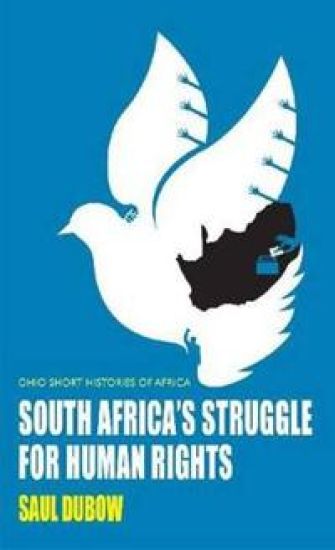
South Africa's Struggle for Human Rights

South Africa's Struggle for Human Rights

Saul Dubow

Ohio University Press
2012
pokkari
The human rights movement in South Africa's transition to a postapartheid democracy has been widely celebrated as a triumph for global human rights. It was a key aspect of the political transition, often referred to as a miracle, which brought majority rule and democracy to South Africa. The country's new constitution, its Truth and Reconciliation Commission, and the moral authority of Nelson Mandela stand as exemplary proof of this achievement. Yet, less than a generation after the achievement of freedom, the status of human rights and constitutionalism in South Africa is uncertain. In government the ANC has displayed an inconsistent attitude to the protection, and advancement, of hard-won freedoms and rights, and it is not at all clear that a broader civic and political consciousness of the importance of rights is rooting itself more widely in popular culture.
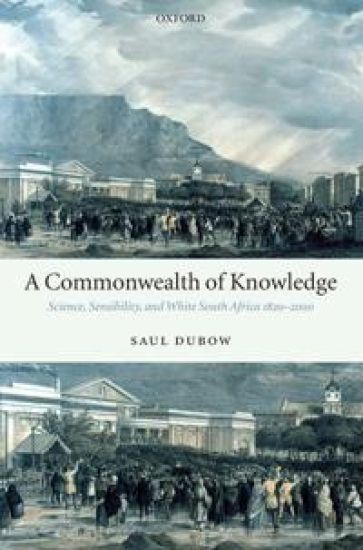
A Commonwealth of Knowledge

A Commonwealth of Knowledge

Saul Dubow

Oxford University Press
2006
sidottu
A Commonwealth of Knowledge addresses the relationship between social and scientific thought, colonial identity, and political power in nineteenth- and twentieth-century South Africa. It hinges on the tension between colonial knowledge, conceived of as a universal, modernizing force, and its realization in the context of a society divided along complex ethnic and racial fault-lines. By means of detailed analysis of colonial cultures, literary and scientific institutions, and expert historical thinking about South Africa and its peoples, it demonstrates the ways in which the cultivation of knowledge has served to support white political ascendancy and claims to nationhood. In a sustained commentary on modern South African historiography, the significance of `broad' South Africanism - a political tradition designed to transcend differences between white English- and Afrikaans-speakers - is emphasized. A Commonwealth of Knowledge also engages with wider comparative debates. These include the nature of imperial and colonial knowledge systems; the role of intellectual ideas and concepts in constituting ethnic, racial, and regional identities; the dissemination of ideas between imperial metropole and colonial periphery; the emergence of amateur and professional intellectual communities; and the encounter between imperial and indigenous or local knowledge systems. The book has broad scope. It opens with a discussion of civic institutions (eg. museums, libraries, botanical gardens and scientific societies), and assesses their role in creating a distinctive sense of Cape colonial identity; the book goes on to discuss the ways in which scientific and other forms of knowledge contributed to the development of a capacious South Africanist patriotism compatible with continued membership of the British Commonwealth; it concludes with reflections on the techno-nationalism of the apartheid state and situates contemporary concerns like the `African Renaissance', and responses to HIV/AIDS, in broad historical context.
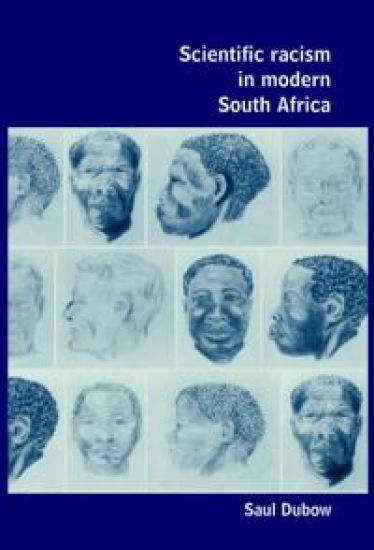
Scientific Racism in Modern South Africa

Scientific Racism in Modern South Africa

Saul Dubow

Cambridge University Press
1995
sidottu
This is the first full-length study of the history of intellectual and scientific racism in modern South Africa. Ranging broadly across disciplines in the social sciences, sciences and humanities, it charts the rise of scientific racism during the late nineteenth century and the subsequent decline of biological determinism from the mid-twentieth century, and considers the complex relationship between theories of essential racial difference and the political rise of segregation and apartheid. Saul Dubow draws extensively on comparable studies of intellectual racism in Europe and the United States to demonstrate the selective absorption of widely prevalent conceptions of racial difference in the particular historical context of South Africa, and the issues he addresses are of relevance to both Africanist and international students of racism and race relations.
Scientific Racism in Modern South Africa

Scientific Racism in Modern South Africa

Saul Dubow

Cambridge University Press
1995
pokkari
This is the first full-length study of the history of intellectual and scientific racism in modern South Africa. Ranging broadly across disciplines in the social sciences, sciences and humanities, it charts the rise of scientific racism during the late nineteenth century and the subsequent decline of biological determinism from the mid-twentieth century, and considers the complex relationship between theories of essential racial difference and the political rise of segregation and apartheid. Saul Dubow draws extensively on comparable studies of intellectual racism in Europe and the United States to demonstrate the selective absorption of widely prevalent conceptions of racial difference in the particular historical context of South Africa, and the issues he addresses are of relevance to both Africanist and international students of racism and race relations.