Kirjailija
Scot McKnight
Kirjat ja teokset yhdessä paikassa: 113 kirjaa, julkaisuja vuosilta 1996–2027, suosituimpiin kuuluu Mark. Vertaile teosten hintoja ja tarkista saatavuus suomalaisista kirjakaupoista.
113 kirjaa
Kirjojen julkaisuvuodet: 1996–2027.
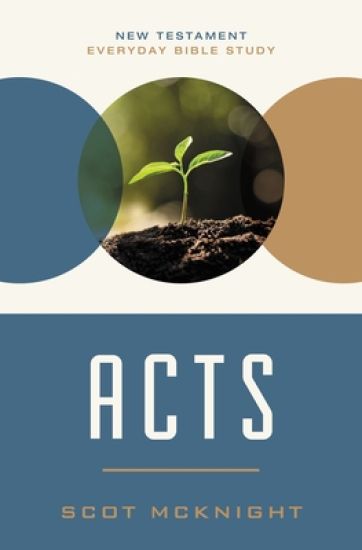
Become a daily Bible reader, attentive to the mind of God." Scot McKnight is one of my absolute favorite New Testament scholars and his Everyday Bible Study series is akin to Einstein creating a user-friendly version of the Theory of Relativity!"—Lisa Harper, award-winning author and Bible teacherIn the New Testament Everyday Bible Study Series, widely respected biblical scholar Scot McKnight reveals the newness and activeness of God's Word as it works in our everyday lives. His unique approach to Bible study combines sound theology with relevant pastoral wisdom. Each volume of this series provides:Original Meaning: Brief, precise expositions of the biblical text and offers a clear focus for the central message of each passage. Fresh Interpretation: Brings the passage alive with fresh images and what it means to follow King Jesus. Practical Application: Biblical connections and questions for reflection and application for each passage. Ideal for personal reflection or group study, Acts will help you see God in the biblical context so you can hear from God in your context. Luke's account of the early church in the book of Acts shines a light on our purpose today. Scot McKnight shows how we are called by God to participate in God's mission in the world to redeem it through Jesus Christ. He'll walk you and your group through Acts with Scripture passages (sometimes translated from the original by McKnight himself), reflection questions, pastoral insights, and ideas for putting God’s words into action.

In My Journey into a Peace Ethic, Scot McKnight sketches a peace ethic, or a peace witness, that embraces the embodied self-denial of Jesus to the point of the cross, which through the resurrection is vindicated by God. As such, a peace ethic volitionally and communally participates in the cruciform pattern of the life of Jesus. Through the power of God's grace and the indwelling Spirit of God, the participant in the way of Jesus is transformed into a Christoform life. A peace ethic is a lived theology whose discerning witness transcends the specific principles and ideas of that theology. In the My Theology series, the world's leading Christian thinkers explain some of the principal tenets of their theological beliefs in concise, pocket-sized books.
James and Galatians
Scot McKnight
HarperChristian Resources
2022
nidottu
Halvin toimitettuna 20,20 €
Become a daily Bible reader, attentive to the mind of God." Scot McKnight is one of my absolute favorite New Testament scholars and his Everyday Bible Study series is akin to Einstein creating a user-friendly version of the Theory of Relativity!"—Lisa Harper, award-winning author and Bible teacherIn the New Testament Everyday Bible Study Series, widely respected biblical scholar Scot McKnight reveals the newness and activeness of God's Word as it works in our everyday lives. His unique approach to Bible study combines sound theology with relevant pastoral wisdom. Each volume of this series provides:Original Meaning: Brief, precise expositions of the biblical text and offers a clear focus for the central message of each passage. Fresh Interpretation: Brings the passage alive with fresh images and what it means to follow King Jesus. Practical Application: Biblical connections and questions for reflection and application for each passage. Ideal for personal reflection or group study, James and Galatians will help you see God in the biblical context so you can hear from God in your context. The letters of James and Galatians both speak words of life to believers in the first century and in the twenty-first century:James offers us practical and relevant wisdom about the speech we use (especially considering modern means of communication), the trials we face, and the specific dangers of wealth. Galatians reminds us of the total sufficiency of Jesus in securing our salvation, and of the leadership of the Holy Spirit for living out our faith. Exploring the links between the time these words were written and our own times, Scot McKnight uncovers the enduring relevance and importance of these two letters for our lives today. He'll walk you and your group through both letters with Scripture passages (sometimes translated from the original by McKnight himself), reflection questions, pastoral insights, and ideas for putting God's words into action.
Divine Violence and the Character of God
Claude F Mariottini; Scot McKnight
Wipf Stock Publishers
2022
sidottu
At the start of Holy Week, tears streamed down Jesus' face as he cried out, "If only you knew the things that make for peace." From that moment, until a week later when he triumphantly declared, "Peace be with you," Jesus spent each day confronting injustice, calling out oppressors and contending for peace. But what ifdespite all our familiarity with the events of Holy Weekwe still don't know how Jesus makes peace? And what ifdespite clinging to the cross of Christ for our salvationwe've actually embraced a different approach to peacemaking? One that justifies killing enemies. One whose methods include nailing criminals to crosses. We desperately need to recover the radical vision of peacemaking that Jesus embodied throughout Holy Week. And we urgently need to be trained in his way of making peace. So, come. Let's journey together day-by-day through Jesus' final week and discover anew why he is called the Prince of Peace. Read less
Divine Violence and the Character of God
Claude F Mariottini; Scot McKnight
Wipf Stock Publishers
2022
pokkari
There is much violence in the Old Testament, both human and divine. Christians and non-Christians react differently to what they read about the God of the Old Testament. Some people are so affected by the violence found in the Old Testament that they give up on God, stop going to church and reading the Bible, and eventually lose their faith. Others are offended by divine violence and seek to find an alternative explanation for the violent acts of God in the Old Testament. A popular alternative in the twenty-first century is to return to the second century and adopt some form of Marcionism and make the God of the Old Testament to be a different God from the God revealed by Christ in the New Testament. The purpose of this book is not a defense of God and his use of violence. The author seeks to understand why God acted the way he did and to understand the reason for divine violence in the Old Testament. Yahweh did use violence in his work of reconciliation. However, the use of violence was necessary when everything else failed. Israel provoked God to anger. When God brought judgment upon his people, he did so with tears in his eyes.
Aprende la retadora pero importante tarea de transportar el mensaje antiguo de la Palabra de Dios a un contexto moderno y claro, utilizando Los Comentarios B blicos con aplicaci n NVI. Estos comentarios adem s de enfocarse en la aplicaci n de un pasaje, tambi n nos permite pensar en el proceso por el cual se desarrolla un texto en su sentido original hasta llegar a su significado contempor neo. Son verdaderos comentarios, no exposiciones populares. Siendo obras de referencia y no de literatura devocional. En cada comentario encontrar s: El significado del texto b blico en su contexto del primer siglo (Sentido Original)La conexi n entre el contexto original de la Biblia y su aplicaci n contempor neo (Construyendo Puentes)La aplicaci n de un mensaje b blico contempor neo con el mismo poder que fue escrito en el pasado. NVI Application Commentary: 1 PeterLearn the exciting but important task of translating the ancient message of God's Word into a clear modern context using the NIV Bible Commentaries with application. These commentaries not only focus on the application of a passage, but also allow us to think about the process by which a text develops from its original meaning to its contemporary sense. These are true commentaries, not popular expositions. Being works of reference and not devotional literature. In each commentary you will find: The meaning of the biblical text in its first century context (Original Meaning). The connection between the original context of the Bible and its contemporary application (Building Bridges). The application of a contemporary biblical message with the same power as it was written in the past.
Aprende la retadora pero importante tarea de transportar el mensaje antiguo de la Palabra de Dios a un contexto moderno y claro, utilizando Los Comentarios B blicos con aplicaci n NVI. Estos comentarios adem s de enfocarse en la aplicaci n de un pasaje, tambi n nos permite pensar en el proceso por el cual se desarrolla un texto en su sentido original hasta llegar a su significado contempor neo. Son verdaderos comentarios, no exposiciones populares. Siendo obras de referencia y no de literatura devocional. En cada comentario encontrar s: El significado del texto b blico en su contexto del primer siglo (Sentido Original)La conexi n entre el contexto original de la Biblia y su aplicaci n contempor neo (Construyendo Puentes)La aplicaci n de un mensaje b blico contempor neo con el mismo poder que fue escrito en el pasado. NVI Application Commentary: GalatiansLearn the exciting but important task of translating the ancient message of God's Word into a clear modern context using the NIV Bible Commentaries with application. These commentaries not only focus on the application of a passage, but also allow us to think about the process by which a text develops from its original meaning to its contemporary sense. These are true commentaries, not popular expositions. Being works of reference and not devotional literature. In each commentary you will find: The meaning of the biblical text in its first century context (Original Meaning). The connection between the original context of the Bible and its contemporary application (Building Bridges). The application of a contemporary biblical message with the same power as it was written in the past.
Five Things Theologians Wish Biblical Scholars Knew
Hans Boersma; Scot McKnight
IVP Academic
2021
nidottu
The disciplines of theology and biblical studies should serve each other, and they should serve both the church and the academy together. But the relationship between them is often marked by misunderstandings, methodological differences, and cross-discipline tension. Theologian Hans Boersma here highlights five things he wishes biblical scholars knew about theology. In a companion volume, biblical scholar Scot McKnight reflects on five things he wishes theologians knew about biblical studies. With an irenic spirit as well as honesty about differences that remain, Boersma and McKnight seek to foster understanding between their disciplines through these books so they might once again collaborate with one another.
Five Things Biblical Scholars Wish Theologians Knew
Scot McKnight; Hans Boersma
IVP Academic
2021
nidottu
The disciplines of biblical studies and theology should serve each other, and they should serve both the church and the academy together. But the relationship between them is often marked by misunderstandings, methodological differences, and cross-discipline tension. New Testament scholar Scot McKnight here highlights five things he wishes theologians knew about biblical studies. In a companion volume, theologian Hans Boersma reflects on five things he wishes biblical scholars knew about theology. With an irenic spirit as well as honesty about differences that remain, McKnight and Boersma seek to foster understanding between their disciplines through these books so they might once again collaborate with one another.
To read Romans from beginning to end, from letter opening to final doxology, is to retrace the steps of Paul. To read Romans front to back was what Paul certainly intended. But to read Romans forward may have kept the full message of Romans from being perceived. Reading forward has led readers to classify Romans as abstract and systematic theology, as a letter unstained by real pastoral concerns. But what if a different strategy were adopted? Could it be that the secret to understanding the relationship between theology and life, the key to unlocking Romans, is to begin at the letter's end? Scot McKnight does exactly this in Reading Romans Backwards. McKnight begins with Romans 12–16, foregrounding the problems that beleaguered the house churches in Rome. Beginning with the end places readers right in the middle of a community deeply divided between the strong and the weak, each side dug in on their position. The strong assert social power and privilege, while the weak claim an elected advantage in Israel's history. Continuing to work in reverse, McKnight unpacks the big themes of Romans 9–11-God's unfailing, but always surprising, purposes and the future of Israel-to reveal Paul's specific and pastoral message for both the weak and the strong in Rome. Finally, McKnight shows how the widely regarded "universal" sinfulness of Romans 1-4, which is so often read as simply an abstract soteriological scheme, applies to a particular rhetorical character's sinfulness and has a polemical challenge. Romans 5-8 equally levels the ground with the assertion that both groups, once trapped in a world controlled by sin, flesh, and systemic evil, can now live a life in the Spirit. In Paul's letter, no one gets off the hook but everyone is offered God's grace. Reading Romans Backwards places lived theology in the front room of every Roman house church. It focuses all of Romans-Paul's apostleship, God's faithfulness, and Christ's transformation of humanity-on achieving grace and peace among all people, both strong and weak. McKnight shows that Paul's letter to the Romans offers a sustained lesson on peace, teaching applicable to all divided churches, ancient or modern.
Perspectives on Paul – Five Views
Scot Mcknight; B. J. Oropeza; Dennis Edwards
Baker Academic, Div of Baker Publishing Group
2020
nidottu
This five-views work brings together an all-star lineup of Pauline scholars to offer a constructive, interdenominational, up-to-date conversation on key issues of Pauline theology. The editors begin with an informative recent history of biblical tradition related to the perspectives on Paul. John M. G. Barclay, A. Andrew Das, James D. G. Dunn, Brant Pitre, and Magnus Zetterholm then discuss how to interpret Paul's writings and theology, especially the apostle's view of salvation. The book concludes with an assessment of the perspectives from a pastoral point of view by Dennis Edwards.
This book examines conversion stories as told by people who have actually undergone a conversion experience, including experiences of apostasy. The stories reveal that there is not just one "conversion story." Scot McKnight and Hauna Ondrey show that "conversion theory" helps explain why some people walk away from one religion, often to another, very different religion. The book confirms the usefulness--particularly for pastors, rabbis, and priests, and university and college teachers--of applying conversion theory to specific groups. However, the book's sensitive detailing of the stories themselves makes conversion more than a theoretical occurrence; it makes the immediacy, and often the difficulty, of conversion both real and moving.
Analog Church – Why We Need Real People, Places, and Things in the Digital Age
Jay Y. Kim; Scot McKnight
Inter-Varsity Press,US
2020
nidottu
Outreach Resource of the Year The Gospel Coalition Book Award What does it mean to be an analog church in a digital age? In recent decades the digital world has taken over our society at nearly every level, and the church has increasingly followed suit—often in ways we're not fully aware of. But as even the culture at large begins to reckon with the limits of a digital world, it's time for the church to take stock. Are online churches, video venues, and brighter lights truly the future? What about the digital age's effect on discipleship, community, and the Bible? As a pastor in Silicon Valley, Jay Kim has experienced the digital church in all its splendor. In Analog Church, he grapples with the ramifications of a digital church, from our worship and experience of Christian community to the way we engage Scripture and sacrament. Could it be that in our efforts to stay relevant in our digital age, we've begun to give away the very thing that our age most desperately needs: transcendence? Could it be that the best way to reach new generations is in fact found in a more timeless path? Could it be that at its heart, the church has really been analog all along?
The State of New Testament Studies – A Survey of Recent Research
Scot Mcknight; Nijay K. Gupta
Baker Academic, Div of Baker Publishing Group
2019
nidottu
This book surveys the current landscape of New Testament studies, offering readers a concise guide to contemporary discussions. Bringing together a diverse group of experts, it covers research on the most important issues in New Testament studies, including new discipline areas, making it an ideal supplemental textbook for a variety of courses on the New Testament. Michael Bird, David Capes, Greg Carey, Lynn Cohick, Dennis Edwards, Michael Gorman, and Abson Joseph are among the contributors.
Pastor Paul – Nurturing a Culture of Christoformity in the Church
Scot McKnight
Brazos Press, Div of Baker Publishing Group
2019
sidottu
Being a pastor is a complicated calling. Pastors are often pulled in multiple directions and must "become all things to all people" (1 Cor. 9:22). What does the New Testament say (or not say) about the pastoral calling? And what can we learn about it from the apostle Paul? According to popular New Testament scholar Scot McKnight, pastoring must begin first and foremost with spiritual formation, which plays a vital role in the life and ministry of the pastor. As leaders, pastors both create and nurture culture in a church. The biblical vision for that culture is Christoformity, or Christlikeness. Grounding pastoral ministry in the pastoral praxis of the apostle Paul, McKnight shows that nurturing Christoformity was at the heart of the Pauline mission. The pastor's central calling, then, is to mediate Christ in everything. McKnight explores seven dimensions that illustrate this concept--friendship, siblings, generosity, storytelling, witness, subverting the world, and wisdom--as he calls pastors to be conformed to Christ and to nurture a culture of Christoformity in their churches.
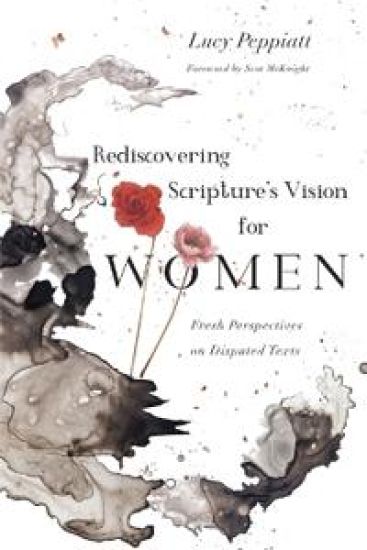
Rediscovering Scripture`s Vision for Women – Fresh Perspectives on Disputed Texts
Lucy Peppiatt; Scot McKnight
IVP Academic
2019
nidottu
IVP Readers' Choice Award Does God call women to serve as equal partners in marriage and as leaders in the church? The answer to this straightforward question is deeply contested. Into the fray, Lucy Peppiatt offers her work on interpretation of the Bible and Christian practice. With careful exegetical work, Peppiatt considers relevant passages in Ephesians, Colossians, 1 Peter, 1 Timothy, and 1 Corinthians. There she finds a story of God releasing women alongside men into all forms of ministry, leadership, work, and service on the basis of character and gifting, rather than biological sex. Those who see the overturning of male-dominated hierarchy in the Scriptures, she argues, are truly rediscovering an ancient message—a message distorted by those who assumed that a patriarchal world, which they sometimes saw reflected in the Bible, was the one God had ordained.
“Make sure this new guide for living is on your shelf.” —Max Lucado This 15th anniversary of the bestselling classic The Jesus Creed invites us to rediscover the core of biblical Christianity: Loving God and Loving Others. Memorizing the Great Commandment is one thing, but living by it is quite another. One of today’s most engaging and sought-after Biblical scholars, Scot McKnight demystifies this ancient creed and reveals its power to transform the lives of believers today. He explores how Jesus connected the ancient Jewish commandments to “Love the Lord your God with all your heart, soul and strength” and to “Love your neighbor as yourself” to become the foundation of his ministry. In The Jesus Creed, his seminal work, Scot invites followers of Jesus to step back into the world in which Jesus lived and to hear his core teachings like we’ve never heard them before. And just like his disciples, we discover how praying the Jesus Creed will close the gap between the people we are right now and the people God created us to be. In The Jesus Creed, you will: Learn about the identities, hopes and struggles of the people closest to Jesus – Joseph and Mary, John the Baptist, Peter, and John Discover how Jesus's radical acts of compassion restore those who are marginalized, oppressed, or grieving How the Jesus Creed can shape society to grow in justice, faith, and joy How the Jesus Creed deepens our love for Jesus, leading to healing, forgiveness and wholeness in our personal lives