Kirjojen hintavertailu – 12 903 724 kirjaa ja 27 kauppaa

Kirjailija

Scott A. Silverstone

Kirjat ja teokset yhdessä paikassa: 4 kirjaa, julkaisuja vuosilta 2004–2025, suosituimpiin kuuluu Understanding Near Crises and Escalation in World Politics. Vertaile teosten hintoja ja tarkista saatavuus suomalaisista kirjakaupoista.

4 kirjaa

Kirjojen julkaisuvuodet: 2004–2025.

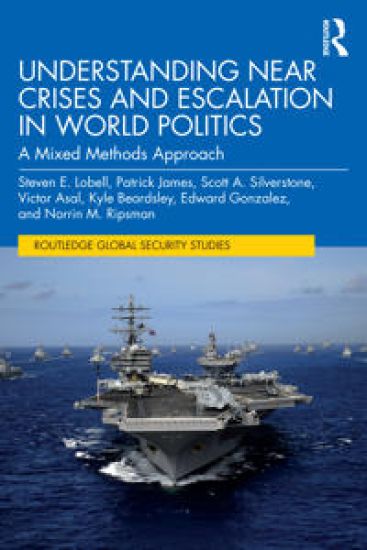
Understanding Near Crises and Escalation in World Politics

Understanding Near Crises and Escalation in World Politics

Steven E. Lobell; Patrick James; Scott A. Silverstone; Victor Asal; Kyle Beardsley; Edward Gonzalez; Norrin M. Ripsman

TAYLOR FRANCIS LTD
2025
nidottu

Halvin toimitettuna 64,60 €

This book introduces the near crisis phase of conflict and escalation. These time-sensitive disputes between states, and even with violent non-state actors, do not involve significant risk of military escalation, at least in the moment. Investigating how and why some near crises escalate, while others do not, requires an explanation of the different dynamics of international disputes and the policy tools that states and international institutions can employ. We ask an expanded set of questions about specific cases and general patterns of conflict behavior, such as: why did Israeli leaders respond to Hezbollah’s 2006 cross-border raid with escalation, resulting in the Second Lebanon War, while in previous instances the Israelis limited their retaliation? Why didn’t the 2015 Iranian Ballistic Missile Test or the 1995 Norwegian Black Brant Missile Launch escalate, while the 2009 North Korea Missile Movement and the 1995 Taiwan Straits dispute tipped into a full-blown crisis, and why did the 2008 Russia-Georgia conflict escalate from near crisis to war? We use primary sources and newly created data on near crises to answer these questions and others. The overall conclusion is that an ounce of prevention at the near crisis phase is worth a pound of cure in averting a full-blown crisis or war. This book will be of great interest to students of security studies, conflict studies, foreign policy, and international relations.

Understanding Near Crises and Escalation in World Politics

Understanding Near Crises and Escalation in World Politics

Steven E. Lobell; Patrick James; Scott A. Silverstone; Victor Asal; Kyle Beardsley; Edward Gonzalez; Norrin M. Ripsman

TAYLOR FRANCIS LTD
2025
sidottu
This book introduces the near crisis phase of conflict and escalation. These time-sensitive disputes between states, and even with violent non-state actors, do not involve significant risk of military escalation, at least in the moment. Investigating how and why some near crises escalate, while others do not, requires an explanation of the different dynamics of international disputes and the policy tools that states and international institutions can employ. We ask an expanded set of questions about specific cases and general patterns of conflict behavior, such as: why did Israeli leaders respond to Hezbollah’s 2006 cross-border raid with escalation, resulting in the Second Lebanon War, while in previous instances the Israelis limited their retaliation? Why didn’t the 2015 Iranian Ballistic Missile Test or the 1995 Norwegian Black Brant Missile Launch escalate, while the 2009 North Korea Missile Movement and the 1995 Taiwan Straits dispute tipped into a full-blown crisis, and why did the 2008 Russia-Georgia conflict escalate from near crisis to war? We use primary sources and newly created data on near crises to answer these questions and others. The overall conclusion is that an ounce of prevention at the near crisis phase is worth a pound of cure in averting a full-blown crisis or war. This book will be of great interest to students of security studies, conflict studies, foreign policy, and international relations.
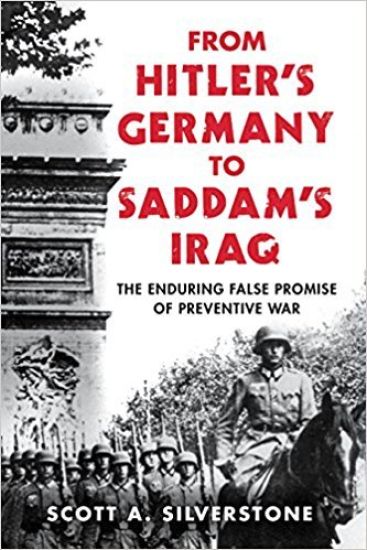
From Hitler's Germany to Saddam's Iraq

From Hitler's Germany to Saddam's Iraq

Scott A. Silverstone

Rowman Littlefield
2018
sidottu
This book boldly challenges conventional wisdom about the value of preventive war. Beginning with the rise of German power and the French and British response to the Rhineland crisis leading to World War II, Scott Silverstone overturns the common impulse to point an accusing finger at British leadership for its alleged naïveté, willful blindness, or outright cowardice. Arguing against the belief that Britain could have contained Germany and avoided war if it had used force when Hitler remilitarized the Rhineland, the author uses this dramatic event to wrestle with a general strategic problem that has broad relevance for our current foreign policy dilemmas. Silverstone argues that the Rhineland crisis is a critical case for studying a central dynamic of world history—power shifts among states—and the preventive war temptation that power shifts frequently produce. There has been surging interest in the idea of preventive war, an interest stimulated by the Bush administration’s articulation of the “preemption doctrine” in 2002 and the disastrous invasion of Iraq in 2003, and by frustration over the difficulty of preventing the proliferation of nuclear weapons by such states as North Korea and Iran. Clarifying the way we think about preventive war, the author analyzes the enduring strategic flaws in preventive war that must inform how political leaders and the public think about this option as a means of dealing with shifting threats in the modern world. Offering a radically conservative argument for when to wage war, this persuasive book will be essential reading for policy makers and concerned citizens alike.
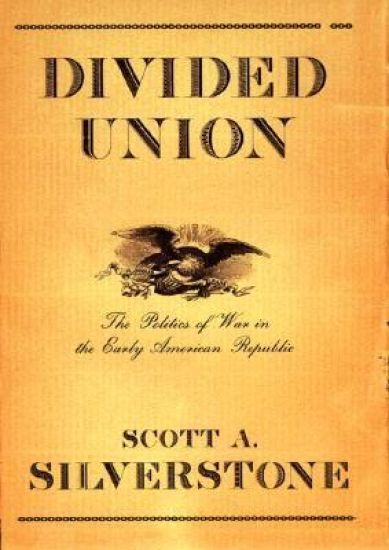
Divided Union

Divided Union

Scott A. Silverstone

Cornell University Press
2004
sidottu
Between the Revolutionary War and the Civil War, the United States was embroiled in competitive inter-state politics. Although it did not directly involve itself in European affairs, the United States did engage regularly in dangerous struggles with other states and with colonial powers with territory on the American periphery. Aside from the War of 1812, the Oregon Crisis, and the Mexican War, other "near misses" included here—disputes of 1807 and 1809 with Britain, with Spain over East Florida in 1811–13, with Mexico in 1853, and disputes with Spain over Cuba in 1853–55 and with Mexico in 1858–1860—have been ignored in the democratic peace literature. Scott A. Silverstone finds these cases particularly useful for testing alternative explanations of constraints on armed conflict, because the United States backed down each time, allowing each crisis to pass short of its full potential for violence. Silverstone builds on a nascent theory of institutional constraints on the use of force presented in the Federalist Papers to explain American attitudes toward participation in conflicts. He argues that the federal character of American democracy that emerged from the founding and the large size of the new American republic provide the keys to understanding its decision-making processes. Divided Union shows how the institutional features of federal union and the diverse social, economic, and security interests within this geographically extended republic created political conditions that impeded the use of force by the United States before the Civil War.