Kirjojen hintavertailu – 12 903 735 kirjaa ja 27 kauppaa

Kirjailija

Scott Kim

Kirjat ja teokset yhdessä paikassa: 6 kirjaa, julkaisuja vuosilta 2010–2025, suosituimpiin kuuluu Ambigrammia. Vertaile teosten hintoja ja tarkista saatavuus suomalaisista kirjakaupoista.

6 kirjaa

Kirjojen julkaisuvuodet: 2010–2025.

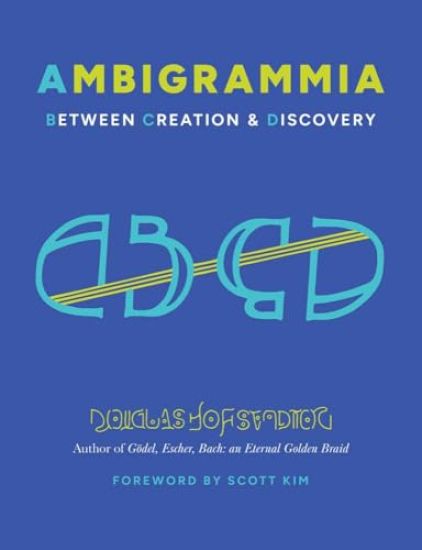
Ambigrammia

Ambigrammia

Douglas Hofstadter; Scott Kim

YALE UNIVERSITY PRESS
2025
sidottu

Halvin toimitettuna 38,70 €

On the history and creation of ambigrams, by a pioneer of the practice In the 1960s and 1970s, a trio of imaginative individuals independently discovered that ordinary words and phrases could be given double readings by playfully distorting the letters composing them. These doubly readable words and phrases, if designed by an artistic eye and hand, could possess great visual beauty. Douglas Hofstadter named such calligraphic creations “ambigrams,” and over the decades he has designed thousands of them, as have his friends Scott Kim and John Langdon, the other main pioneers of the subtle art form he calls ambigrammia. ABCD (Hofstadter’s informal title for this book) offers a sampler of hundreds of Hofstadter’s ambigrams, along with a few dozen by Kim, Langdon, and others. With deep links to cognitive science, ABCD exhibits ambigrams of many types and shows how ambigrammia can be extended in surprising directions. All along the way, Hofstadter discusses creativity and its alter ego, “discoverativity,” revealing how the “pocket sized creativity puzzles” that constitute the art form are pervaded by these complementary qualities. ABCD is also notably autobiographical: Hofstadter vividly recounts how his life has been intimately intertwined with the creation/discovery of ambigrams in many countries and in many languages.
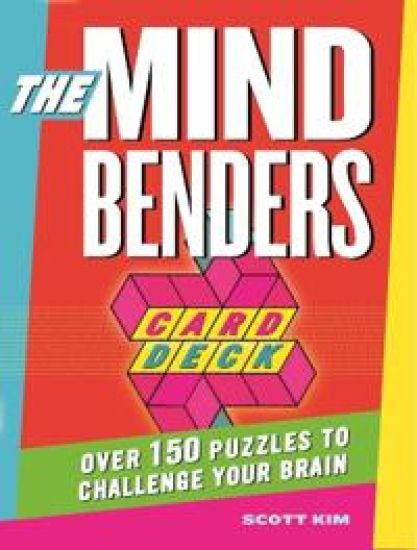
The Mind Benders Card Deck

The Mind Benders Card Deck

Scott Kim

WORKMAN PUBLISHING
2023
muu
Smart, addictive, challenging, fun, and good for the brain-here, in an irresistible card deck, are more than 150 truly satisfying, mind-expanding, full-colour puzzles. It's like salted peanuts for the puzzle aficionado and boot camp for the neophyte who wants to give his or her mind a workout. Created by puzzle master Scott Kim-a contributor to Games and Discover magazines-The Mind Benders Card Deck is a cornucopia of spatial puzzles, number challenges, wordplay, visual conundrums, and more. The puzzles are categorized by type but distributed in a mixed fashion (i.e., a word puzzle next to a number puzzle next to a visual stumper). Readers can move card by card, working different parts of the brain-or easily find their favourite type of puzzle, going from easy to challenging. Test your knack for patterns with Dot Matrix. Put the pieces together in Assemblies. Deduce the secret word in Letter Swap, or untangle the mangled phrases of Lost in Translation. Plus discover cool twists on Sudoku, far-out ambigrams, Wordezoids, mazes, and number crunches. Answers are included upside-down at the bottom of each card.
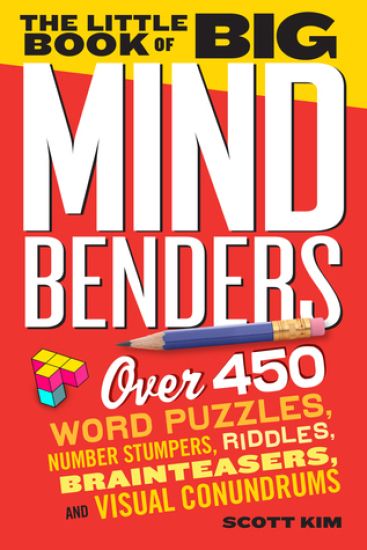
The Little Book of Big Mind Benders

The Little Book of Big Mind Benders

Scott Kim

Workman Publishing
2014
pokkari
Smart, addictive, challenging, fun, and good for the brain—here, in the irresistible 4" x 6" games format, are more than 450 truly satisfying, mind-expanding, full-color puzzles. It’s like salted peanuts for the puzzle aficionado and boot camp for the neophyte who wants to give his or her mind a workout. Created by puzzle master Scott Kim—a contributor to Games and Discover magazines—and adapted from the bestselling Amazing Mind Benders Page-A-Day Calendar, The Little Book of Big Mind Benders is a cornucopia of spatial puzzles, number challenges, wordplay, visual conundrums, and more. The puzzles are categorized by type but distributed throughout the book in a mixed fashion (i.e., a word puzzle next to a number puzzle next to a visual stumper). Readers can move page by page, working different parts of the brain—or easily find their favorite type of puzzle, going from easy to challenging. Test your knack for patterns with Dot Matrix. Put the pieces together in Assemblies. Deduce the secret word in Letter Swap, or untangle the mangled phrases of Lost in Translation. Plus discover cool twists on Sudoku, far-out ambigrams, Wordezoids, mazes, and number crunches. Answers are included in the back of the book.
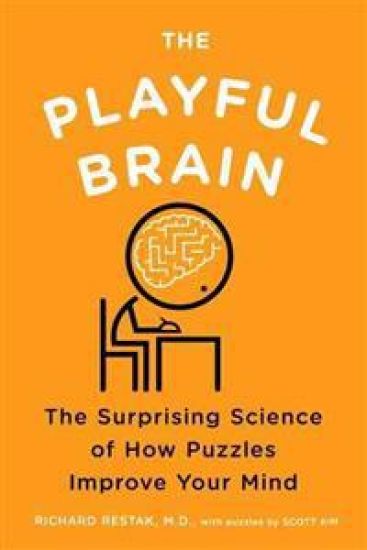
The Playful Brain: The Surprising Science of How Puzzles Improve Your Mind
This is your brain on puzzles. Everyone knows that puzzles can improve your brain function. Now a leading neurosurgeon and a noted puzzle designer team up to reveal the fascinating science behind it. Packed with illuminating insights and dozens of puzzles, this is both a lively book of popular science and an engaging set of exercises in developing a wide array of thinking and memory skills.
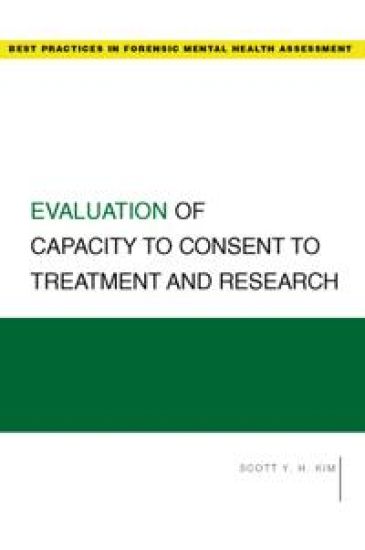
Evaluation of Capacity to Consent to Treatment and Research
Forensic mental health assessment (FMHA) has grown into a specialization informed by research and professional guidelines. This series presents up-to-date information on the most important and frequently conducted forms of FMHA. The 19 topical volumes address best approaches to practice for particular types of evaluation in the criminal, civil, and juvenile/family areas. Each volume contains a thorough discussion of the relevant legal and psychological concepts, followed by a step-by-step description of the assessment process from preparing for the evaluation to writing the report and testifying in court. Volumes include the following helpful features: BL Boxes that zero in on important information for use in evaluations BL Tips for best practice and cautions against common pitfalls BL Highlighting of relevant case law and statutes BL Separate list of assessment tools for easy reference BL Helpful glossary of key terms for the particular topic In making recommendations for best practice, authors consider empirical support, legal relevance, and consistency with ethical and professional standards. These volumes offer invaluable guidance for anyone involved in conducting or using forensic evaluations. Patients provide valid informed consent to a treatment or a diagnostic procedure if they have sufficient capacity, have been given appropriate information, and give consent freely without coercion or undue influence. When a patient's capacity for treatment consent is in doubt, a clinician must determine whether the patient indeed has the capacity. This book provides clear, step-by-step information on the evaluation procedure for capacity to consent to both treatment and research.