Kirjojen hintavertailu – 12 903 735 kirjaa ja 27 kauppaa

Kirjailija

Scott Masson

Kirjat ja teokset yhdessä paikassa: 5 kirjaa, julkaisuja vuosilta 2016–2021, suosituimpiin kuuluu Romanticism, Hermeneutics and the Crisis of the Human Sciences. Vertaile teosten hintoja ja tarkista saatavuus suomalaisista kirjakaupoista.

5 kirjaa

Kirjojen julkaisuvuodet: 2016–2021.

Romanticism, Hermeneutics and the Crisis of the Human Sciences
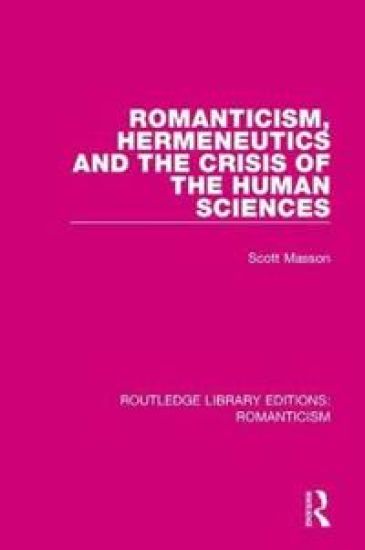
The human sciences established and developed in the nineteenth century have slowly disintegrated. It is an ironic end. It was in the name of the greater legitimacy of more universal psychological criteria that its architects disavowed the traditional theological standard for valuing and evaluating human words and deeds. With hindsight, we can see that universality was indeed gained, but only at the cost of alienating any sense of common legitimacy. Harold Bloom, defending the canon largely in the humanising, 'moral sense' convention of critics operating since Matthew Arnold, has resolutely maintained the common legitimacy of aesthetic value against the claims of particular interest groups. But the very universality attached to aesthetic value is at odds with the world of common sense, and thus lies at the root of the problem. To complicate matters, this universality has been understood as a traditional criterion. A more radical treatment of the subject is needed. This study begins by surveying the field of modern hermeneutics. Noting its repeated crises of self-legitimisation, it traces these to circular beliefs bequeathed by Romanticism that human nature is self-begetting, and can thus be known intimately and autonomously. After providing a historical overview of how human nature had been understood, the focus shifts to the attack in Coleridge's Biographia Literaria on Wordsworth's 1802 Preface to Lyrical Ballads, and to a reading of some key Romantic texts. It reads Coleridge's famous definition of the imagination as an attack on Romantic hermeneutics, rooted in the traditional view that man has been created in Imago Dei.
For Life

For Life

Linda Baartse; Joseph Boot; Scott Masson

Eicc Publications
2018
pokkari
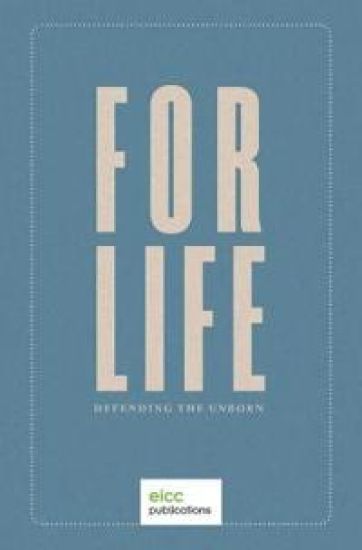
How do we understand and articulate the biblical basis for the pro-life position? How should we respond to the killing of unborn children? The biblical and historical answer to such questions lies in drawing attention to the idolatry which gave rise to our present culture's obsession with death, and demonstrating that life is something rooted in the nature of God, that can only be given or taken on God's authority. This short book is intended to equip Christians with a biblical foundation for why and how to speak up for life, and minister to the vulnerable souls who are considering abortion with compassionate understanding.
Romanticism, Hermeneutics and the Crisis of the Human Sciences
The human sciences established and developed in the nineteenth century have slowly disintegrated. It is an ironic end. It was in the name of the greater legitimacy of more universal psychological criteria that its architects disavowed the traditional theological standard for valuing and evaluating human words and deeds. With hindsight, we can see that universality was indeed gained, but only at the cost of alienating any sense of common legitimacy. Harold Bloom, defending the canon largely in the humanising, 'moral sense' convention of critics operating since Matthew Arnold, has resolutely maintained the common legitimacy of aesthetic value against the claims of particular interest groups. But the very universality attached to aesthetic value is at odds with the world of common sense, and thus lies at the root of the problem. To complicate matters, this universality has been understood as a traditional criterion. A more radical treatment of the subject is needed. This study begins by surveying the field of modern hermeneutics. Noting its repeated crises of self-legitimisation, it traces these to circular beliefs bequeathed by Romanticism that human nature is self-begetting, and can thus be known intimately and autonomously. After providing a historical overview of how human nature had been understood, the focus shifts to the attack in Coleridge's Biographia Literaria on Wordsworth's 1802 Preface to Lyrical Ballads, and to a reading of some key Romantic texts. It reads Coleridge's famous definition of the imagination as an attack on Romantic hermeneutics, rooted in the traditional view that man has been created in Imago Dei.
Romanticism, Hermeneutics and the Crisis of the Human Sciences
First published in 2004. This study begins by surveying the field of modern hermeneutics. Noting its repeated crisis of self-legitimisation, it traces these to circular beliefs bequeathed by Romanticism that human nature is self-begetting, and can thus be known intimately and autonomously. After providing a historical overview of how human nature had been understood, the focus shifts to the attack in Coleridge’s Biographia Literaria on Wordsworth’s 1802 Preface to Lyrical Ballads, and to a reading of some key Romantic texts. It reads Coleridge’s famous definition of the imagination as an attack on Romantic hermeneuticsm, roots in the traditional view that man has been created in Imago Dei. This title will be of interest to students of literature.
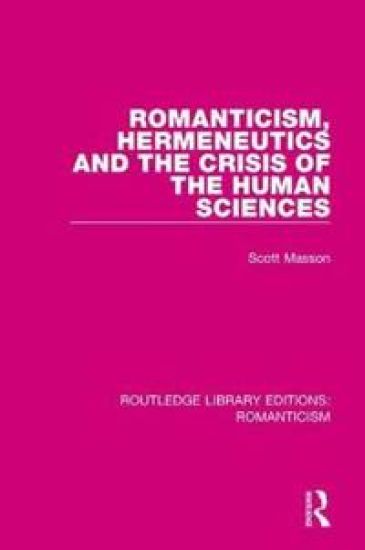
Romanticism, Hermeneutics and the Crisis of the Human Sciences
First published in 2004. This study begins by surveying the field of modern hermeneutics. Noting its repeated crisis of self-legitimisation, it traces these to circular beliefs bequeathed by Romanticism that human nature is self-begetting, and can thus be known intimately and autonomously. After providing a historical overview of how human nature had been understood, the focus shifts to the attack in Coleridge’s Biographia Literaria on Wordsworth’s 1802 Preface to Lyrical Ballads, and to a reading of some key Romantic texts. It reads Coleridge’s famous definition of the imagination as an attack on Romantic hermeneuticsm, roots in the traditional view that man has been created in Imago Dei. This title will be of interest to students of literature.