

Kirjojen hintavertailu – 12 903 733 kirjaa ja 27 kauppaa

Kirjailija

Scott McVay

Kirjat ja teokset yhdessä paikassa: 2 kirjaa, julkaisuja vuosilta 1995–2023, suosituimpiin kuuluu The Biophilia Hypothesis. Vertaile teosten hintoja ja tarkista saatavuus suomalaisista kirjakaupoista.

2 kirjaa

Kirjojen julkaisuvuodet: 1995–2023.

Whale Music

Whale Music

David Rothenberg; Scott McVay

Terra Nova Press
2023
nidottu
The marvelous sonic world of whales, from the perspective of music and science. Whale song is an astonishing world of sound whose existence no one suspected before the 1960s. Its discovery has forced us to confront the possibility of alien intelligence--not in outer space but right here on earth. Thoughtful, richly detailed, and deeply entertaining, Whale Music uses the enigma of whale sounds to open up whales' underwater world of sonic mystery. In observing and talking with leading researchers from around the globe as they attempt to decipher undersea music, Rothenberg tells the story of scientists and musicians confronting an unknown as vast as the ocean itself. His search culminates in a grand attempt to make interspecies music by playing his clarinet with whales in their native habitats, from Russia to Canada to Hawaii. This is a revised edition of Thousand Mile Song, originally published in 2008. The latest advances in cetacean science and interspecies communication have been incorporated into this new edition, along with added photographs and color whale scores.
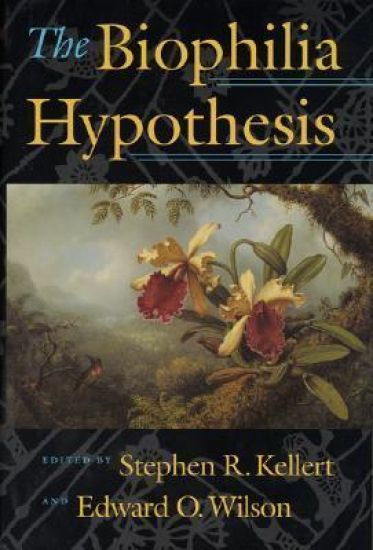
The Biophilia Hypothesis

The Biophilia Hypothesis

Stephen R. Kellert; Edward O. Wilson; Scott McVay

ISLAND PRESS
1995
nidottu

Halvin toimitettuna 48,90 €

"Biophilia" is the term coined by Edward O. Wilson to describe what he believes is humanity's innate affinity for the natural world. In his landmark book Biophilia, he examined how our tendency to focus on life and lifelike processes might be a biologically based need, integral to our development as individuals and as a species. That idea has caught the imagination of diverse thinkers. The Biophilia Hypothesis brings together the views of some of the most creative scientists of our time, each attempting to amplify and refine the concept of biophilia. The variety of perspectives -- psychological, biological, cultural, symbolic, and aesthetic -- frame the theoretical issues by presenting empirical evidence that supports or refutes the hypothesis. Numerous examples illustrate the idea that biophilia and its converse, biophobia, have a genetic component: fear, and even full-blown phobias of snakes and spiders are quick to develop with very little negative reinforcement, while more threatening modern artifacts -- knives, guns, automobiles -- rarely elicit such a response people find trees that are climbable and have a broad, umbrella-like canopy more attractive than trees without these characteristics people would rather look at water, green vegetation, or flowers than built structures of glass and concrete The biophilia hypothesis, if substantiated, provides a powerful argument for the conservation of biological diversity. More important, it implies serious consequences for our well-being as society becomes further estranged from the natural world. Relentless environmental destruction could have a significant impact on our quality of life, not just materially but psychologically and even spiritually.