
Kirjailija
Scott Phillips
Kirjat ja teokset yhdessä paikassa: 25 kirjaa, julkaisuja vuosilta 2001–2026, suosituimpiin kuuluu One Page Investing Plan. Vertaile teosten hintoja ja tarkista saatavuus suomalaisista kirjakaupoista.
25 kirjaa
Kirjojen julkaisuvuodet: 2001–2026.

From the master of Western noir comes a provocatively entertaining crime saga set in the early days of the film industry. This dark historical adventure captures the beginnings of the Hollywood studio system and the "blue movie" industry that grows up alongside it. Los Angeles, 1916: Photographer Bill Ogden has opened a portrait studio in the seedy noir world of early Hollywood, where he is joined by his granddaughter, Flavia--a woman in need of a fresh start after bludgeoning her drunken, abusive husband to death in Wichita. Though his business is legit, Bill finds himself brushing up against the "blue movie" porn industry growing in the shadows of the motion picture mainstream. When a series of grisly murders take place across the city, Bill and his capable granddaughter are pulled into events as tricky and tangled as anything this side of The Big Sleep. We meet dreamers, opportunists, washed-up former stars and starry-eyed newcomers, a cast of unforgettable characters living on the margins looking to make a quick buck, launch a career, or just keep their family together. The Devil Raises His Own is at once a stripped-down noir thriller, and a panoramic look at Los Angeles at the beginning of motion pictures--a Boogie Nights set in the film industry's nascence from one of the best crime novelists working today.
From the author of New York Times Notable book The Ice Harvest, a cult classic of Western Noir set in a 19th century Kansas frontier town rocked by a series of of brutal murders, Introducing photographer and saloon owner Bill Ogden. Perfect for fans of Deadwood and Justified In 1872, Cottonwood, Kansas, is a one-horse speck on the map; a community of run-down farms, dusty roads, and two-bit crooks. Self-educated saloon owner and photographer Bill Ogden looks on his adopted town with an eye to making a profit or getting out. His brains and ambition bring him to the attention of one Marc Leval, a wealthy Chicago developer with big plans for the small town. The advent of the railroad and rumors of a cattle trail turn Cottonwood into a wild and wooly boomtown--and with Leval as a partner, Ogden dreams of bringing civilization to the prairie. But civilizing the Great Plains was never that simple. While many in Cottonwood distrust Leval's motives, and mob violence threatens to derail the town's dreams of greatness, Ogden finds himself dangerously obsessed with Leval's stunningly beautiful wife. Meanwhile, plying its sinister trade unnoticed, an apparently ordinary local farm family quietly butchers traveling salesmen, weary travelers, and other unsuspecting wanderers. In his own inimitable brand of narrative wizardry, Scott Phillips traces the metamorphosis of a frontier town that becomes a lightning rod for sin, corruption, and murder. He also brings to life actual crimes that befell Kansas in the 1870s and 1880s, carried out by a strange clan who popularly became known as the Bloody Benders. Brilliantly written, maliciously fun, and full of many surprises, Cottonwood is historical fiction at its finest.
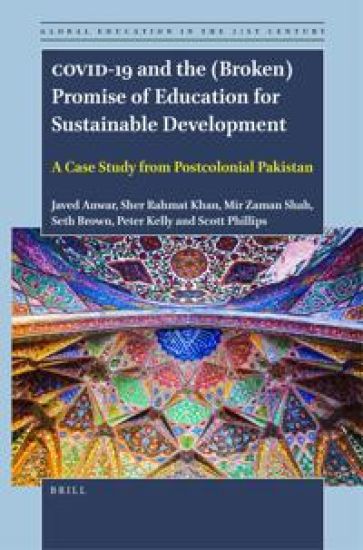
COVID-19 and the (Broken) Promise of Education for Sustainable Development
Javed Anwar; Sher Rahmat Khan; Mir Zaman Shah; Seth Brown; Peter Kelly; Scott Phillips
BRILL
2023
sidottu
The book charts the emergence of the COVID-19 pandemic, and the impact that it has had on the lives of young people and their communities, education systems, the teaching profession, and the responses by governments, NGOs, and donor organisations in Pakistan. Drawing on theories of postcolonialism, feminism, and neoliberal globalisation, the authors explore the development of Pakistan as a postcolonial nation-state, and examine the legacies of colonialism in education systems and policies, teacher education and development. The Pakistani authors bring extensive knowledge and experience to this case study of the ‘broken promise’ of education for sustainable development. This mix of theoretical insight and practical experience promises to produce significant policy and development impact in post-COVID-19 Pakistan, South Asia more broadly, and in other postcolonial development contexts around the world as it develops a critique of the UN SDGs as a global and more local framework for development. UPCOMING: Webinar / Launch 10th of May:COVID-19 and the (broken) promise of education for sustainable development: A case study from postcolonial Pakistan.
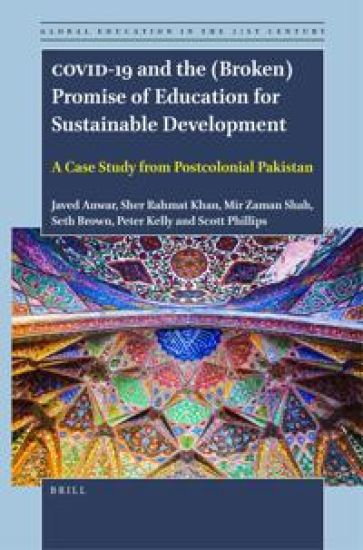
COVID-19 and the (Broken) Promise of Education for Sustainable Development
Javed Anwar; Sher Rahmat Khan; Mir Zaman Shah; Seth Brown; Peter Kelly; Scott Phillips
BRILL
2023
nidottu
The book charts the emergence of the COVID-19 pandemic, and the impact that it has had on the lives of young people and their communities, education systems, the teaching profession, and the responses by governments, NGOs, and donor organisations in Pakistan. Drawing on theories of postcolonialism, feminism, and neoliberal globalisation, the authors explore the development of Pakistan as a postcolonial nation-state, and examine the legacies of colonialism in education systems and policies, teacher education and development. The Pakistani authors bring extensive knowledge and experience to this case study of the ‘broken promise’ of education for sustainable development. This mix of theoretical insight and practical experience promises to produce significant policy and development impact in post-COVID-19 Pakistan, South Asia more broadly, and in other postcolonial development contexts around the world as it develops a critique of the UN SDGs as a global and more local framework for development. UPCOMING: Webinar / Launch 10th of May:COVID-19 and the (broken) promise of education for sustainable development: A case study from postcolonial Pakistan.

Legal decisions continue to mystify: why was this person sentenced to 20 years in prison, but that person to just 10 years for the same crime? Why did one person sue for civil damages, but another let the matter drop? Legal rules are supposed to answer these questions, but their answers are radically incomplete. Wouldn’t it be wonderful to have a theory that predicted and explained legal decisions? Drawing on Donald Black’s theoretical ideas, Geometrical Justice: The Death Penalty in America addresses these issues, focusing specifi cally on who is sentenced to death and executed in the United States. The book explains why some murders are more serious than others and how the social characteristics of defendants, victims, and jurors aff ect case outcomes. Building on the most rigorous data in the field, the authors reveal wide discrepancies in capital punishment – why one person lives, but another person dies. Geometrical Justice will be of interest to those engaged in criminal justice, criminology, and socio- legal studies, as well as students taking courses on sentencing, corrections, and capital punishment.

Legal decisions continue to mystify: why was this person sentenced to 20 years in prison, but that person to just 10 years for the same crime? Why did one person sue for civil damages, but another let the matter drop? Legal rules are supposed to answer these questions, but their answers are radically incomplete. Wouldn’t it be wonderful to have a theory that predicted and explained legal decisions? Drawing on Donald Black’s theoretical ideas, Geometrical Justice: The Death Penalty in America addresses these issues, focusing specifi cally on who is sentenced to death and executed in the United States. The book explains why some murders are more serious than others and how the social characteristics of defendants, victims, and jurors aff ect case outcomes. Building on the most rigorous data in the field, the authors reveal wide discrepancies in capital punishment – why one person lives, but another person dies. Geometrical Justice will be of interest to those engaged in criminal justice, criminology, and socio- legal studies, as well as students taking courses on sentencing, corrections, and capital punishment.
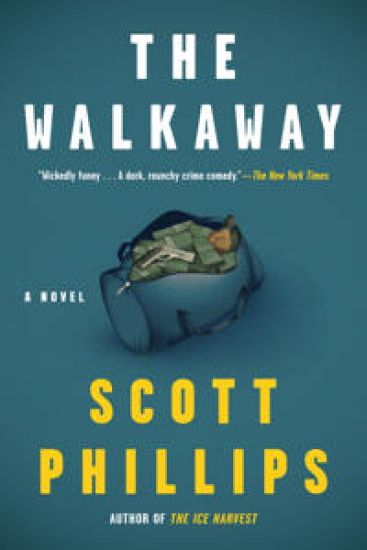
Re-issued by Soho Crime, The Walkaway has the same flair for dark humor and crime noir that heralded his bestselling debut, The Ice Harvest. The crime was unintentional and had no witnesses. The guilty could flee the scene, dispose of the body, keep the cash, and simply walk away. But actions have consequences. And even the most perfectly executed "walkaway" is followed by a shadow . . . On a snowy Christmas morning in 1979, Gunther Fahnstiel, travelling with his wife, accidentally backed his RV over a stranger, killing him instantly. In the poor soul's car was a satchel containing plane tickets, a .22 caliber pistol, a bottle of Johnnie Walker, and more money than Gunther had ever seen in his life. For the debt-ridden old couple, it would indeed be a merry Christmas. But nobody can buy a happy ending. Especially Gunther. Ten years later, under the scorching summer sun, seventy-seven-year-old Gunther walks away from his nursing home and sets off to find the hidden money. Unbeknownst to him, he's followed by a trio of unsavory characters.
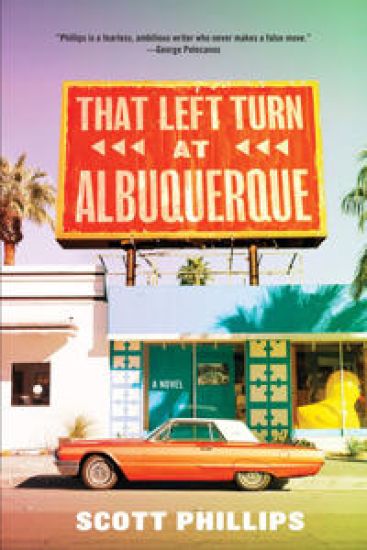
A hardboiled valentine to the Golden State, That Left Turn at Albuquerque marks the return of noir master Scott Phillips. Douglas Rigby, attorney-at-law, is bankrupt. He's just sunk his last $200,000--a clandestine "loan" from his last remaining client, former bigshot TV exec Glenn Haskill--into a cocaine deal gone wrong. The lesson? Never trust anyone else with the dirty work. Desperate to get back on top, Rigby formulates an art forgery scheme involving one of Glenn's priceless paintings, a victimless crime. But for Rigby to pull this one off, he'll need to negotiate a whole cast of players with their own agendas, including his wife, his girlfriend, an embittered art forger, Glenn's resentful nurse, and the man's money-hungry nephew. One misstep, and it all falls apart--will he be able to save his skin? Written with hard-knock sensibility and wicked humor, Scott Phillips's newest novel will cement him as one of the great crime writers of the 21st century.
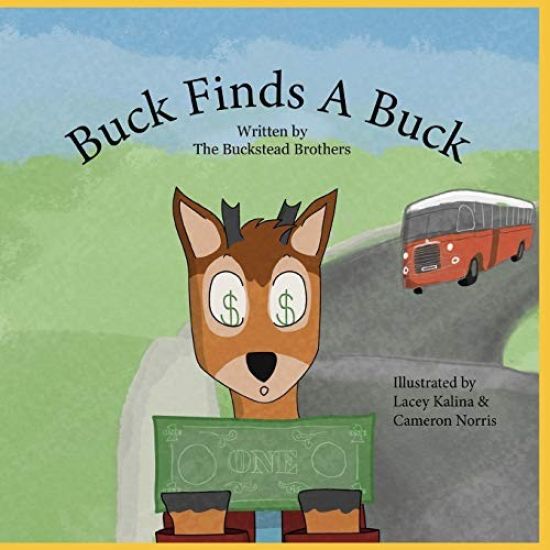
A story about the importance of kindness. While walking to school, Buck sees someone drop a dollar bill on the ground. Buck thinks about taking the dollar and buying something for himself. But then, he decides to do the kind thing and return the dollar.

Dominating the Game: How to prepare students for a high-stakes exam!
Scott Phillips
Wallace S Phillips
2019
nidottu
Do your students underperform on big tests? Are you frustrated because they fail to meet your expectations? Teachers are not taught how to prepare students for major exams. As a result, virtually all teachers use dramatically inefficient and wasteful approaches for test preparation. And these actions are reflected in subpar student scores." Dominating the Game" provides a precise method for preparing students for every major exam. You'll learn to take the variables out of the preparation process and get outstanding results every time. This book outlines a student-friendly test-taking system that yields maximum results. You'll learn to transform students from timid testers to the hardest working kids in school. Testing success is only a few pages away -Easily raise passing rates 10, 15, or 20 points in a single year.-You'll eliminate guesswork with instructions that tell you what to do from the first day of school to the day of the exam.-Even new teachers can use this approach to outscore seasoned veterans.-Turn every student into a testing machine.
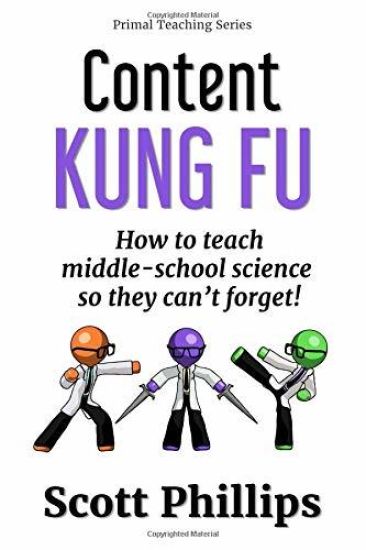
Content Kung Fu: How to teach middle-school science so they can't forget
Scott Phillips
Primal Teaching Books
2018
nidottu
Do your students struggle to remember lessons just days after you taught them? Terrible recall doesn't have to be an epidemic in your class any longer. With Content Kung Fu, you'll learn a powerful brain-centered teaching approach that maximizes student retention. With simple, small changes to your current teaching style, you'll dramatically improve the working memory of all your students. Sound impossible? It's not. In this easy-to-follow book, you'll learn to teach so your students literally can't forget your lessons. Discover the powerful connection between memory and timing no one in education even talks about. Content Kung Fu creates near-perfect recall in all your students, even those who struggle in school Generate instant warm-ups that align to your curriculum. Finish every class with thoughtful and productive wrap-ups. Use brain-centered learning to maximize student memory retention. Produce superior results with much less work. Whether you're a first-year teacher or have 20 years under your belt, Content Kung Fu will completely change how you think about teaching.
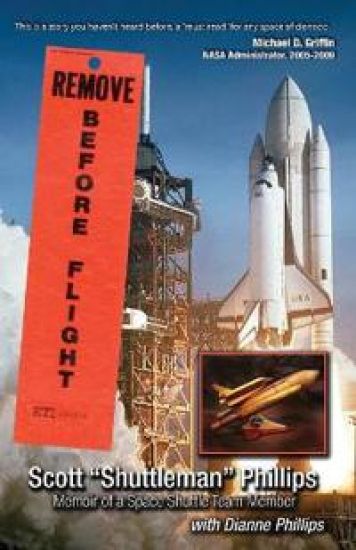
As a ten-year-old boy inspired by fellow Ohioan, Neil Armstrong, when he landed on the moon in 1969, Scott dreamed of someday becoming part of something larger than himself. Ten years later, through a series of serendipitous life events, Scott Phillips embarked on a career with NASA's groundbreaking Space Shuttle Program. He was the last team member to exit the first External Tank prior to its maiden flight on April 12, 1981, and saved the Remove Before Flight ribbon as a memento. What followed was an extraordinary thirty-three-year adventure, encompassing the entire span of the program--from the depths of tragedy to the exclusive never-before-seen photos and first-hand stories. Remove Before Flight takes the reader on a historical and personal journey that will enlighten and entertain.
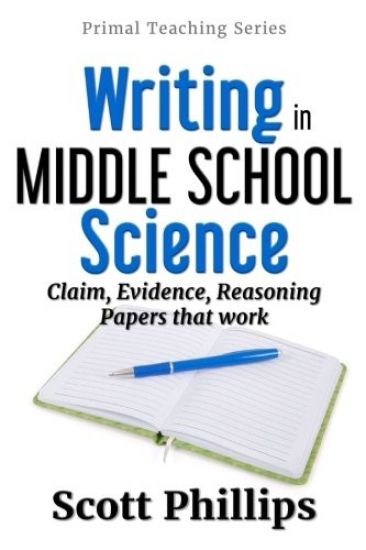
Writing in Middle School Science: Claim, Evidence, Reasoning Papers that Work
Scott Phillips
Primal Teaching Books
2018
nidottu
Are you frustrated your middle school science students can't write? Whether you call them Claim, Evidence, Reasoning (CER) or Conclusions Based on Data (CBDs), seemingly all science teachers struggle with student writing. This simple six-sentence, step-by-step, one-day lesson allows students to produce fantastic work in minutes. You'll grade each paper in seconds and truly know who understands the material and who does not. Students will write them in minutes and you'll learn to grade them in seconds The author went from using them three times per year to more than sixty times per year because they are the most effective method to guage student understanding. Change the way you teach writing in middle school science forever
Cottonwood (2004) was a huge step forward for the burgeoning king of noir Scott Phillips, and his dark and gritty take on the western earned him starred reviews and praise from crime masters Michael Connelly and George Pelecanos. That novel featured the Kansas town beginning in 1872 when it was just a small community of run down farms, dusty roads, and two-bit crooks. Saloon owner and photographer Bill Ogden thought it could be more and allied with wealthy developer Marc Leval to capitalize on the advent of the railroad and the cattle trail that soon turned Cottonwood into a wild boomtown. But problems followed the money and soon Bill was confronting both the wicked family of serial killers known as the Bloody Benders as well as his one-time friend Marc, having fallen into an affair with his beautiful wife Maggie. Bill then turned up alone in San Francisco in 1890, having to face a past from which he could not run. But what happened to him in those missing years? What happened to Maggie, to Bill, and their escape from the murderous Bender family? Hop Alley answers all those questions as we return to the Wild West and discover Bill Ogden, now living as Bill Sadlaw, running a photo studio near the Chinese part of town know as Hop Alley in the frontier town of Denver in 1878. Left by Maggie, Bill enjoys an erotic affair with Priscilla, a fallen singer addicted to laudanum, who is also seeing his friend Ralph Banbury, the editor of the local Denver Bulletin (neither man minds sharing). Bill's peaceful time away from Cottonwood turns anything but as he must confront the mysterious murder of his housekeeper's brother-in-law, the increasing instability of Priscilla as both men try to ease out of her clutches, and an all out-riot across Hop Alley. And when the body count starts rising, Bill will soon start wishing he had never left Cottonwood at all. Hop Alley proves that no one does the Wild West like noir master Scott Phillips.
Cottonwood (2004) was a huge step forward for the burgeoning king of noir Scott Phillips, and his dark and gritty take on the western earned him starred reviews and praise from crime masters Michael Connelly and George Pelecanos. That novel featured the Kansas town beginning in 1872 when it was just a small community of run down farms, dusty roads, and two-bit crooks. Saloon owner and photographer Bill Ogden thought it could be more and allied with wealthy developer Marc Leval to capitalize on the advent of the railroad and the cattle trail that soon turned Cottonwood into a wild boomtown. But problems followed the money and soon Bill was confronting both the wicked family of serial killers known as the Bloody Benders as well as his one-time friend Marc, having fallen into an affair with his beautiful wife Maggie. Bill then turned up alone in San Francisco in 1890, having to face a past from which he could not run. But what happened to him in those missing years? What happened to Maggie, to Bill, and their escape from the murderous Bender family? Hop Alley answers all those questions as we return to the Wild West and discover Bill Ogden, now living as Bill Sadlaw, running a photo studio near the Chinese part of town know as Hop Alley in the frontier town of Denver in 1878. Left by Maggie, Bill enjoys an erotic affair with Priscilla, a fallen singer addicted to laudanum, who is also seeing his friend Ralph Banbury, the editor of the local Denver Bulletin (neither man minds sharing). Bill's peaceful time away from Cottonwood turns anything but as he must confront the mysterious murder of his housekeeper's brother-in-law, the increasing instability of Priscilla as both men try to ease out of her clutches, and an all out-riot across Hop Alley. And when the body count starts rising, Bill will soon start wishing he had never left Cottonwood at all. Hop Alley proves that no one does the Wild West like noir master Scott Phillips.
The landscape of contemporary Paris, the best restaurants, the trendiest bars and clubs, is usually filled with the wealthy, the famous, and le rake or le roue, the charming, educated sophisticate with little or no conscience. Into this cushy world bursts  Dr. Crandall Taylor" or rather the actor who plays him the star of a dated American soap opera that is now one of the hottest primetime shows in France. And this newfound fame, as enriching as it is unexpected, is not wasted on Crandall, eager to put his dark and often violent American past behind him and enjoy all the fruits and the women that Paris and fame have to offer him. But TV fame isn't enough. Randall wants a feature film. Every actor wants a feature film, and so Crandall uses his charm and intellect to draw into his narcissistic web four different women: an executive at the network that runs his show; an American porn star reaching new heights on the internet; a bookish university student with a slightly nasty bent; and the beautiful would-be actress wife of an arms dealer. Against his better judgment, Crandall accepts both the arms dealer's cash and his beautiful wife's advances. Soon, Crandall is on the run through the alleys and streets of Paris, trying not only to fund a film but simply to stay alive. But this is no ordinary chase and Crandall is no ordinary mouse and soon his penchant for violence, sex, and megalomania erupts into full blown war. Rake is the latest noir classic from the author of The Ice Harvest. It features a charming, despicable anti-hero and a funny, satiric take on modern entertainment culture. Phillips turns his gimlet eye on the lush life of an actor who, on his destructive tour through Paris, crosses the line from garden variety narcissism into full-fledged psycopathy.