Kirjojen hintavertailu – 12 859 819 kirjaa ja 27 kauppaa
Kirjailija
Scott Straus
Kirjat ja teokset yhdessä paikassa: 8 kirjaa, julkaisuja vuosilta 2006–2025, suosituimpiin kuuluu From War to Genocide. Vertaile teosten hintoja ja tarkista saatavuus suomalaisista kirjakaupoista.
Through an intellectually stimulating and empirical approach to global studies, students examine how key factors—forces, interactions, and tensions—contribute to world events and global problems.
The challenge of teaching international studies is to help students think coherently about the multiple causes and effects of global problems. In International Studies: Global Forces, Interactions, and Tensions, award-winning scholars Scott Straus and Barry Driscoll introduce students to the foundations of the course; the major actors, institutions and theories; as well as the contemporary problems that will matter most to students. In the fully updated Second Edition, the authors give students a clear framework that pinpoints how key factors—forces, interactions, and tensions—contribute to current world events and global problems like human rights abuses, economic inequality, pandemic and global health responses, and food security. The book raises the bar for the Introduction to International Studies course and is relevant to students from a wide variety of backgrounds with diverse interests in geography, sociology, political science, and anthropology. Included with this text The online resources for your text are available via the password-protected Instructor Resource Site.
In April 1994 Rwanda exploded in violence, with political, social, and economic divisions most visible along ethnic lines of the Hutu and Tutsi factions. The ensuing killings resulted in the deaths of as much as 20 percent of Rwanda's population. André Guichaoua, who was present as the genocide began, unfolds a complex story with multiple actors, including three major political parties that each encompassed a spectrum of positions, all reacting to and influencing a rapidly evolving situation. Economic polarities, famine-fueled privation, clientelism, corruption, north-south rivalries, and events in the neighboring nations of Burundi and Uganda all deepened ethnic tensions, allowing extremists to prevail over moderates. Guichaoua draws on years of meticulous research to describe and analyze this history. He emphasizes that the same virulent controversies that fueled the conflict have often influenced judicial, political, and diplomatic responses to it, reproducing the partisan cleavages between the former belligerents and implicating state actors, international institutions, academics, and the media. Guichaoua insists upon the imperative of absolute intellectual independence in pursuing the truth about some of the gravest human rights violations of the twentieth century.
In April 1994 Rwanda exploded in violence, with political, social, and economic divisions most visible along ethnic lines of the Hutu and Tutsi factions. The ensuing killings resulted in the deaths of as much as 20 percent of Rwanda’s population. André Guichaoua, who was present as the genocide began, unfolds a complex story with multiple actors, including three major political parties that each encompassed a spectrum of positions, all reacting to and influencing a rapidly evolving situation. Economic polarities, famine-fueled privation, clientelism, corruption, north-south rivalries, and events in the neighboring nations of Burundi and Uganda all deepened ethnic tensions, allowing extremists to prevail over moderates. Guichaoua draws on years of meticulous research to describe and analyze this history. He emphasizes that the same virulent controversies that fueled the conflict have often influenced judicial, political, and diplomatic responses to it, reproducing the partisan cleavages between the former belligerents and implicating state actors, international institutions, academics, and the media. Guichaoua insists upon the imperative of absolute intellectual independence in pursuing the truth about some of the gravest human rights violations of the twentieth century.
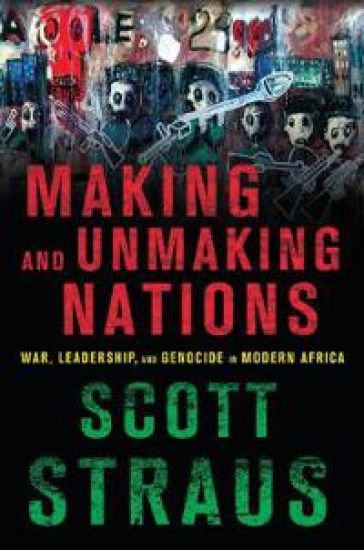
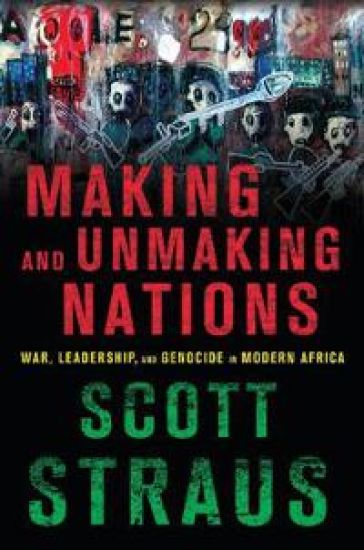
Winner of the Grawmeyer Award for Ideas Improving World Order, 2018 Winner of the Joseph Lepgold Prize Winner of the Best Books in Conflict Studies (APSA) Winner of the Best Book in Human Rights (ISA) In Making and Unmaking Nations, Scott Straus seeks to explain why and how genocide takes place—and, perhaps more important, how it has been avoided in places where it may have seemed likely or even inevitable. To solve that puzzle, he examines postcolonial Africa, analyzing countries in which genocide occurred and where it could have but did not. Why have there not been other Rwandas? Straus finds that deep-rooted ideologies—how leaders make their nations—shape strategies of violence and are central to what leads to or away from genocide. Other critical factors include the dynamics of war, the role of restraint, and the interaction between national and local actors in the staging of campaigns of large-scale violence. Grounded in Straus's extensive fieldwork in contemporary Africa, the study of major twentieth-century cases of genocide, and the literature on genocide and political violence, Making and Unmaking Nations centers on cogent analyses of three nongenocide cases (Côte d'Ivoire, Mali, and Senegal) and two in which genocide took place (Rwanda and Sudan). Straus's empirical analysis is based in part on an original database of presidential speeches from 1960 to 2005. The book also includes a broad-gauge analysis of all major cases of large-scale violence in Africa since decolonization. Straus's insights into the causes of genocide will inform the study of political violence as well as giving policymakers and nongovernmental organizations valuable tools for the future.
Winner of the Grawmeyer Award for Ideas Improving World Order, 2018 Winner of the Joseph Lepgold Prize Winner of the Best Books in Conflict Studies (APSA) Winner of the Best Book in Human Rights (ISA) In Making and Unmaking Nations, Scott Straus seeks to explain why and how genocide takes place—and, perhaps more important, how it has been avoided in places where it may have seemed likely or even inevitable. To solve that puzzle, he examines postcolonial Africa, analyzing countries in which genocide occurred and where it could have but did not. Why have there not been other Rwandas? Straus finds that deep-rooted ideologies—how leaders make their nations—shape strategies of violence and are central to what leads to or away from genocide. Other critical factors include the dynamics of war, the role of restraint, and the interaction between national and local actors in the staging of campaigns of large-scale violence. Grounded in Straus's extensive fieldwork in contemporary Africa, the study of major twentieth-century cases of genocide, and the literature on genocide and political violence, Making and Unmaking Nations centers on cogent analyses of three nongenocide cases (Côte d'Ivoire, Mali, and Senegal) and two in which genocide took place (Rwanda and Sudan). Straus's empirical analysis is based in part on an original database of presidential speeches from 1960 to 2005. The book also includes a broad-gauge analysis of all major cases of large-scale violence in Africa since decolonization. Straus's insights into the causes of genocide will inform the study of political violence as well as giving policymakers and nongovernmental organizations valuable tools for the future.
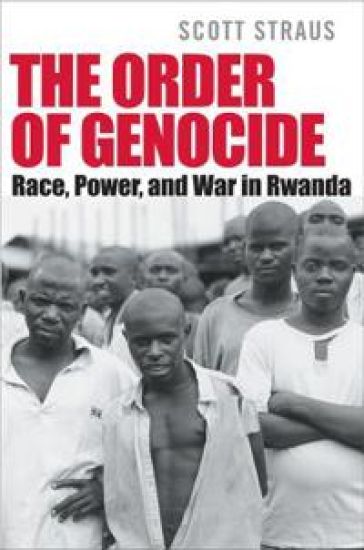
The Rwandan genocide has become a touchstone for debates about the causes of mass violence and the responsibilities of the international community. Yet a number of key questions about this tragedy remain unanswered: How did the violence spread from community to community and so rapidly engulf the nation? Why did individuals make decisions that led them to take up machetes against their neighbors? And what was the logic that drove the campaign of extermination? According to Scott Straus, a social scientist and former journalist in East Africa for several years (who received a Pulitzer Prize nomination for his reporting for the Houston Chronicle), many of the widely held beliefs about the causes and course of genocide in Rwanda are incomplete. They focus largely on the actions of the ruling elite or the inaction of the international community. Considerably less is known about how and why elite decisions became widespread exterminatory violence. Challenging the prevailing wisdom, Straus provides substantial new evidence about local patterns of violence, using original research—including the most comprehensive surveys yet undertaken among convicted perpetrators—to assess competing theories about the causes and dynamics of the genocide. Current interpretations stress three main causes for the genocide: ethnic identity, ideology, and mass-media indoctrination (in particular the influence of hate radio). Straus's research does not deny the importance of ethnicity, but he finds that it operated more as a background condition. Instead, Straus emphasizes fear and intra-ethnic intimidation as the primary drivers of the violence. A defensive civil war and the assassination of a president created a feeling of acute insecurity. Rwanda's unusually effective state was also central, as was the country's geography and population density, which limited the number of exit options for both victims and perpetrators. In conclusion, Straus steps back from the particulars of the Rwandan genocide to offer a new, dynamic model for understanding other instances of genocide in recent history—the Holocaust, Armenia, Cambodia, the Balkans—and assessing the future likelihood of such events.
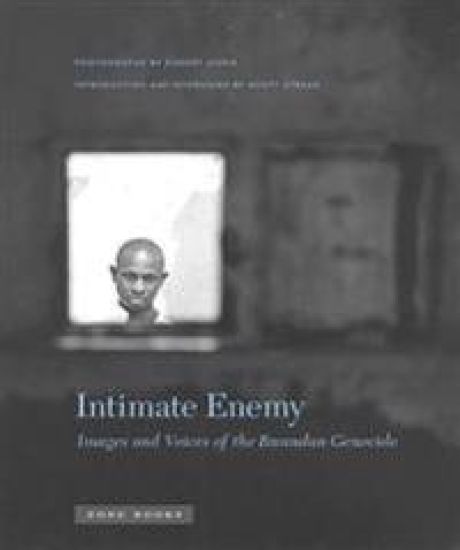
Testimony and photographs from the Rwandan genocide, providing a rare look at both perpetrators and survivors. In 1994, an interim government in Rwanda orchestrated one of the world's worst mass crimes: a 100-day extermination campaign that took half a million lives. At the time, Rwanda's genocide went largely unnoticed by the outside world. Today there is growing interest in the Rwandan experience as many discover the horror that took place and seek to understand how and why violence of this character and magnitude could have happened in our time. Intimate Enemy is a rare entree into the logic, language, and imagery of Rwanda's violence. The book presents perpetrator testimony along with photographs of Rwandans, both perpetrators and survivors. The images and words are raw and unanalyzed; the reader is left to make sense of the killers and their would-be victims. Intimate Enemy challenges our assumptions about the genocide and about those who perpetrated it. It also prods us to consider how to represent and imagine violence on the scale of Rwanda.