Kirjojen hintavertailu – 12 859 829 kirjaa ja 27 kauppaa

Kirjailija

Scott Thomas

Kirjat ja teokset yhdessä paikassa: 33 kirjaa, julkaisuja vuosilta 2005–2026, suosituimpiin kuuluu Violet. Vertaile teosten hintoja ja tarkista saatavuus suomalaisista kirjakaupoista.

33 kirjaa

Kirjojen julkaisuvuodet: 2005–2026.

A Young Man's Game

A Young Man's Game

Scott Thomas

Lulu.com
2014
nidottu
'A Young Man's Game,' is about getting involved in your community and taking risks that make the community a better place. The book serves as an insight to the successes and challenges that the author has faced throughout the start of his career in public service. The author has ran for office and has been elected to office several times since he was 18 years old.
Gospel Coach

Gospel Coach

Scott Thomas; Tom Wood; Dr. Steve Brown

Zondervan
2012
nidottu
Many ministry leaders serving in churches find themselves overwhelmed, disillusioned, and depressed by the enormous and challenging task of leading and serving others. When leaders aren’t healthy, the result is often an unhealthy church. Leaders need someone to shepherd their soul so that they can then lead others to the Chief Shepherd, Jesus Christ. Every church leader—from fulltime ministers to volunteer leaders—needs a Gospel Coach who will come alongside them with words drawn from Scripture and godly wisdom, grounded in the gracious saving work of Jesus Christ, and presented in the context of a trusting relationship. Gospel coaching is an intentional relationship of skillful caring for others based on four ancient shepherding principles: 1) Know the sheep 2) Feed the sheep 3) Lead the sheep 4) Protect the sheep Gospel coaches inquire about the personal, spiritual, and missional aspects of a leader’s life in a loving yet focused manner, probing the heart for compulsive unbelief or selfish motivation, disobedience, and sin, leading them back to the Gospel through belief, repentance, and obedience.
Multilevel Modeling of Categorical Outcomes Using IBM SPSS

Multilevel Modeling of Categorical Outcomes Using IBM SPSS

Ronald H Heck; Scott Thomas; Lynn Tabata

Routledge
2012
sidottu
This is the first workbook that introduces the multilevel approach to modeling with categorical outcomes using IBM SPSS Version 20. Readers learn how to develop, estimate, and interpret multilevel models with categorical outcomes. The authors walk readers through data management, diagnostic tools, model conceptualization, and model specification issues related to single-level and multilevel models with categorical outcomes. Screen shots clearly demonstrate techniques and navigation of the program. Modeling syntax is provided in the appendix. Examples of various types of categorical outcomes demonstrate how to set up each model and interpret the output. Extended examples illustrate the logic of model development, interpretation of output, the context of the research questions, and the steps around which the analyses are structured. Readers can replicate examples in each chapter by using the corresponding data and syntax files available at www.psypress.com/9781848729568. The book opens with a review of multilevel with categorical outcomes, followed by a chapter on IBM SPSS data management techniques to facilitate working with multilevel and longitudinal data sets. Chapters 3 and 4 detail the basics of the single-level and multilevel generalized linear model for various types of categorical outcomes. These chapters review underlying concepts to assist with trouble-shooting common programming and modeling problems. Next population-average and unit-specific longitudinal models for investigating individual or organizational developmental processes are developed. Chapter 6 focuses on single- and multilevel models using multinomial and ordinal data followed by a chapter on models for count data. The book concludes with additional trouble shooting techniques and tips for expanding on the modeling techniques introduced. Ideal as a supplement for graduate level courses and/or professional workshops on multilevel, longitudinal, latent variable modeling, multivariate statistics, and/or advanced quantitative techniques taught in psychology, business, education, health, and sociology, this practical workbook also appeals to researchers in these fields. An excellent follow up to the authors’ highly successful Multilevel and Longitudinal Modeling with IBM SPSS and Introduction to Multilevel Modeling Techniques, 2nd Edition, this book can also be used with any multilevel and/or longitudinal book or as a stand-alone text introducing multilevel modeling with categorical outcomes.

Multilevel Modeling of Categorical Outcomes Using IBM SPSS

Multilevel Modeling of Categorical Outcomes Using IBM SPSS

Ronald H Heck; Scott Thomas; Lynn Tabata

Routledge
2012
nidottu
This is the first workbook that introduces the multilevel approach to modeling with categorical outcomes using IBM SPSS Version 20. Readers learn how to develop, estimate, and interpret multilevel models with categorical outcomes. The authors walk readers through data management, diagnostic tools, model conceptualization, and model specification issues related to single-level and multilevel models with categorical outcomes. Screen shots clearly demonstrate techniques and navigation of the program. Modeling syntax is provided in the appendix. Examples of various types of categorical outcomes demonstrate how to set up each model and interpret the output. Extended examples illustrate the logic of model development, interpretation of output, the context of the research questions, and the steps around which the analyses are structured. Readers can replicate examples in each chapter by using the corresponding data and syntax files available at www.psypress.com/9781848729568. The book opens with a review of multilevel with categorical outcomes, followed by a chapter on IBM SPSS data management techniques to facilitate working with multilevel and longitudinal data sets. Chapters 3 and 4 detail the basics of the single-level and multilevel generalized linear model for various types of categorical outcomes. These chapters review underlying concepts to assist with trouble-shooting common programming and modeling problems. Next population-average and unit-specific longitudinal models for investigating individual or organizational developmental processes are developed. Chapter 6 focuses on single- and multilevel models using multinomial and ordinal data followed by a chapter on models for count data. The book concludes with additional trouble shooting techniques and tips for expanding on the modeling techniques introduced. Ideal as a supplement for graduate level courses and/or professional workshops on multilevel, longitudinal, latent variable modeling, multivariate statistics, and/or advanced quantitative techniques taught in psychology, business, education, health, and sociology, this practical workbook also appeals to researchers in these fields. An excellent follow up to the authors’ highly successful Multilevel and Longitudinal Modeling with IBM SPSS and Introduction to Multilevel Modeling Techniques, 2nd Edition, this book can also be used with any multilevel and/or longitudinal book or as a stand-alone text introducing multilevel modeling with categorical outcomes.

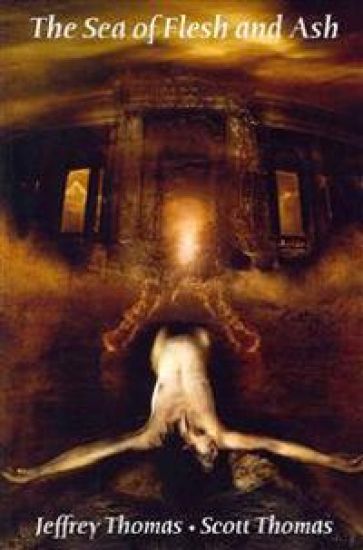
The Sea of Flesh and Ash

The Sea of Flesh and Ash

Scott Thomas; Jeffrey Thomas

Createspace Independent Publishing Platform
2011
nidottu
In The Sea of Flesh and Ash, brothers Jeffrey Thomas and Scott Thomas explore the haunted environs of their native New England - and alternate realms of existence - in two poetic and chilling short novels. Jeffrey Thomas' The Sea of Flesh follows the destinies of a dying woman beset by terrifying nightmares; a young Vietnamese woman experiencing strange visions; and an American research scientist is stalked by a menacing figure, with dangerous consequences. Scott Thomas' The Sea of Ash takes us along as three men from three different centuries experience the wonders and horrors of an unknown New England.
Listen 'n' Learn Spanish with Your Favorite Movies

Listen 'n' Learn Spanish with Your Favorite Movies

Scott Thomas; Gaby Thomas

McGraw-Hill Professional
2009
nidottu
Learn more than 7,000 Spanish words and phrases just by turning on your DVD player! How? Easy! Pop in one of 16 popular movies in your DVD playerTurn on the Spanish soundtrack in the DVD options menu Open up Listen 'n' Learn Spanish with Your Favorite Movies and follow along to learn key Spanish vocabulary and phrasesHere are the phrases you'll learn from watching a scene from the The Chronicles of Narnia: The Lion, the Witch, and the Wardrobe:Chapter 3 - The Wardrobe [7:08] (This shows you when the scene begins) Phrases to listen for: (Important phrases you'll find useful in everyday conversations)¿cómo que…?: what do you mean…? :: de verdad: really, truly :: todo lo que: everything that :: lo lamento: I'm sorry :: ¿por qué?: why? :: no lo sé: I don't know :: cerca de: near :: tal vez: maybe, perhapsLucy comes from out behind the lamp post and approaches the faun. (Scene description)¿te escondías de mí?: were you hiding from me?(Highlighted vocabulary)barba: beardla más alta: the tallest :: alto: tallEva: Evehumana: humana partir de: beginning, startingfarol: streetlampocéano: ocean oriente: the eastroca: rockpalo: stickhielo: icebastante amplio: quite large :: bastante: enough, quite :: amplio: large, ampleIt is easy to pick up Spanish words and phrases as you listen. You'll learn from classics such as The Fox and the Hound, March of the Penguins, The Princess Bride, and Finding Nemo. And four more bonus movie guides are found at www.mhprofessional.com. So start popping the popcorn and get ready to learn Spanish and have fun!
Midnight in New England

Midnight in New England

Scott Thomas

Down East Books,U.S.
2007
pokkari
Evoking the times and styles of Edgar Allan Poe and H. P. Lovecraft, this collection of original stories is set in 18th and 19th century New England—when restless spirits seemed to roam more freely. Not quite horror, not quite mystery, these dark yet spellbindingly eloquent tales hover on the edge, threatening at every page to plunge the characters into madness.
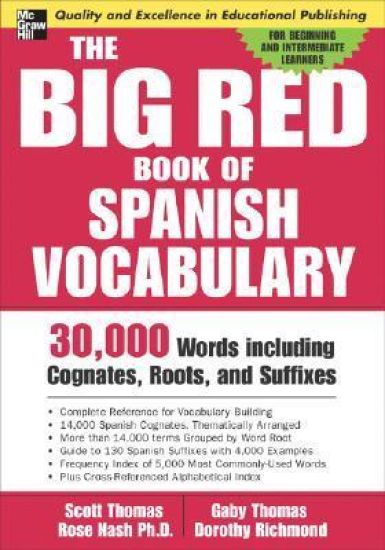
The Big Red Book of Spanish Vocabulary

The Big Red Book of Spanish Vocabulary

Scott Thomas

McGraw-Hill Professional
2005
nidottu
Vocabulary forms the building blocks of language learning, and it is essential for learners to expand their vocabulary – whether for active communication, or passive oral understanding or written comprehension. However, most existing vocabulary books don’t provide any assistance in actually learning and assimilating the words – the student might as well just look words up in a dictionary. In answer to this need, The Big Red Book of Spanish Vocabulary is a unique reference that provides students with a tremendous resource by combining three key, complementary approaches to vocabulary building:• Cognates: the easiest way to build vocabulary – by learning words in Spanish that are similar to the English meaning. This section contains 14,000 cognates thematically arranged into 20 thematic groups, which are further divided into 100 topics.• Root families: another key way to expand vocabulary is to learn related word families that have the same root. This section contains 14,000 terms grouped by 2,200 root categories. The headwords (the most commonly used word in the family) are ordered alphabetically.• Suffixes: more than most languages, Spanish relies on suffixes to denote parts of speech and convey nuances of meaning. This section contains 130 of the most common Spanish suffixes, grouped alphabetically. The meaning of each suffix is explained, and then exemplified by an illustrative list of words taking the suffix (4,000 words in all), their English equivalent, and the stem to which it is related. These three sections are complimented by a Frequency Index that lists the 5,000 most frequently used words in Spanish. The 1,000 most commonly used words are illustrated by example sentences that provide contextual usage. This index is cross-referenced to the Cognate, Root and Suffix sections. In addition, an Alphabetical Index cross-references all the entries in the Root, Suffix and Frequency sections.