Kirjojen hintavertailu – 12 903 725 kirjaa ja 27 kauppaa

Kirjailija

Scott W. Ambler

Kirjat ja teokset yhdessä paikassa: 8 kirjaa, julkaisuja vuosilta 1998–2017, suosituimpiin kuuluu Building Object Applications that Work. Vertaile teosten hintoja ja tarkista saatavuus suomalaisista kirjakaupoista.

8 kirjaa

Kirjojen julkaisuvuodet: 1998–2017.

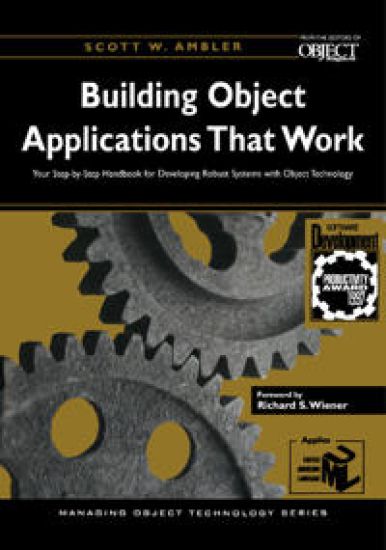
Building Object Applications that Work

Building Object Applications that Work

Scott W. Ambler

Cambridge University Press
1998
pokkari
Written by internationally acclaimed trainer and developer Scott Ambler, this book is a must-have resource for designers, programmers and testers of today’s OO applications. The author takes you through the entire process of building object applications, from analyzing the project (so you know what you need to build), to designing a user-friendly interface, to testing your approaches to make sure your applications work properly. Building Object Applications That Work includes sections on: • how to use the Unified Modeling Language effectively • analysis, so you know what you need to build • design techniques, so that you know how you are going to build your application • collecting the right metrics to improve your development approach • applying OO patterns to improve the quality of your applications • creating applications for stand-alone, client/server and distributed environments • using both relational and object-oriented databases to make your objects persistent • architecting your applications so they are maintainable and extensible
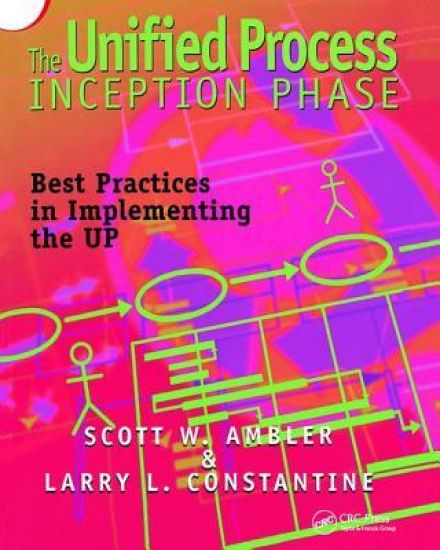
The Unified Process Inception Phase

The Unified Process Inception Phase

Scott W. Ambler; Larry Constantine

CRC Press
2017
sidottu
Is the Unified Process the be all and end all standard for developing object-oriented component-based software? This book is the third in a four volume series that presents a critical review of the Unified Process. The authors present a survey of the alte
Refactoring Databases

Refactoring Databases

Scott W. Ambler; Pramod J. Sadalage

Addison-Wesley Educational Publishers Inc
2011
nidottu

Halvin toimitettuna 38,00 €

Refactoring has proven its value in a wide range of development projects–helping software professionals improve system designs, maintainability, extensibility, and performance. Now, for the first time, leading agile methodologist Scott Ambler and renowned consultant Pramodkumar Sadalage introduce powerful refactoring techniques specifically designed for database systems. Ambler and Sadalage demonstrate how small changes to table structures, data, stored procedures, and triggers can significantly enhance virtually any database design–without changing semantics. You’ll learn how to evolve database schemas in step with source code–and become far more effective in projects relying on iterative, agile methodologies. This comprehensive guide and reference helps you overcome the practical obstacles to refactoring real-world databases by covering every fundamental concept underlying database refactoring. Using start-to-finish examples, the authors walk you through refactoring simple standalone database applications as well as sophisticated multi-application scenarios. You’ll master every task involved in refactoring database schemas, and discover best practices for deploying refactorings in even the most complex production environments. The second half of this book systematically covers five major categories of database refactorings. You’ll learn how to use refactoring to enhance database structure, data quality, and referential integrity; and how to refactor both architectures and methods. This book provides an extensive set of examples built with Oracle and Java and easily adaptable for other languages, such as C#, C++, or VB. NET, and other databases, such as DB2, SQL Server, MySQL, and Sybase. Using this book’s techniques and examples, you can reduce waste, rework, risk, and cost–and build database systems capable of evolving smoothly, far into the future.
The Elements of UML™ 2.0 Style

The Elements of UML™ 2.0 Style

Scott W. Ambler

Cambridge University Press
2005
pokkari
For all developers who create models using the Unified Modeling Language (UML) 2.x The Elements of UML™ 2.0 Style sets the rules for style that will improve your productivity - especially in teams, where understandability and consistency are critical. Coming from renowned UML expert Scott Ambler, the book furnishes a set of rules for modelling in the UML and describes a collection of standards and guidelines for creating effective UML diagrams that will be concise and easy to understand. It provides conventions for: Class diagrams; Timing Diagrams; Use case diagrams; Composite Structure Diagrams; Sequence diagrams; Interaction Overview Diagrams; Activity diagrams; Object diagrams; State machine diagrams; Package diagrams; Communication diagrams; Deployment diagrams and Component diagrams. The Elements of UML™ 2.0 Style sets the rules for style that will improve your productivity.
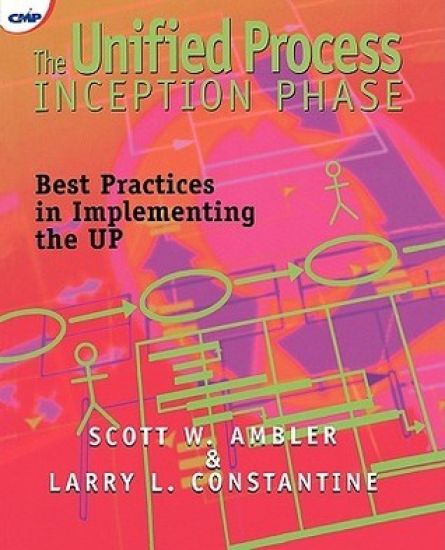
The Unified Process Inception Phase

The Unified Process Inception Phase

Scott W. Ambler; Larry Constantine

CMP Books
2000
nidottu
Is the Unified Process the be all and end all standard for developing object-oriented component-based software? This book is the third in a four volume series that presents a critical review of the Unified Process. The authors present a survey of the alte
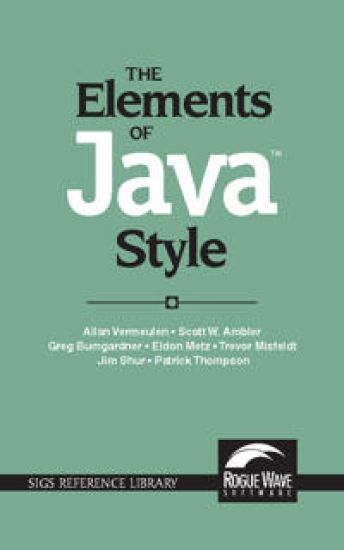
The Elements of Java™ Style

The Elements of Java™ Style

Allan Vermeulen; Scott W. Ambler; Greg Bumgardner; Eldon Metz; Trevor Misfeldt; Jim Shur

Cambridge University Press
2000
pokkari
The Elements of Java Style, written by renowned author Scott Ambler, Rogue Wave Software Vice President Alan Vermeulen, and a team of programmers from Rogue Wave, is for anyone who writes Java code. While there are many books that explain the syntax and basic use of Java, this book explains not just what you can do with the syntax, but what you ought to do. Just as Strunk and White’s The Elements of Style provides rules of usage for the English language, this book provides a set of rules for Java practitioners to follow. While illustrating these rules with parallel examples of correct and incorrect usage, the book provides a collection of standards, conventions, and guidelines for writing solid Java code which will be easy to understand, maintain, and enhance. Anyone who writes Java code or plans to should have this book next to their computer.