Kirjailija
Seamus Heaney
Kirjat ja teokset yhdessä paikassa: 70 kirjaa, julkaisuja vuosilta 1981–2027, suosituimpiin kuuluu Archipelago. Vertaile teosten hintoja ja tarkista saatavuus suomalaisista kirjakaupoista.
70 kirjaa
Kirjojen julkaisuvuodet: 1981–2027.
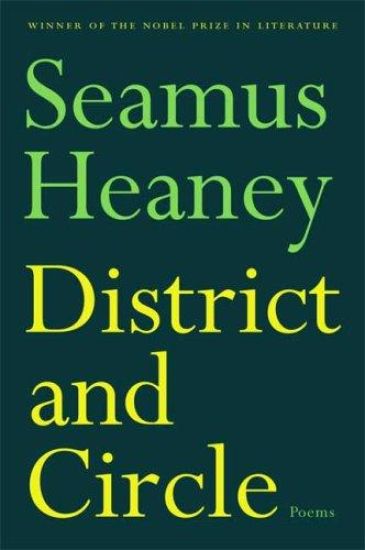
Seamus Heaney's new collection starts "In an age of bare hands and cast iron" and ends as "The automatic lock / clunks shut" in the eerie new conditions of a menaced twenty-first century. In their haunted, almost visionary clarity, the poems assay the weight and worth of what has been held in the hand and in the memory. Images out of a childhood spent safe from the horrors of World War II - railway sleepers, a sledgehammer, the "heavyweight / Silence" of "Cattle out in rain" - are colored by a strongly contemporary sense that "Anything can happen," and other images from the dangerous present - a journey on the Underground, a melting glacier - are fraught with this same anxiety. But District and Circle, which includes a number of prose poems and translations, offers resistance as the poet gathers his staying powers and stands his ground in the hiding places of love and excited language. In a sequence like "The Tollund Man in Springtime" and in several poems which "do the rounds of the district" - its known roads and rivers and trees, its familiar and unfamiliar ghosts - the gravity of memorial is transformed into the grace of recollection. With more relish and conviction than ever, Seamus Heaney maintains his trust in the obduracy of workaday realities and the mystery of everyday renewals. District and Circle is the winner of the 2007 Poetry Now award and the 2006 T. S. Eliot Prize for Poetry.
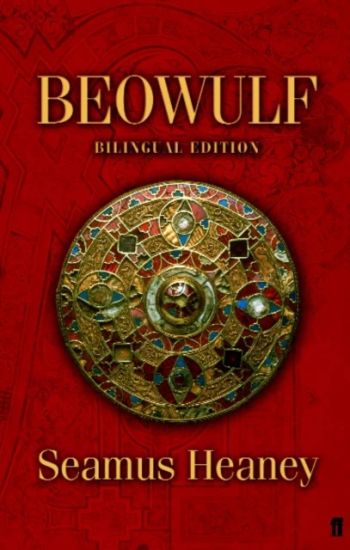
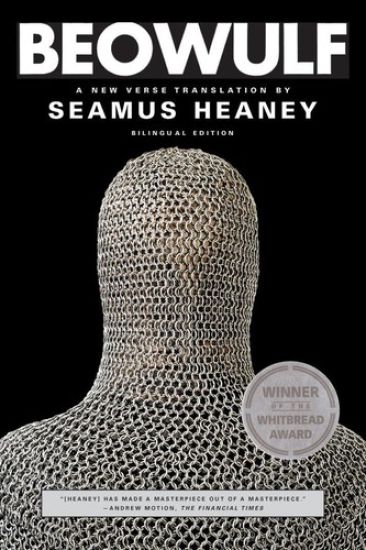
Beowulf, composed between the seventh and tenth century, is the elegaic narrative of the adventures of Beowulf, a Scandinavian hero who saves the Danes from the seemingly invincible monster Grendel, and, later, from Grendel's mother. He returns to his own country and dies in old age in a vivid battle against a dragon. The poem is about encountering the monstrous, defeating it, and living on in the exhausted aftermath. Heaney's celebrated translation honours what is remote and intuits what is uncannily familiar, at the end of the twentieth century, in this founding masterpiece of English poetry. Now, for the first time, the Old English text - which survived only in a single scorched manuscript, now held in the British Museum - can be read in conjunction with the translation on facing pages.
Widely praised on its first publication in 1978, The Haw Lantern ventured into new imaginative territory with poems exploring the theme of loss - including a celebrated sonnet sequence concerning the death of the poet's mother - joined by meditations on the conscience of the writer and exercises in an allegorical vein.
For the fortieth anniversary of its publication, in May 2006, Faber are reissuing Seamus Heaney's classic first collection, Death of a Naturalist, which on its appearance in 1966 won the Cholmondeley Award, the E. C. Gregory Award, the Somerset Maugham Award and the Geoffrey Faber Memorial Prize.'His words give us the soil-reek of Ireland, the colourful violence of his childhood on a farm in Derry. The full-blooded energy of these poems makes Death of a Naturalist the best first book of poems I've read for some time.' - C. B. Cox in the Spectator 'The power and precision of his best poems are a delight, and as a first collection Death of a Naturalist is outstanding [...] His subject is those things which are inherent or inherited. What he praises is to be praised in his own work.' - Christopher Ricks, New Statesman'Now, to pry into roots, to finger slime, To stare big-eyed Narcissus, into some springIs beneath all adult dignity. I rhymeTo see myself, to set the darkness echoing.'
Commissioned to mark the centenary of the Abbey Theatre in Dublin in 2004, The Burial at Thebes is Seamus Heaney's new verse translation of Sophocles' great tragedy, Antigone - whose eponymous heroine is one of the most sharply individualized and compelling figures in Western drama. Faithful to the play's time and place, The Burial at Thebes represents opposing voices as they enact the ancient conflict between family and state in a time of crisis, pitching the morality of private allegiance against that of public service. Above all, The Burial at Thebes honours the sovereign urgency and grandeur of the Antigone, in which language speaks truth to power, then and now.
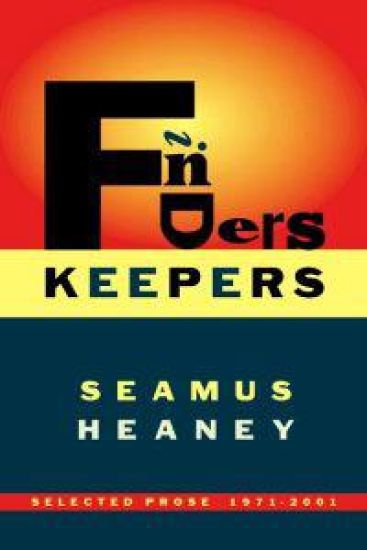
Finders Keepers is a gathering of Seamus Heaney's prose of three decades. Whether autobiographical, topical or specifically literary, these essays and lectures circle the central preoccupying questions: How should a poet properly live and write? What is his relationship to be to his own voice, his own place, his literary heritage and the contemporary world? As well as being a selection from the poet's three previous collections of prose (Preoccupations, The Government of the Tongue and The Redress of Poetry), the present volume includes material from 'The Place of Writing', a series of lectures delivered at Emory University in 1988. Also included are a rich variety of pieces not previously collected in volume form, ranging from short newspaper articles to more extended lectures and contributions to books. In its soundings of a wide range of poets - Irish and British, American and East European, predecessors and contemporaries - Finders Keepers is, as its title indicates, 'an announcement of both excitement and possession'.
Delving into his literary heritage and his own voice in the modern world, this current collection contains the Nobel Prize winner's greatest lectures, short newspaper articles, radio commentaries, and other richly textured pieces. Reprint.
Originally published in 1969, Seamus Heaney's Door into the Dark continues a furrow so startlingly opened in his first collection, Death of a Naturalist (1966). With the sensuousness and physicality of language that would become the hallmark of his early writing, these poems graphically depict the author's rural upbringing, from the local forge to the banks of Lough Neagh, concluding in the preserving waters of the bogland and a look ahead to his next book, Wintering Out (1972).
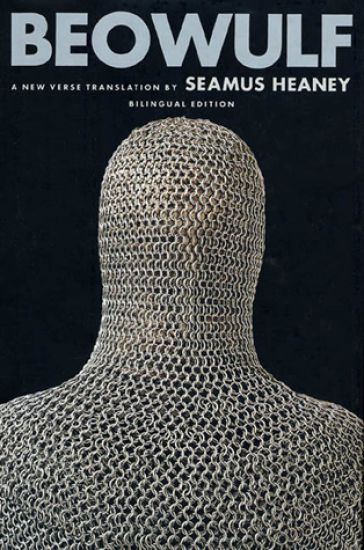
Composed towards the end of the first millennium, the Anglo-Saxon poem Beowulf is one of the great Northern epics and a classic of European literature. In his new translation, Seamus Heaney has produced a work which is both true, line by line, to the original poem, and an expression, in its language and music, of something fundamental to his own creative gift. The poem is about encountering the monstrous, defeating it, and then having to live on, physically and psychically exposed, in that exhausted aftermath. It is not hard to draw parallels between this story and the history of the twentieth century, nor can Heaney's Beowulf fail to be read partly in the light of his Northern Irish upbringing. But it also transcends such considerations, telling us psychological and spiritual truths that are permanent and liberating.
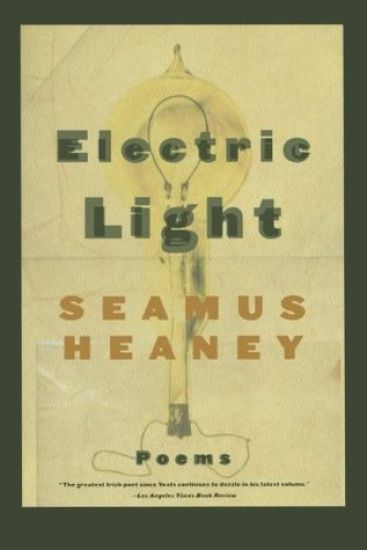
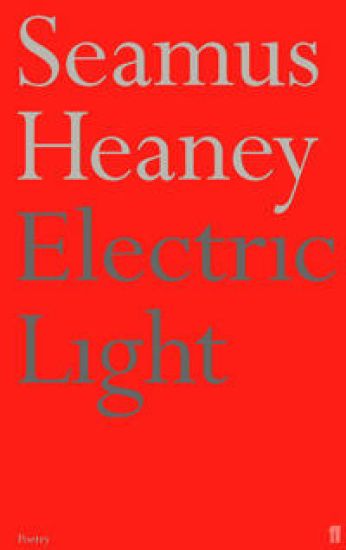
The powerful collection by the bestselling translator of Beowulf In the finland of perch, the fenland of alder, on airThat is water, on carpets of Bann stream, on holdIn the everything flows and steady go of the world.--from "Perch" Seamus Heaney's collection travels widely in time and space, visiting the sites of the classical world and revisiting the poet's childhood: rural electrification and the light of ancient evenings are reconciled within the orbit of a single lifetime. This is a book about origins (not least, the origins of words) and oracles: the places where things start from, the ground of understanding -- whether in Arcadia or Anahorish, the sanctuary at Epidaurus or the Bann valley in County Derry. Electric Light ranges from short takes to conversation poems. The pre-Socratic wisdom that everything flows is held in tension with the elegizing of friends and fellow poets. These gifts of recollection renew the poet's calling to assign things their proper names; once again Heaney can be heard exting his word hoard and roll call in this, his eleventh collection.
This volume contains a selection of work from each of Seamus Heaney's published books of poetry up to and including the Whitbread prize-winning collection, The Haw Lantern (1987).'His is 'close-up' poetry - close up to thought, to the world, to the emotions. Few writers at work today, in verse or fiction, can give the sense of rich, fecund, lived life that Heaney does.' John Banville'More than any other poet since Wordsworth he can make us understand that the outside world is not outside, but what we are made of.' John Carey
A reissue of Heaney's "New Selected Poems 1966-1987", which has been expanded to include work from two subsequent collections, "Seeing Things" and the award-winning "The Spirit Level", as well as poems not previously published.
In North Seamus Heaney found a myth which allowed him to articulate a vision of Ireland - its people, history and landscape. Here the Irish experience is refracted through images drawn from different parts of the Northern European experience, and the idea of the north allows the poet to contemplate the violence on his home ground in relation to memories of the Scandinavian and English invasions which have marked Irish history so indelibly.
The title poem from this collection is set on an island that has been a site of pilgrimage in Ireland for over a thousand years. A narrative sequence, it is an autobiographical quest concerned with 'the growth of a poet's mind'. The long poem is preceded by a section of shorter lyrics and leads into a third group of poems in which the poet's voice is at one with the voice of the legendary mad King Sweeney.'Surpasses even what one might reasonably expect from this magnificently gifted poet.' John Carey, Sunday Times
Electric Light travels widely in time and space, visiting the sites of the classical world, revisiting the poet's childhood: rural electrification and the light of ancient evenings are reconciled within the orbit of a single lifetime. This is a book about origins (not least the origins of words) and oracles: the places where things start from, the ground of understanding - whether in Arcadia or Anahorish, the sanctuary at Epidaurus or the Bann valley in County Derry. Electric Light ranges from short takes ('glosses') to conversation poems whose cunning passagework gives rein to 'the must and drift of talk'; other poems are arranged in sections, their separate cargoes docked alongside each other to reveal a hidden and curative connection. The presocratic wisdom that everything flows is held in tension with the fixities of remembrance: elegising friends and fellow poets, naming 'the real names' of contemporaries behind the Shakespearean roles they played at school. These gifts of recollection renew the poet's calling to assign to things their proper names. The resulting poems are full of delicately prescriptive tonalities, where Heaney can be heard extending his word-hoard and rollcall in this, his eleventh collection.
A brilliant and faithful rendering of the Anglo-Saxon epic from the Nobel laureate. Composed toward the end of the first millennium of our era, Beowulf is the elegiac narrative of the adventures of Beowulf, a Scandinavian hero who saves the Danes from the seemingly invincible monster Grendel and, later, from Grendel's mother. He then returns to his own country and dies in old age in a vivid fight against a dragon. The poem is about encountering the monstrous, defeating it, and then having to live on in the exhausted aftermath. In the contours of this story, at once remote and uncannily familiar at the end of the twentieth century, Seamus Heaney finds a resonance that summons power to the poetry from deep beneath its surface. Drawn to what he has called the "four-squareness of the utterance" in Beowulf and its immense emotional credibility, Heaney gives these epic qualities new and convincing reality for the contemporary reader.
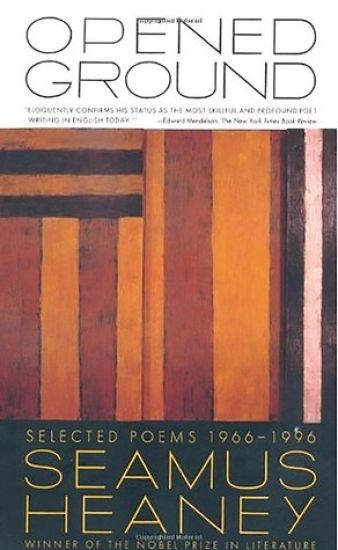
As selected by the author, Opened Ground includes the essential work from Heaney's twelve previous books of poetry, as well as new sequences drawn from two of his landmark translations, The Cure at Troy and Sweeney Astray, and several previously uncollected poems. Heaney's voice is like no other--"by turns mythological and journalistic, rural and sophisticated, reminiscent and impatient, stern and yielding, curt and expansive" (Helen Vendler, The New Yorker)--and this is a one-volume testament to the musicality and precision of that voice. The book closes with Heaney's Nobel Lecture: "Crediting Poetry."
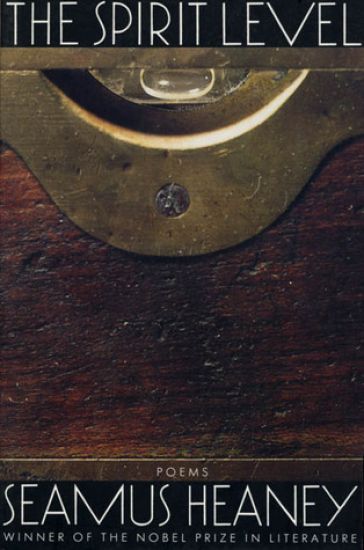
The Spirit Level was the first book of poems Heaney published after winning the Nobel Prize in Literature in 1995. Reviewing this book in The New York Times Book Review, Richard Tillinghast noted that Heaney "has been and is here for good . . . His poems] will last. Anyone who reads poetry has reason to rejoice at living in the age when Seamus Heaney is writing."
Ukkosvaloa-kokoelman runojen aiheet liikkuvat lapsuusmuistoista ja perheestä runoilijan ja runouden rooliin väkivallan runtelemassa Pohjois–Irlannissa. Ojanpiennarten kuninkaan tapaan Ukkosvaloa on läpileikkaus Heaneyn tuotannosta. Se sisältää runoja hänen kaikista tähänastisista teoksistaan, myös uusimmasta, syksyllä 1995 ilmestyneestä The Spirit Levelistä.