Kirjojen hintavertailu – 12 903 725 kirjaa ja 27 kauppaa

Kirjailija

Séamus Higson

Kirjat ja teokset yhdessä paikassa: 4 kirjaa, julkaisuja vuosilta 2011–2015, suosituimpiin kuuluu Analytical Biotechnology. Vertaile teosten hintoja ja tarkista saatavuus suomalaisista kirjakaupoista.

4 kirjaa

Kirjojen julkaisuvuodet: 2011–2015.

Analytical Biotechnology

Analytical Biotechnology

Séamus Higson

Wiley-Blackwell
2015
sidottu
Analytical Biotechnology fills a niche by introducing each topic in simple terms that requires no previous knowledge and is structured to take the reader in a logical step-by-step approach from basic principles though to the current state of the art. Topics covered by the book include: the use of biological molecules as analytical reagents (including enzymes, antibodies, aptamers, and nucleic acids), chromatography and its use within analytical biotechnology, sensors and biosensors, immunochemistry and immunosensors, nucleic acids and their use within genomic, proteomic and metabolomic techniques, biotechnology as applied to forensic science and market economics of the analytical biotechnology sector. In order to reach out to the widest possible audience, this book will cover all of the most widely used bio-analytical techniques (such as ELISAs, lateral flow tests, surface plasmon resonance, PCR and other DNA techniques) - but will also give a provide a coverage to emerging techniques such as the development of labeless electrochemical antibody assays and the use of aptamers.

Analytical Biotechnology

Analytical Biotechnology

Séamus Higson

Wiley-Blackwell
2015
nidottu
Analytical Biotechnology fills a niche by introducing each topic in simple terms that requires no previous knowledge and is structured to take the reader in a logical step-by-step approach from basic principles though to the current state of the art. Topics covered by the book include: the use of biological molecules as analytical reagents (including enzymes, antibodies, aptamers, and nucleic acids), chromatography and its use within analytical biotechnology, sensors and biosensors, immunochemistry and immunosensors, nucleic acids and their use within genomic, proteomic and metabolomic techniques, biotechnology as applied to forensic science and market economics of the analytical biotechnology sector. In order to reach out to the widest possible audience, this book will cover all of the most widely used bio-analytical techniques (such as ELISAs, lateral flow tests, surface plasmon resonance, PCR and other DNA techniques) - but will also give a provide a coverage to emerging techniques such as the development of labeless electrochemical antibody assays and the use of aptamers.
Macrocycles

Macrocycles

Frank Davis; Séamus Higson

John Wiley Sons Inc
2011
sidottu
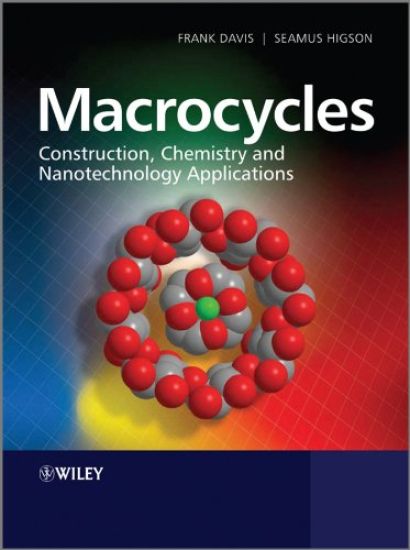
Macrocyclic molecules contain rings made up of seven or more atoms. They are interesting because they provide building blocks for synthesizing precise two or three dimensional structures – an important goal in nanotechnology. For example, they can be used to develop nanosized reaction vessels, cages, switches and shuttles, and have potential as components in molecular computers. They also have applications as catalysts and sensors. Macrocycles: Construction, Chemistry and Nanotechnology Applications is an essential introduction this important class of molecules and describes how to synthesise them, their chemistry, how they can be used as nanotechnology building blocks, and their applications. A wide range of structures synthesised over the past few decades are covered, from the simpler cyclophanes and multi-ring aromatic structures to vases, bowls, cages and more complex multi-ring systems and 3D architectures such as “pumpkins”, interlocking chains and knots. Topics covered include: principles of macrocycle synthesissimple ring compoundsmulti-ring aromatic structuresporphyrins and phthalocaninescyclophanescrown ethers, cryptands and spherandscalixarenes, resorcinarenes, cavitands, carcerands, and heterocalixarenescyclodextrinscucurbiturilscyclotriveratylenesrotaxanescatenanescomplex 3D architectures, including trefoils and knots Macrocycles: Construction, Chemistry and Nanotechnology Applications distills the essence of this important topic for undergraduate and postgraduate students, and for researchers in other fields interested in getting a general insight into this increasingly important class of molecules.
Macrocycles

Macrocycles

Frank Davis; Séamus Higson

John Wiley Sons Inc
2011
nidottu
Macrocyclic molecules contain rings made up of seven or more atoms. They are interesting because they provide building blocks for synthesizing precise two or three dimensional structures – an important goal in nanotechnology. For example, they can be used to develop nanosized reaction vessels, cages, switches and shuttles, and have potential as components in molecular computers. They also have applications as catalysts and sensors. Macrocycles: Construction, Chemistry and Nanotechnology Applications is an essential introduction this important class of molecules and describes how to synthesise them, their chemistry, how they can be used as nanotechnology building blocks, and their applications. A wide range of structures synthesised over the past few decades are covered, from the simpler cyclophanes and multi-ring aromatic structures to vases, bowls, cages and more complex multi-ring systems and 3D architectures such as “pumpkins”, interlocking chains and knots. Topics covered include: principles of macrocycle synthesissimple ring compoundsmulti-ring aromatic structuresporphyrins and phthalocaninescyclophanescrown ethers, cryptands and spherandscalixarenes, resorcinarenes, cavitands, carcerands, and heterocalixarenescyclodextrinscucurbiturilscyclotriveratylenesrotaxanescatenanescomplex 3D architectures, including trefoils and knots Macrocycles: Construction, Chemistry and Nanotechnology Applications distills the essence of this important topic for undergraduate and postgraduate students, and for researchers in other fields interested in getting a general insight into this increasingly important class of molecules.