Kirjojen hintavertailu – 12 903 735 kirjaa ja 27 kauppaa

Kirjailija

Sean Feast

Kirjat ja teokset yhdessä paikassa: 11 kirjaa, julkaisuja vuosilta 2015–2026, suosituimpiin kuuluu Coming Down in the Drink. Vertaile teosten hintoja ja tarkista saatavuus suomalaisista kirjakaupoista.

11 kirjaa

Kirjojen julkaisuvuodet: 2015–2026.

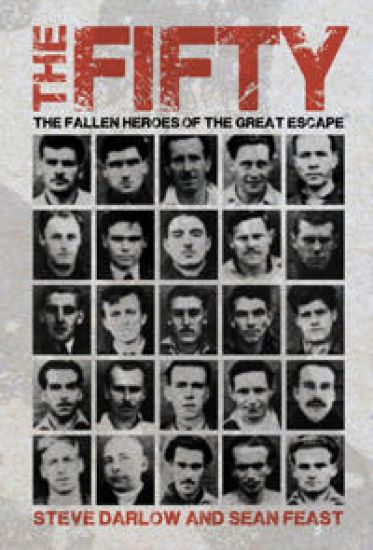
The Fifty

The Fifty

Steve Darlow; Sean Feast

FIGHTING HIGH LTD
2026
sidottu
The Great Escape has gone down in history as a story of bravery and cunning that ultimately led to the killing of fifty prisoners of war, all officially recorded as ‘beim Fluchtversuch erschossen’ – shot whilst attempting to escape. While the names of surviving escapers may be familiar, having lived to tell their stories, most of the murdered fifty are less well known, and many receive no more than a footnote in the stories, films and documentaries created thus far. So, who were these men? Where did they come from? How much fighting had they done? And how did they come to be prisoners of war? In The Fifty – The Fallen Heroes of the Great Escape, authors Steve Darlow and Sean Feast present the stories of the killed escapers. They look at their early lives, operational careers, and how they came to be in Stalag Luft 3. They touch upon the very human side of the escape and its aftermath, how the families came to be told, and their practical struggles even thirty years after the event to conclude their loved ones’ affairs in obtaining proof of how, where, and when they died. Crucially, the authors look at the way in which the lives of the murdered men are commemorated, and how their families wished them to be remembered. Brought together in a single volume, The Fifty presents a series of profiles of the fallen heroes – an homage for those whose bid for freedom ended in the most tragic circumstances.
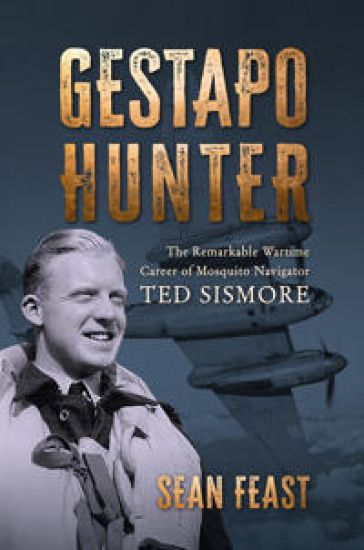
Gestapo Hunter

Gestapo Hunter

Sean Feast

Grub Street Publishing
2024
sidottu
Gestapo Hunter explores the charmed life and exceptional career of Ted Sismore, widely considered one of the RAF’s very best wartime navigators and leaders. A quiet, unassuming man who was nicknamed ‘Daisy’ on account of his youthful complexion, Ted was one of only a handful of aircrew to complete a tour of operations in Blenheims in the summer of 1941. He is best remembered, however, for his long association with the Mosquito. Planning and leading some of the Mossie’s most famous raids against the Nazi regime’s most-loathed characters. He flew in the daylight attack on Berlin, timed to coincide with an address being given by Hermann Göring, for which he received the first of several awards for gallantry and which was widely publicised. This was followed by a range of attacks which demonstrated the Mosquito’s range and marked the aircraft out for further special duties. Identified by Basil Embry, the mercurial AOC of 2 Group, as something of a kindred spirit, Ted joined the Group’s HQ staff, planning Operation Jericho, the famous attack on Amiens prison on February 18, 1944. He then took part in further attacks aimed at disrupting Gestapo activities including the bombing of their HQ at Odense. After the war, Ted teamed up with Mick Martin, the famous Dambuster, to break the flying record from London to Cape Town, in 1947, a journey of almost 7,000 miles. He later qualified as a pilot, flying Meteors, Javelins and Canberras, retiring as an air commodore. He died in 2012. As far as he was able Sean Feast used Ted’s own words throughout the book. The result is a fascinating insight into the life of an extraordinary man.
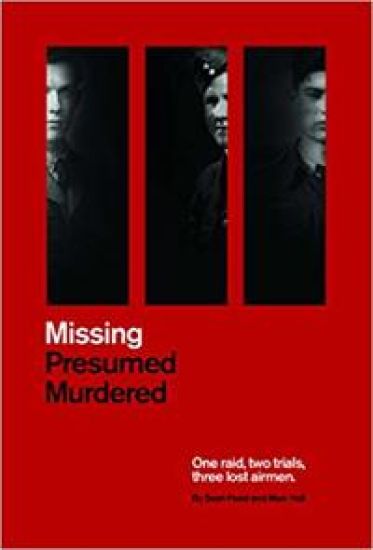
Missing Presumed Murdered

Missing Presumed Murdered

Sean Feast; Marc Hall

Fighting High Ltd
2024
sidottu
On 12 December 1944, with the war entering its final stages, Bomber Command launched its last Main Force raid on the Krupps Steel works at Essen. The attack was devastatingly successful, and completed for the loss of only a handful of aircraft. Three of the airmen lost in the raid are still listed as ‘missing’, believed killed in action. Extensive investigative research by aviation historians Sean Feast and Marc Hall has discovered the truth about what happened to these missing men, and how they are linked to the murder of three unidentified RAF airmen, on a bridge, within twenty-four hours of believing they were safe. They have also discovered the truth about a fourth airman, a Canadian, shot down on the same raid who died in mysterious circumstances and whose near-naked body was discovered after the war, hastily buried in an unmarked grave. In the centenary year of the RAF, the authors reveal a darker side to the history of the ‘Third Service’. Complementing historical research with the evidence of present-day specialists, they have pieced together the harrowing story of four murders, the identities of the victims and their killers, and the tantalising possibility that at least one of the ‘missing’ men may at last have been found.
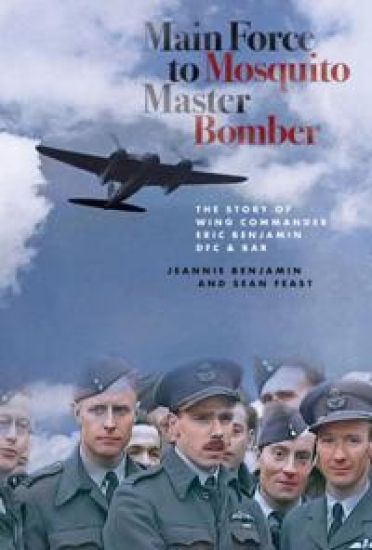
Main Force to Mosquito Master Bomber

Main Force to Mosquito Master Bomber

Jeannie Benjamin; Sean Feast

FIGHTING HIGH LTD
2024
sidottu
Wing Commander Eric Benjamin was no stranger to danger or excitement. In an action-packed career as part of the RAF Volunteer Reserve (RAFVR), he was awarded the Distinguished Flying Cross twice for his bravery under fire. He flew Fairey Battles with No. 150 Squadron during the Battle of France, Main Force Avro Lancasters with No. 61 Squadron during the Battle of Berlin, and De Havilland Mosquitoes as an elite Pathfinder Master Bomber in the latter stages of the war. He survived being shot down on his first operation, when his air gunner was severely wounded, and was among the last RAF aircrew to be evacuated from France in the summer of 1940. He was pulled clear of the mangled wreckage of a Vickers Wellington that crashed in flames during a spell as an instructor, narrowly escaping with his life for a second time, and ‘starred’ as a Flight Commander interviewed for Pathé News after a successful raid on Berlin in 1943. Towards the end of 1944, he achieved his ambition of flying Mosquitoes, and was selected and trained as a Master Bomber, operating as part of No. 54 Base in No. 5 Group and helping to mop up what was left of German industry and military might. It was from one of these sorties that his aircraft failed to return. Authored by Sean Feast and Eric’s daughter Jeannie, the book includes numerous previously unpublished photographs of Eric, his colleagues, and the aircraft he flew. An inveterate letter writer, Eric once said of flying that there was ‘no greater sport’. He died as he had lived, doing what he loved best.
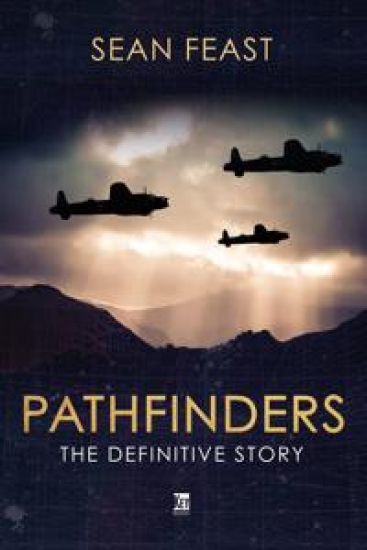
Pathfinders

Pathfinders

Sean Feast

KEY PUBLISHING LTD
2023
nidottu
Pathfinders is a new history of Bomber Command’s corps d’elite and the men who led the greatest striking force ever known. The story explores the genesis of Pathfinder Force (PFF), from its initial inception and less-than-spectacular start to its development as a precision instrument that gave the razor edge to the RAF bomber offensive. It looks at its difficult birth – Sir Arthur Harris was vehemently opposed to its creation – and the key personalities and squabbles, in particular the increasingly bitter rivalry between the mercurial PFF commander, Australian Donald Bennett, and his rival in 5 Group, Sir Ralph Cochrane, and what Bennett saw as Harris’ ultimate betrayal. The book explores how crews became Pathfinders, some with bounding enthusiasm, others more reluctantly or by chance, and how the quality and availability of crews varied throughout the war. Drawing on more than 20 years of research and interviews with the heroes of PFF, it considers their training and the methods and techniques deployed on operations including the Master Bomber system, and it examines their successes and failures, the tragedies and triumphs, and Pathfinder Force’s vital contribution to victory in Europe.
The Pathfinders

The Pathfinders

Sean Feast

KEY PUBLISHING LTD
2022
sidottu
This definitive history of the Pathfinders and the role they played in World War Two takes an in-depth look at the elite unit, from its initial inception, and less than spectacular start, to its development as a precision instrument that transformed bomber operations. The aircraft, technology and weapons used are covered in full, as are the characters involved with the unit. The author also details the training and techniques deployed, in particular the emergence of the Master Bomber and Long-Stop systems. Finally, the Pathfinder Force's contribution to victory is assessed. This comprehensive look at one of the war's most fascinating units will give the reader a greater understanding of the unit's vital contribution to the war and show how some of the techniques developed are still in use today.
The Lost Graves of PeenemuNde

The Lost Graves of PeenemuNde

Sean Feast; Mike McLeod

Fighting High Ltd
2020
sidottu
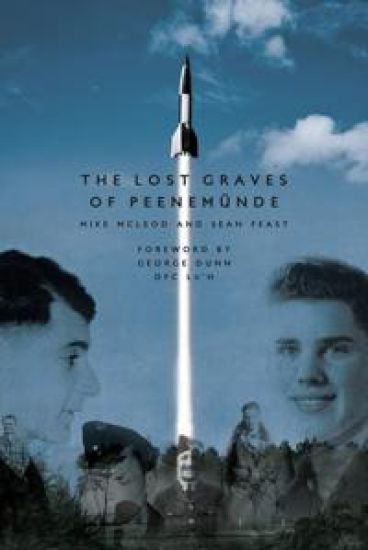
The raid on the secret rocket research establishment at Peenemunde on the Baltic coast in August 1943 has gone down in history as one of the most successful and remarkable of the war. The site was virtually obliterated, and the Germans forced to move rocket production and development elsewhere. But it came at a terrible cost, with 40 bombers failing to return and 245 RAF aircrew killed. After the war, the bodies of many of those who were killed were recovered by the Missing Research and Enquiry Service (MRES) and buried in Commonwealth war graves. But not all. A series of mishaps and miscommunication led the MRES to search in the wrong place. Funds to continue the search dried up. And with the site falling into Russian hands, and access to British and US search parties severely restricted, the search ultimately had to be called off, and the remaining men commemorated on the Runnymede Memorial as having no known grave. But some of the missing men are still there, waiting to be found. With a foreword from Peenemunde raid veteran pilot George Dunn DFC L d'H, and illustrated with a wealth of previously unpublished photographs, Sean Feast and Mike McLeod tell the story of the forgotten graves of Peenemunde, the search to discover the truth about their final resting place, and the chance that their bodies may yet be discovered and returned.
Halton Boys

Halton Boys

Sean Feast

Grub Street Publishing
2020
sidottu
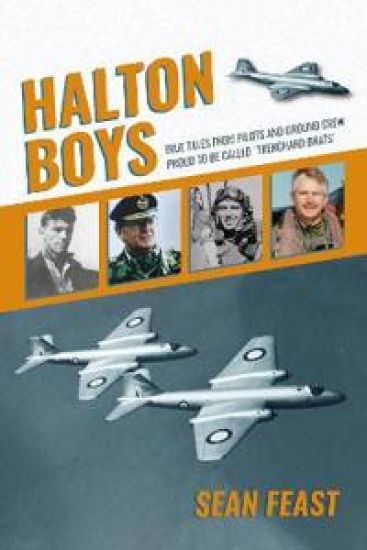
The RAF Halton Apprenticeship Scheme has a deserved reputation for excellence. The brainchild of MRAF Hugh Trenchard, the founder of the Royal Air Force, it took the ‘traditional’ idea of an apprenticeship and interpreted it in a novel way. It allowed teenage boys from any social background or geography to learn a technical trade that would equip them for their future lives, within and beyond the RAF. It also gave the best an opportunity to become pilots and break into the once public-school-dominated officer class. Of the 50,000 boys trained as apprentices, seventeen won the Sword of Honour at Cranwell, and more than 1,200 were commissioned with 110 achieving Air Rank. Eighteen have been knighted, with well over 1,000 others being honoured at various levels of state. More than a hundred Halton Boys served as pilots in the Battle of Britain (and many more as airframe/engine fitters and armourers), including the mercurial Don Finlay, the former Olympic hurdler. Others like Gerry Blacklock and Pat Connolly flew bombers on perilous missions over Western Europe or took part in the famous ‘Dams’ Raid. Then there were the three men murdered for their part in the Great Escape, and those who battled and survived years as prisoners of the Japanese in the Far East. In the jet era, ex-apprentice Graham Hulse became an ‘ace’ in Korea, serving with an American fighter squadron, and Mike Hines went on to become OC 617 Squadron after having first flown operations during the Suez crisis. Others like Charles Owen became a pioneer commercial jet pilot, and Peter Goodwin had the misfortune of being captured in the first Gulf War and used as a human shield. Some forged successful careers beyond the RAF, like Lawrie Haynes, who was on the main board at Rolls-Royce and is now chairman of the Board of Trustees of the Royal Air Force Benevolent Fund, and Eugene Borysuik – one of the many Polish apprentices trained at Halton, who enjoyed a successful career at GEC. And there were many others beyond air and ground crew including policemen, government officials and even bishops whose careers started with the Halton family. This is the story of Halton told through and by the boys who were there and who are still proud to be called ‘Trenchard Brats’.
Coming Down in the Drink

Coming Down in the Drink

Sean Feast

Pen Sword Aviation
2017
sidottu
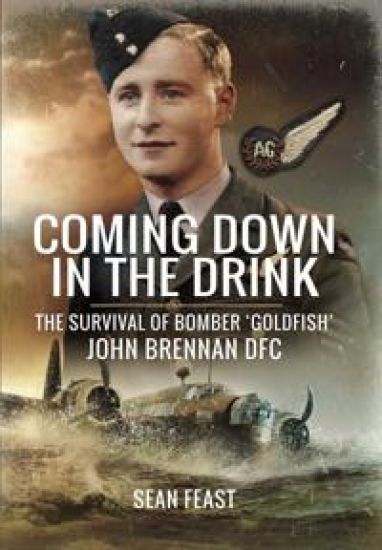
Coming Down in the Drink is the story of Flight Lieutenant John Brennan DFC. John is an Irishman who need not have fought in the war at all. A sense of adventure took him to London where he trained as a chef before joining the RAF and qualifying as a wireless operator/air gunner. Posted to 148 Squadron in the Middle East in 1941, John was soon in the fray as the front gunner of a Wellington, flying daily sorties to Benghazi in what was known as 'the mail run', bombing enemy ships that were offloading vital supplies to Rommel and the Afrika Korps. As much at risk from faulty engines as enemy action, John completed a tour of almost 300 hours of operational flying, including an operation in March 1942 in which his Wellington suffered an engine failure and came down in the sea. He thus became a member of the Goldfish Club. Posted home and commissioned, he spent time instructing in Scotland, surviving another accident in which his pilot crashed into a mountainside. Volunteering for a second tour, John joined 78 Squadron in the summer of 1944, being crewed with one of the flight commanders. He completed his tour, this time as a wireless operator, in March 1945, by which time they were operating in daylight in support of the Allied advance. He was awarded the DFC. John is one of the only surviving wartime members of the Goldfish Club, and has a fascinating record of 63 operations that covers both the 'forgotten' bombing war in the Middle East in 1941/42, operating from strips of sand in the barren desert, to a main force heavy bomber squadron in the snow of Yorkshire at the end of the war.
Bomber Command: Battle of Berlin Failed to Return

Bomber Command: Battle of Berlin Failed to Return

Steve Bond; Steve Darlow; Sean Feast; Andy Macdonald; Robert Owen; Nicole Russel; Howard Sandall

Fighting High Ltd
2017
sidottu
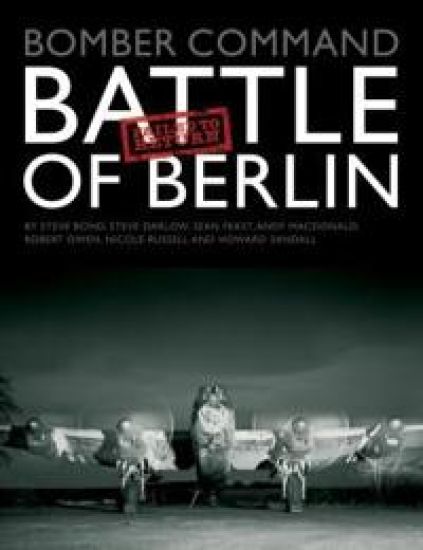
‘Tonight you are going to the Big City. You will have the opportunity to light a fire in the belly of the enemy that will burn his black heart out.’ The message from Commander-in-Chief of RAF Bomber Command Sir Arthur Harris was clear. As the Second World War continued into a fifth year, the airmen of Bomber Command were to fly deep into hostile airspace and bring the war direct to the German Nazi capital Berlin. From the autumn of 1943 to the last days of winter in early 1944, during the hours of extended darkness, the bomber crews braved the flak, the searchlights, enemy night fighters and extremes of weather, to bombard the ‘black heart’. Prior to the all-out campaign against the ‘Big City’ Sir Arthur Harris firmly believed his bomber force could break the German will to wage war, but he also prophesied that ‘It will cost us between 400 and 500 aircraft’. Fighting High Publishing brings together acclaimed Bomber Command historians to tell the story of some of the thousands of airmen who failed to return from operations as part of the 1943 and 1944 Bomber Command Battle of Berlin. The authors, utilising family archives, personal testimony and records, wartime memoirs, diaries and letters, witness recollections, logbooks, and official documents, piece together the remarkable, yet ultimately tragic events surrounding the losses described. Illustrated throughout with previously unpublished black and white and colour photographs Bomber Command Battle of Berlin Failed to Return ensures the memory of those who made the ultimate sacrifice is kept alive. ‘We Will Remember Them’.
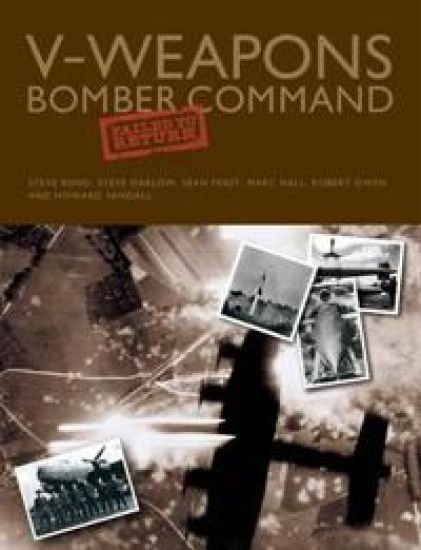
V-Weapons Bomber Command Failed to Return

V-Weapons Bomber Command Failed to Return

Howard Sandall; Robert Owen; Marc Hall; Sean Feast; Steve Darlow; Dr Steve Bond

Fighting High Ltd
2015
sidottu
In the Summer of 1944 Nazi Germany launched its terrifying Vergeltungswaffen (reprisal weapon) attack against the population of south-east England. Under direct attack the Allies responded. The Supreme Allied Commander General Dwight D. Eisenhower was quite clear that the V-weapon counter measures were of paramount importance over everything except the urgent requirements of the D-Day and Normandy land battle, ’this priority to obtain until we can be certain that we have definitely gotten the upper hand of this particular business.’ He would use all the resources at his disposal including the Royal Air Force’s heavy bomber force. The task for RAF Bomber Command was simple. If the bomber crews could reduce the number of V1s launched, the fighter aircraft and gun defences had a better chance to intercept and shoot down the flying bombs. But these pilotless aircraft were not the only menace, the V2 rocket offensive would soon be launched, and the Allies closely monitored the construction of what they came to learn was the V3 ‘supergun’ site. When the war came to a close Bomber Command could justifiably claim success against the V-Weapons. There was a cost though – a cost in aircrew lives. V-Weapons Bomber Command Failed to Return tells the story of some of those airmen who were prepared to risk their lives countering the German V-Weapon offensive in direct defence of the civilian population. They had responded to what British Prime Minister Winston Churchill described as the attempt to ‘blast the viper in his nest’. Their story deserves to be told. ‘We Will Remember Them’.