Kirjojen hintavertailu – 12 903 725 kirjaa ja 27 kauppaa

Kirjailija

Sean M. Kelley

Kirjat ja teokset yhdessä paikassa: 3 kirjaa, julkaisuja vuosilta 1997–2023, suosituimpiin kuuluu Atlas of Maritime Florida. Vertaile teosten hintoja ja tarkista saatavuus suomalaisista kirjakaupoista.

3 kirjaa

Kirjojen julkaisuvuodet: 1997–2023.

Atlas of Maritime Florida

Atlas of Maritime Florida

Roger C. Smith; James J. Miller; Sean M. Kelley; Linda G. Harbin

University Press of Florida
1997
nidottu
An atlas of 13,000 years of Florida maritime history, this book begins with an overview of its bathymetry, shoreline, winds and currents. Other chapters examine the growth of Florida's maritime industries and survey ship types, lighthouse locations, ports, hurricanes, reefs and shipwreck sites.
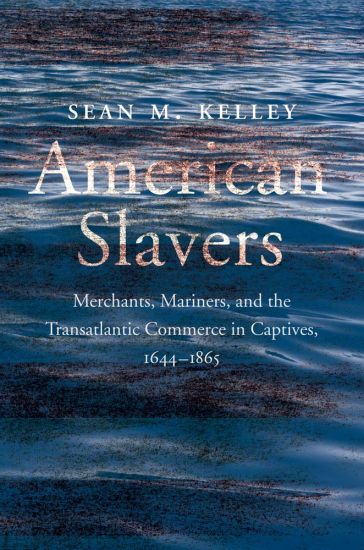
American Slavers

American Slavers

Sean M. Kelley

YALE UNIVERSITY PRESS
2023
sidottu
The first telling of the unknown story of America’s two-hundred-year history as a slave-trading nation “A work of impressive breadth, deep research, and evenhanded analysis.”—James Oakes, New York Review of Books A total of 305,000 enslaved Africans arrived in the New World aboard American vessels over a span of two hundred years as American merchants and mariners sailed to Africa and to the Caribbean to acquire and sell captives. Using exhaustive archival research, including many collections that have never been used before, historian Sean M. Kelley argues that slave trading needs to be seen as integral to the larger story of American slavery. Engaging with both African and American history and addressing the trade over time, Kelley examines the experience of captivity, drawing on more than a hundred African narratives to offer a portrait of enslavement in the regions of Africa frequented by American ships. Kelley also provides a social history of the two American ports where slave trading was most intensive, Newport and Bristol, Rhode Island. In telling this tragic, brutal, and largely unknown story, Kelley corrects many misconceptions while leaving no doubt that Americans were a nation of slave traders.
Los Brazos de Dios

Los Brazos de Dios

Sean M. Kelley

Louisiana State University Press
2010
sidottu
Historians have long believed that the ""frontier"" shaped Texas plantation society, but in this detailed examination of Texas's most important plantation region, Sean M. Kelley asserts that the dominant influence was not the frontier but the Mexican Republic. The Lower Brazos River Valley -- the only slave society to take root under Mexican sovereignty -- made replication of eastern plantation culture extremely difficult and complicated. By tracing the synthesis of cultures, races, and politics in the region, Kelley reveals a distinct variant of southern slavery -- a borderland plantation society. Kelley opens by examining the four migration streams that defined the antebellum Brazos community: Anglo-Americans and their African American slaves who constituted the first two groups to immigrate; Germans who came after the Mexican government barred immigrants from the U. S. while encouraging those from Europe; and African-born slaves brought in through Cuba who ultimately made up the largest concentration of enslaved Africans in the antebellum South. Within this multicultural milieu, Kelley shows, the disparity between Mexican law and German practices complicated southern familial relationships and master-slave interaction. Though the Mexican policy on slavery was ambiguous, alternating between toleration and condemnation, Brazos slaves perceived the Rio Grande River as the boundary between white supremacy and racial egalitarianism. As a result, thousands fled across the border, further destabilising the Brazos plantation society. In the 1850s, nonslaveholding Germans also contributed to the upheaval by expressing a sense of ethnic solidarity in politics. In an attempt to undermine Anglo efforts to draw a sharp boundary between black and white, some Germans hid runaway slaves. Ultimately, Kelley demonstrates how the Civil War brought these issues to the fore, eroding the very foundations of Brazos plantation society. With Los Brazos de Dios, Kelley offers the first examination of Texas slavery as a borderland institution and reveals the difficulty with which southern plantation society was transplanted in the West.