Kirjojen hintavertailu – 12 859 828 kirjaa ja 27 kauppaa

Kirjailija

Sebastian Bauer

Kirjat ja teokset yhdessä paikassa: 12 kirjaa, julkaisuja vuosilta 2008–2021, suosituimpiin kuuluu OpenGeoSys Tutorial. Vertaile teosten hintoja ja tarkista saatavuus suomalaisista kirjakaupoista.

12 kirjaa

Kirjojen julkaisuvuodet: 2008–2021.

OpenGeoSys Tutorial

OpenGeoSys Tutorial

Agnes Sachse; Erik Nixdorf; Eunseon Jang; Karsten Rink; Thomas Fischer; Beidou Xi; Christof Beyer; Sebastian Bauer; Marc Walther; Yuanyuan Sun; Yonghui Song

Springer International Publishing AG
2017
nidottu
This book explores the application of the open-source software OpenGeoSys (OGS) for hydrological numerical simulations concerning conservative and reactive transport modeling. It provides general information on the hydrological and groundwater flow modeling of a real case study and step-by-step model set-up with OGS, while also highlighting related components such as the OGS Data Explorer. The material is based on unpublished manuals and the results of a collaborative project between China and Germany (SUSTAIN H2O). Though the book is primarily intended for graduate students and applied scientists who deal with hydrological modeling, it also offers a valuable source of information for professional geoscientists wishing to expand their knowledge of the numerical modeling of hydrological processes including nitrate reactive transport modeling. This book is the second in a series that showcases further applications of computational modeling in hydrological science.
Mathematisches Modellieren

Mathematisches Modellieren

Sebastian Bauer

Springer Fachmedien Wiesbaden
2021
nidottu
Das Buch richtet sich an Studierende und Lehrende des Lehramts der Sekundarstufe sowie an Lehrerinnen und Lehrer der Sekundarstufe. Es baut auf Grundkenntnissen in der Analysis und der Linearen Algebra, wie sie gewöhnlich in den ersten Semestern des Studiengangs erworben werden, auf und knüpft an typische Modellierungsaufgaben aus der Schulpraxis an. Hierbei werden besonders bedeutende, historisch interessante oder ästhetisch ansprechende mathematische Modelle unterschiedlicher Bezugswissenschaften zusammen mit der dafür benötigten mathematischen Theorie entwickelt und dargestellt. Dabei erfolgt die nötige Theorieentwicklung immer in enger Verzahnung mit den betrachteten mathematischen Modellen. Typische Vorgehensweisen des Modellierens, wie Dimensionsanalysen, Vereinfachung durch Linearisierung, Isolierung verschiedener Effekte und Vernachlässigung kleiner Effekte, werden im Verlauf der Darstellung immer wieder aufgegriffen. Auf diese Weise ermöglicht das Werk Lehrkräften einen fachlich „höheren Standpunkt“ zu den schulischen Möglichkeiten und Anforderungen des Mathematischen Modellierens.
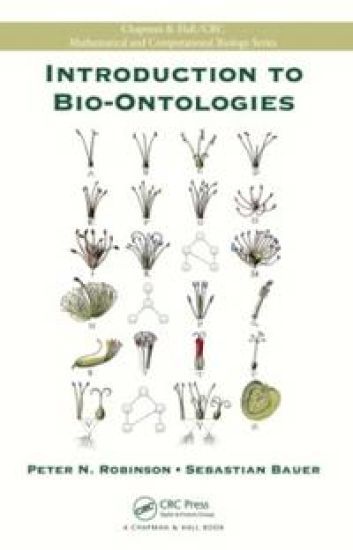
Introduction to Bio-Ontologies

Introduction to Bio-Ontologies

Peter N. Robinson; Sebastian Bauer

CRC Press
2020
nidottu
Introduction to Bio-Ontologies explores the computational background of ontologies. Emphasizing computational and algorithmic issues surrounding bio-ontologies, this self-contained text helps readers understand ontological algorithms and their applications. The first part of the book defines ontology and bio-ontologies. It also explains the importance of mathematical logic for understanding concepts of inference in bio-ontologies, discusses the probability and statistics topics necessary for understanding ontology algorithms, and describes ontology languages, including OBO (the preeminent language for bio-ontologies), RDF, RDFS, and OWL. The second part covers significant bio-ontologies and their applications. The book presents the Gene Ontology; upper-level ontologies, such as the Basic Formal Ontology and the Relation Ontology; and current bio-ontologies, including several anatomy ontologies, Chemical Entities of Biological Interest, Sequence Ontology, Mammalian Phenotype Ontology, and Human Phenotype Ontology. The third part of the text introduces the major graph-based algorithms for bio-ontologies. The authors discuss how these algorithms are used in overrepresentation analysis, model-based procedures, semantic similarity analysis, and Bayesian networks for molecular biology and biomedical applications. With a focus on computational reasoning topics, the final part describes the ontology languages of the Semantic Web and their applications for inference. It covers the formal semantics of RDF and RDFS, OWL inference rules, a key inference algorithm, the SPARQL query language, and the state of the art for querying OWL ontologies. Web ResourceSoftware and data designed to complement material in the text are available on the book’s website: http://bio-ontologies-book.org The site provides the R Robo package developed for the book, along with a compressed archive of data and ontology files used in some of the exercises. It also offers teaching/presentation slides and links to other relevant websites. This book provides readers with the foundation to use ontologies as a starting point for new bioinformatics research projects or to support current molecular genetics research projects. By supplying a self-contained introduction to OBO ontologies and the Semantic Web, it bridges the gap between both fields and helps readers see what each can contribute to the analysis and understanding of biomedical data.
Amazon Echo: 1 x 1 Amazon Echo für Anfänger und Fortgeschrittene

Amazon Echo: 1 x 1 Amazon Echo für Anfänger und Fortgeschrittene

Sebastian Bauer

Createspace Independent Publishing Platform
2017
nidottu
Du interessierst dich f r die Amazon Echo Ger te? Du hast dir vielleicht selbst eines gekauft und m chtest lernen, es zu bedienen? Dann ist dieses Buch richtig f r dich. Der Amazon Echo, und vor allem sein schlaues K pfchen Alexa, sind in aller Munde und in immer mehr Haushalten zu finden. Kein Wunder, schlie lich er ffnen sie uns zahlreiche M glichkeiten und bieten Unterst tzung im Alltag - und das, dank der bersichtlichen Bedienung, l ngst nicht nur f r Technik-Gurus. In diesem Buch findest du... Info's zur Echo FamilieEine Anleitung zur Einrichtung deines EchosDie wichtigsten Funktionen im berblickEine Auswahl interessanter Skills"Easter Eggs" zum SchmunzelnInfo's zum DatenschutzEinen Blick in unsere smarte ZukunftDu willst mehr erfahren? Sichere Dir Jetzt dein Exemplar. Scroll hoch und klicke auf "JETZT KAUFEN MIT 1-CLICK"
Glas-Titandioxid-Komposite für LTCC-Anwendungen

Glas-Titandioxid-Komposite für LTCC-Anwendungen

Sebastian Bauer

AV Akademikerverlag
2012
pokkari
Inhaltlich unver nderte Neuauflage. In der vorliegenden Arbeit wird die Herstellung von Glas/Titandioxid-Kompositen mit hohen Permittivit ten beschrieben. Ausgehend vom tern ren System Bariumoxid-Boroxid-Titandioxid (BaO-B2O3-TiO2) werden zwei verschiedene Glaszusammensetzungen erschmolzen und die Materialeigenschaften mit unterschiedlichen F llergehalten erarbeitet. Die Permittivit ten der hergestellten amorphen Gl ser, die als Ausgangsverbindungen verwendet werden, liegen bei 13 und 14. Die dielektrischen Verlustfaktoren sind dabei f r beide Gl ser unter 2,5.10-3. Es wird gezeigt, dass Komposite mit F llergehalten von bis zu 30 Vol.-% Titandioxid bei gleichzeitig niedrigen Porosit ten von unter 5 Vol.-% hergestellt werden k nnen. Die Permittivit ten dieser Komposite liegen, wie erwartet, bei Werten von ber 30. Die Abh ngigkeit der Permittivit ten mit steigendem F llergehalt wird best tigt.
Introduction to Bio-Ontologies

Introduction to Bio-Ontologies

Peter N. Robinson; Sebastian Bauer

Taylor Francis Inc
2011
sidottu
Introduction to Bio-Ontologies explores the computational background of ontologies. Emphasizing computational and algorithmic issues surrounding bio-ontologies, this self-contained text helps readers understand ontological algorithms and their applications. The first part of the book defines ontology and bio-ontologies. It also explains the importance of mathematical logic for understanding concepts of inference in bio-ontologies, discusses the probability and statistics topics necessary for understanding ontology algorithms, and describes ontology languages, including OBO (the preeminent language for bio-ontologies), RDF, RDFS, and OWL. The second part covers significant bio-ontologies and their applications. The book presents the Gene Ontology; upper-level ontologies, such as the Basic Formal Ontology and the Relation Ontology; and current bio-ontologies, including several anatomy ontologies, Chemical Entities of Biological Interest, Sequence Ontology, Mammalian Phenotype Ontology, and Human Phenotype Ontology. The third part of the text introduces the major graph-based algorithms for bio-ontologies. The authors discuss how these algorithms are used in overrepresentation analysis, model-based procedures, semantic similarity analysis, and Bayesian networks for molecular biology and biomedical applications. With a focus on computational reasoning topics, the final part describes the ontology languages of the Semantic Web and their applications for inference. It covers the formal semantics of RDF and RDFS, OWL inference rules, a key inference algorithm, the SPARQL query language, and the state of the art for querying OWL ontologies. Web ResourceSoftware and data designed to complement material in the text are available on the book’s website: http://bio-ontologies-book.org The site provides the R Robo package developed for the book, along with a compressed archive of data and ontology files used in some of the exercises. It also offers teaching/presentation slides and links to other relevant websites. This book provides readers with the foundation to use ontologies as a starting point for new bioinformatics research projects or to support current molecular genetics research projects. By supplying a self-contained introduction to OBO ontologies and the Semantic Web, it bridges the gap between both fields and helps readers see what each can contribute to the analysis and understanding of biomedical data.