Kirjailija
Sebastian Brock
Kirjat ja teokset yhdessä paikassa: 21 kirjaa, julkaisuja vuosilta 1992–2021, suosituimpiin kuuluu Diccionario Gorgias Siriaco-Español. Vertaile teosten hintoja ja tarkista saatavuus suomalaisista kirjakaupoista.
21 kirjaa
Kirjojen julkaisuvuodet: 1992–2021.
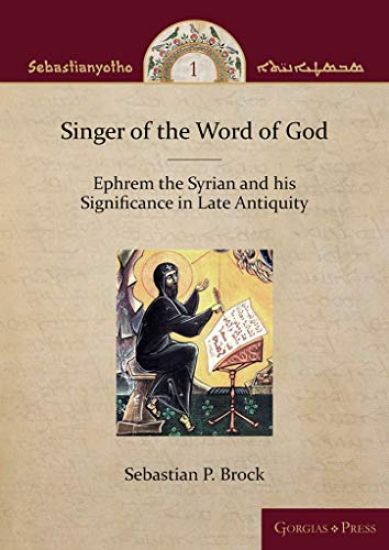
As the first volume of the Sebastianyotho series, this book collects Sebastian P. Brock’s articles related to Ephrem the Syrian. The articles cover a wide array of topics, including a biographical overview of the saint, an exposition of St. Ephrem’s importance for Christianity today and his relevance as a theologian, an analysis of some of his works, and a bibliographic guide to editions of these works. While most of the articles were previously published, many are updated and some are published in English for the first time.
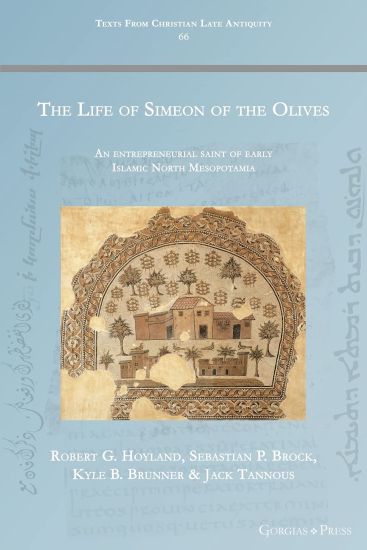
The Life of Simeon of the Olives
Robert Hoyland; Sebastian Brock; Kyle Brunner; Jack Tannous
Gorgias Press
2021
nidottu
The first ever critical edition and complete translation of the Syriac Life of Saint Simeon of the Olives, who was an abbot of Qartmin Monastery in Tur Abdin and a bishop of the city of Harran in the late seventh and early eighth century AD.
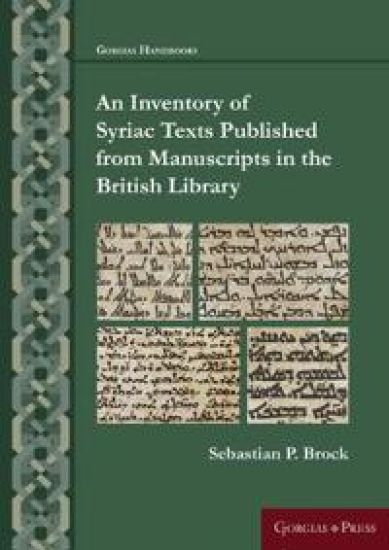
An Inventory of Syriac Texts Published from Manuscripts in the British Library
Sebastian Brock
Gorgias Press
2020
sidottu
The British Library possesses one of the most important collections of Syriac manuscripts in the world, with large numbers dating back to the second half of the first millennium CE. The publication of important Syriac texts from these manuscripts has been going on for some 180 years and still continues. The aim of the present volume is to provide a guide to these scattered publications: following the sequence of the shelf-marks (call numbers), for each manuscript indication is given of what texts have been published from it. For convenience, a concordance between Wright’s Catalogue numbers and shelf-marks is provided, along with a list of palimpsests and of joins with manuscripts in other libraries, in particular with those still in the Library of Dayr al-Surian in Egypt, the monastery which was the source of over 500 manuscripts and fragments purchased by the British Museum in the mid nineteenth century.
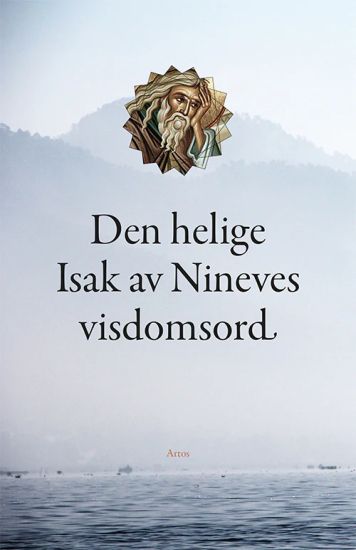
"Jag känner att här, för första gången, finns en röst som ger resonans i de djupaste skikten av mitt väsen, som hittills har varit stängt och okänt för mig. Trots att han är långt borta från mig i tid och rum, har han kommit rätt in i min själs hus." Så skriver en grekisk-ortodox munk på berget Athos om Isak av Nineve, även kallad Isak Syriern munken och teologen som levde som eremit i nuvarande Irak och Iran på 600-talet. I denna volym har 153 visdomsord av Isak av Nineve samlats. Tänkespråk som talar om behovet av disciplin och koncentration, men som också vittnar om ett stort mått av omsorg och tolerans. Urvalet av visdomsord har gjorts av den brittiske syriologen Sebastian Brock, som även försett boken med ett efterord. Här erbjuds en synoptisk utgåva som utöver den svenska översättningen också innehåller den syriska originaltexten. Boken är ett utsnitt ur Isak av Nineves rika andliga författarskap. Det är texter som har haft stor betydelse för östkyrklig tradition i allmänhet och den ryska litteraturen i synnerhet.
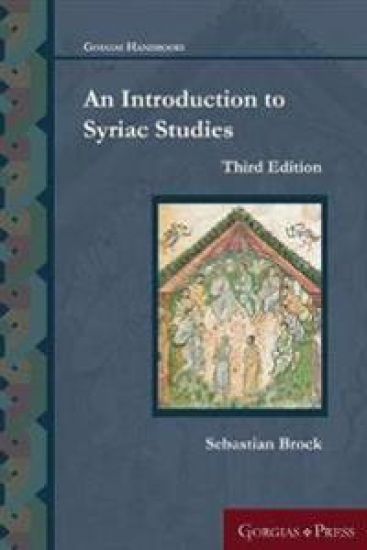
This Introduction aims to provide basic guidance to important areas of Syriac studies. The relevance of Syriac studies to a variety of other fields is explored. A brief orientation to the history of Syriac literature is offered, and Syriac is set within the context of the other Aramaic dialects. A thorough discussion on important tools (Instrumenta Studiorum) is presented; topics include grammars, dictionaries, the Bible in Syriac, histories of Syriac literature, bibliographical aids and relevant series, periodicals, and encyclopedias. This Introduction should prove useful both for the student beginning Syriac studies and for scholars working in adjacent fields.
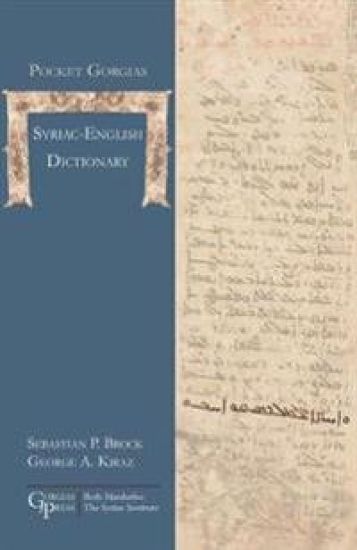
The Pocket Dictionary is both a convenient academic resource and a door into the world of Modern Literary Syriac. With 13,000 entries drawn from the major existing works, it is a practical tool for all but the most specialized Classical Syriac texts.
Diccionario Gorgias Siriaco-Español
Joan Ferrer; George Kiraz; Sebastian Brock
Gorgias Press
2016
sidottu
El Diccionario Gorgias Siriaco-Español, basado en el Gorgias Concise Syriac-English, English-Syriac Dictionary de Brock y Kiraz, ha sido concebido como un recurso académico, concebido tanto para el siriaco clásico como para el siriaco literario moderno. A Concise Syriac-Spanish Dictionary. Based on Brock and Kiraz's 2015 Gorgias Concise Syriac-English, English-Syriac Dictionary, it is designed to be a convenient academic resource for Classical Syriac.
A sensitive and evocative treatment of the role of the Holy Spirit in worship. With a keen awareness of the tradition of Syrian Christianity, Brock begins his exploration with the role of the Holy Spirit in the Syriac Bible. A striking aspect of this tradition is the imagery used for the Spirit, including: compassionate mother, fire, olive oil, as well as the more common image of dove. Brock also summarizes commentaries and other literature on the baptismal rite, touching on Syriac literature and works translated from the Greek.
The fame of the martyr St. Phokas, first bishop of Sinope (on the Black Sea) and patron of seafarers, had spread to many parts of the Christian world by the fifth and sixth centuries. Although the Acts of his martyrdom under Trajan were composed in Greek, the earliest witness to them is the Syriac translation which is edited and translated here from two early manuscripts.
In the present volume, Sebastian Brock provides an introduction and overview of the unique themes and features of spirituality in the Syriac tradition and includes excerpts from various texts throughout the Syriac tradition that exhibit these features.
Brock provides an indispensable bibliographic resource for Jacob of Serugh scholarship. This guide lists Jacob's mimre by biblical passage and liturgical events, uplifted saints and topics, other works including prose and letters, and recommended secondary sources for further study.
Jacob of Sarug (451–521) was a prolific writer of the Syriac Church and was known as “the flute of the Holy Spirit and the harp of the believing church”. Sebastian Brock gives the Syriac edition of six homilies written by Jacob: on the birth of our Lord; on the baptism of our Lord; on the Great Lent; on Palm Sunday; on Good Friday; on Easter Sunday. The text is based on an ancient manuscripts preserved in London and dated 609.
Sebastian Brock provides an overview of Syriac literature from the second to the twenty-first century. Brock divides this overview into six historical periods, surveys the important authors and writings of each period, and provides excerpts from some important writings.
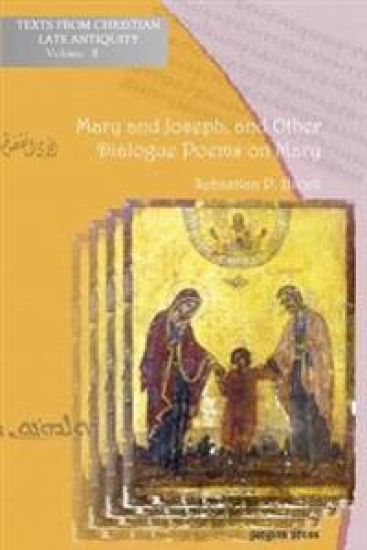
What was Joseph’s reaction when he arrived home to find Mary pregnant? How did Mary manage to persuade him that her child was none other than the Son of God? The Syriac literary tradition had a unique way of answering these sorts of questions raised by the Bible. Dialogue poems (sughyotho) offer lively, thought-provoking, and often delightful re-imaginings of Biblical events. They expand the Biblical stories, giving the familiar characters more dialogue and describing their inner thoughts. The collection provides five dialogue poems featuring Mary, in Syriac original with facing English translation.
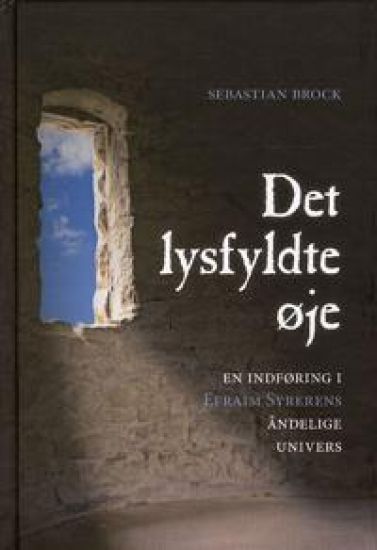
Efraim Syreren, en åndelig forfatter fra det fjerde århundrede, er på enestående vis et mødested mellem øst og vest, mellem europæisk kristendom på den ene side, og asiatisk og afrikansk kristendom på den anden side. For kristne med en europæisk baggrund er Efraim en forfriskende modvægt til en tradition, der er alt for fokuseret på intellektet – mens han for asiatiske og afrikanske kristne er den store kirkefader og teolog, der kan læses uden et forudgående kendskab til græsk filosofisk tradition. Når Efraim er mindre kendt end andre kirkefædre, skyldes det dels at han skrev på syrisk, dels at han skrev om teologi i poetisk form. Ironisk nok er disse hindringer for udbredelsen af hans skrifter de samme, som gør ham til en så spændende skikkelse i vores tid. Sebastian Brock er en af de førende eksperter i Efraim Syreren. Han giver i denne bog en fin introduktion til Efraims tænkning og åndelige univers, og samtidig indeholder bogen et fyldigt uddrag af tekster fra hans forfatterskab.
Dialogue poetry is a genre that began in ancient Sumer and continues in rich fashion in the Syriac tradition. Sebastian Brock has selected an edition of twenty six dialogue poems: between the Church and Zion; Abraham and Isaac; Joseph and Benjamin; the body and the soul; Joseph and Mary; the thief and the cherub; Mary and the Magi; the church and the believers; the angel and Mary; among the months of the year; between the angel and Zachariah; death and Satan; Jesus and the faithful; the two thieves; Jesus and John; the sinful woman and Satan; Abel and Cain; and wheat and gold.
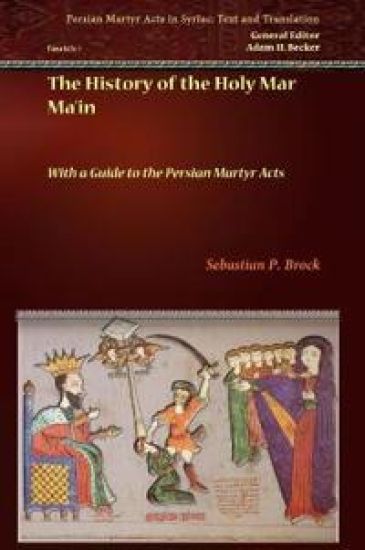
The History of Holy Mar Ma‘in of Sinjar tells the story of a Sasanian general during the time of Shapur II (309-79) who suffered persecution after his conversion to Christianity. In this volume, the first in this new series from Gorgias Press, Sebastian P. Brock provides the first edition ever of the Syriac text of the History of Ma‘in as well as the first full translation of it. This volume also includes a basic guide to the whole corpus of Persian Martyr Acts as well as useful indices to these numerous texts.
This fourth collection by Sebastian Brock focuses on three areas: the christology of the Church of the East, the distinctive phraseology of the invocations to the Holy Spirit in the Syriac liturgical tradition, and two important early Commentaries on the Liturgy. The inclusion of the Church of the East into ecumenical dialogue in recent years has stimulated a renewed study of its christology, which has often been badly misunderstood. A close study of the formative texts of the fifth to seventh centuries indicates that the traditional characterisation of this Church as 'Nestorian' is not only unsatisfactory, but also thoroughly misleading. There follows a series of studies of the wording of the many invocations to the Holy Spirit to be found in Syriac liturgical texts. These bring to light a number of intriguing features, some of which can be traced back to the Jewish roots of one strand of early Syriac Christianity. Syriac also preserves one of the earliest Commentaries on the Liturgy; dating from the fifth century, it proved influential in all three Syriac liturgical traditions, and was even translated into Sogdian. This short text, and another longer work by Gabriel of Qatar (fl. c. 600), are introduced and translated in full.
The Bible in the Syriac Tradition (Kthobo Qadisho L-phuth Mashlmonutho Suryoyto
Sebastian Brock; Mor Polycarpus Augin Aydin
Gorgias Press
2002
nidottu
This is an introduction, written in Syriac, to the Syriac versions of the Bible, with chapters on the manuscript tradition, the main editions, commentaries, and various aspects of the ways the Bible was interpreted and used in the Syriac literary and liturgical tradition. Originally written for a Syriac Studies course at the St Ephrem Ecumenical Research Institute (SEERI), in Kottayam, India, this new edition has been brought up to date and the bibliography expanded.
It is often forgotten that many people in Late Antique Syria were bilingual in Syriac and Greek. The 16 articles in this volume explore different aspects of the interaction between these two literary cultures, exemplified in the works of two of the greatest Christian poets and hymnographers of the period: Ephrem the Syrian and Romanos the Melode. Among the topics covered are the legend of King Abgar and the origins of Christianity in Edessa, Syriac texts on the finding of the Cross, translations from Syriac into Greek and Greek into Syriac (with specific studies on the Aristotle commentary tradition and Hunayn’s translation of Hippocrates’ Aphorisms). The volume concludes with the case of a distinctive topos employed by Greek and Latin scribes, but whose earliest and latest attestations are to be found in colophons of Syriac manuscripts.