Kirjojen hintavertailu – 12 903 725 kirjaa ja 27 kauppaa

Kirjailija

Sebastian Rosato

Kirjat ja teokset yhdessä paikassa: 4 kirjaa, julkaisuja vuosilta 2012–2024, suosituimpiin kuuluu How States Think. Vertaile teosten hintoja ja tarkista saatavuus suomalaisista kirjakaupoista.

4 kirjaa

Kirjojen julkaisuvuodet: 2012–2024.

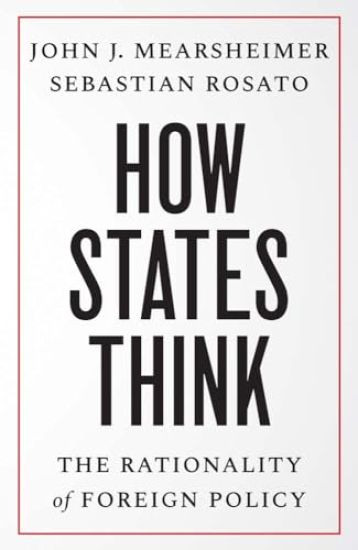
How States Think

How States Think

John J. Mearsheimer; Sebastian Rosato

YALE UNIVERSITY PRESS
2024
pokkari

Halvin toimitettuna 22,50 €

A groundbreaking examination of a central question in international relations: Do states act rationally? To understand world politics, you need to understand how states think. Are states rational? Much of international relations theory assumes that they are. But many scholars believe that political leaders rarely act rationally. The issue is crucial for both the study and practice of international politics, for only if states are rational can scholars and policymakers understand and predict their behavior. John J. Mearsheimer and Sebastian Rosato argue that rational decisions in international politics rest on credible theories about how the world works and emerge from deliberative decision-making processes. Using these criteria, they conclude that most states are rational most of the time, even if they are not always successful. Mearsheimer and Rosato make the case for their position, examining whether past and present world leaders, including George W. Bush and Vladimir Putin, have acted rationally in the context of momentous historical events, including both world wars, the Cold War, and the post–Cold War era. By examining this fundamental concept in a novel and comprehensive manner, Mearsheimer and Rosato show how leaders think, and how to make policy for dealing with other states.
How States Think

How States Think

John J. Mearsheimer; Sebastian Rosato

YALE UNIVERSITY PRESS
2023
sidottu
A groundbreaking examination of a central question in international relations: Do states act rationally? To understand world politics, you need to understand how states think. Are states rational? Much of international relations theory assumes that they are. But many scholars believe that political leaders rarely act rationally. The issue is crucial for both the study and practice of international politics, for only if states are rational can scholars and policymakers understand and predict their behavior. John J. Mearsheimer and Sebastian Rosato argue that rational decisions in international politics rest on credible theories about how the world works and emerge from deliberative decision-making processes. Using these criteria, they conclude that most states are rational most of the time, even if they are not always successful. Mearsheimer and Rosato make the case for their position, examining whether past and present world leaders, including George W. Bush and Vladimir Putin, have acted rationally in the context of momentous historical events, including both world wars, the Cold War, and the post–Cold War era. By examining this fundamental concept in a novel and comprehensive manner, Mearsheimer and Rosato show how leaders think, and how to make policy for dealing with other states.
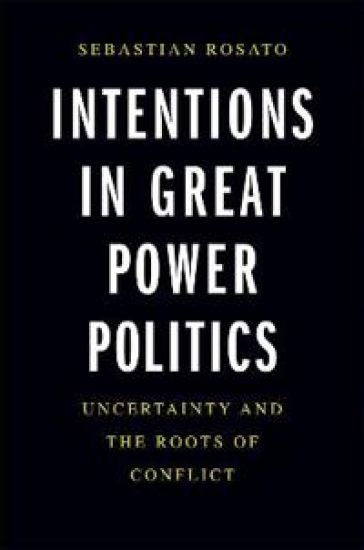
Intentions in Great Power Politics

Intentions in Great Power Politics

Sebastian Rosato

Yale University Press
2021
sidottu
Why the future of great power politics is likely to resemble its dismal past Can great powers be confident that their peers have benign intentions? States that trust each other can live at peace; those that mistrust each other are doomed to compete for arms and allies and may even go to war. Sebastian Rosato explains that states routinely lack the kind of information they need to be convinced that their rivals mean them no harm. Even in cases that supposedly involved mutual trust—Germany and Russia in the Bismarck era; Britain and the United States during the great rapprochement; France and Germany, and Japan and the United States in the early interwar period; and the Soviet Union and United States at the end of the Cold War—the protagonists mistrusted each other and struggled for advantage. Rosato argues that the ramifications of his argument for U. S.–China relations are profound: the future of great power politics is likely to resemble its dismal past.
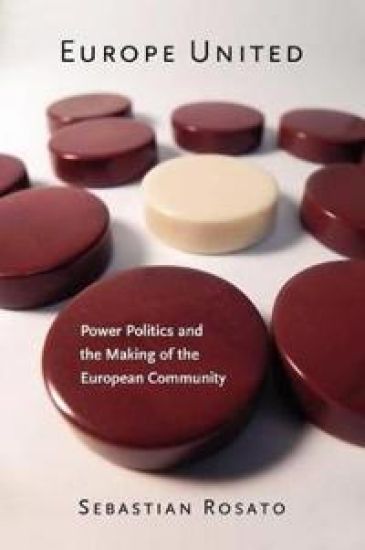
Europe United

Europe United

Sebastian Rosato

Cornell University Press
2012
pokkari
The construction of the European Community (EC) has widely been understood as the product of either economic self-interest or dissatisfaction with the nation-state system. In Europe United, Sebastian Rosato challenges these conventional explanations, arguing that the Community came into being because of balance of power concerns. France and the Federal Republic of Germany—the two key protagonists in the story—established the EC at the height of the cold war as a means to balance against the Soviet Union and one another. More generally, Rosato argues that international institutions, whether military or economic, largely reflect the balance of power. In his view, states establish institutions in order to maintain or increase their share of world power, and the shape of those institutions reflects the wishes of their most powerful members. Rosato applies this balance of power theory of cooperation to several other cooperative ventures since 1789, including various alliances and trade pacts, the unifications of Italy and Germany, and the founding of the United States. Rosato concludes by arguing that the demise of the Soviet Union has deprived the EC of its fundamental purpose. As a result, further moves toward political and military integration are improbable, and the economic community is likely to unravel to the point where it becomes a shadow of its former self.