Kirjojen hintavertailu – 12 903 724 kirjaa ja 27 kauppaa

Kirjailija

Sebastian Thrun

Kirjat ja teokset yhdessä paikassa: 6 kirjaa, julkaisuja vuosilta 1996–2011, suosituimpiin kuuluu Explanation-Based Neural Network Learning. Vertaile teosten hintoja ja tarkista saatavuus suomalaisista kirjakaupoista.

6 kirjaa

Kirjojen julkaisuvuodet: 1996–2011.

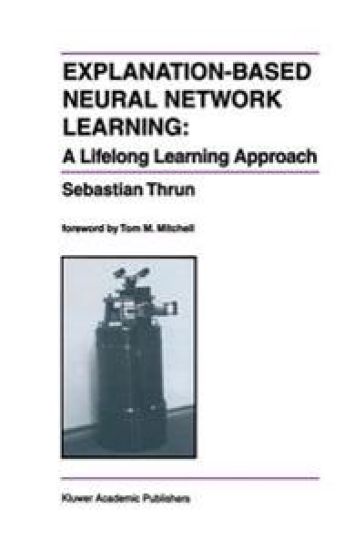
Explanation-Based Neural Network Learning

Explanation-Based Neural Network Learning

Sebastian Thrun

Springer-Verlag New York Inc.
2011
nidottu
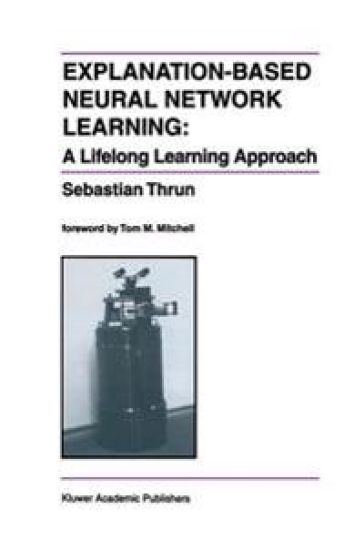
Lifelong learning addresses situations in which a learner faces a series of different learning tasks providing the opportunity for synergy among them. Explanation-based neural network learning (EBNN) is a machine learning algorithm that transfers knowledge across multiple learning tasks. When faced with a new learning task, EBNN exploits domain knowledge accumulated in previous learning tasks to guide generalization in the new one. As a result, EBNN generalizes more accurately from less data than comparable methods. Explanation-Based Neural Network Learning: A Lifelong Learning Approach describes the basic EBNN paradigm and investigates it in the context of supervised learning, reinforcement learning, robotics, and chess. `The paradigm of lifelong learning - using earlier learned knowledge to improve subsequent learning - is a promising direction for a new generation of machine learning algorithms. Given the need for more accurate learning methods, it is difficult to imagine a future for machine learning that does not include this paradigm.' From the Foreword by Tom M. Mitchell.
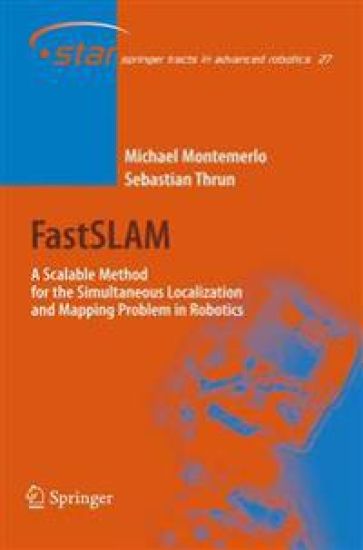
FastSLAM

FastSLAM

Michael Montemerlo; Sebastian Thrun

Springer-Verlag Berlin and Heidelberg GmbH Co. K
2010
nidottu
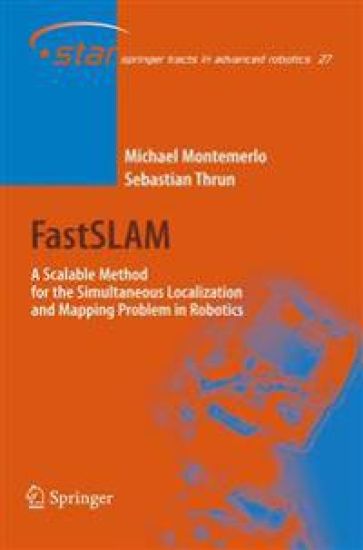
This monograph describes a new family of algorithms for the simultaneous localization and mapping problem in robotics (SLAM). SLAM addresses the problem of acquiring an environment map with a roving robot, while simultaneously localizing the robot relative to this map. This problem has received enormous attention in the robotics community in the past few years, reaching a peak of popularity on the occasion of the DARPA Grand Challenge in October 2005, which was won by the team headed by the authors. The FastSLAM family of algorithms applies particle filters to the SLAM Problem, which provides new insights into the data association problem that is paramount in SLAM. The FastSLAM-type algorithms have enabled robots to acquire maps of unprecedented size and accuracy, in a number of robot application domains and have been successfully applied in different dynamic environments, including the solution to the problem of people tracking.
FastSLAM

FastSLAM

Michael Montemerlo; Sebastian Thrun

Springer-Verlag Berlin and Heidelberg GmbH Co. K
2007
sidottu
This monograph describes a new family of algorithms for the simultaneous localization and mapping problem in robotics (SLAM). SLAM addresses the problem of acquiring an environment map with a roving robot, while simultaneously localizing the robot relative to this map. This problem has received enormous attention in the robotics community in the past few years, reaching a peak of popularity on the occasion of the DARPA Grand Challenge in October 2005, which was won by the team headed by the authors. The FastSLAM family of algorithms applies particle filters to the SLAM Problem, which provides new insights into the data association problem that is paramount in SLAM. The FastSLAM-type algorithms have enabled robots to acquire maps of unprecedented size and accuracy, in a number of robot application domains and have been successfully applied in different dynamic environments, including the solution to the problem of people tracking.
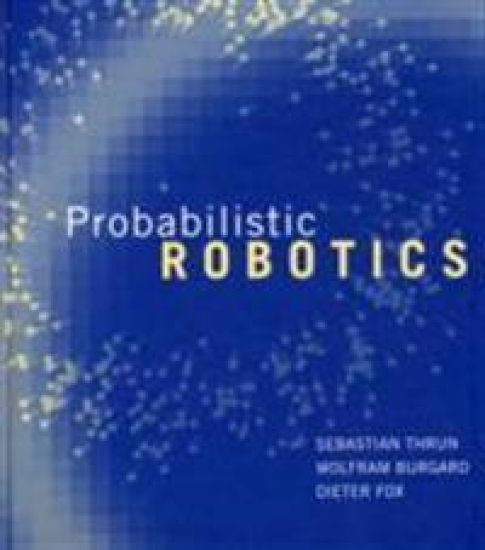
Probabilistic Robotics

Probabilistic Robotics

Sebastian Thrun; Wolfram Burgard; Dieter Fox

MIT Press
2005
sidottu

Halvin toimitettuna 100,70 €

An introduction to the techniques and algorithms of the newest field in robotics. Probabilistic robotics is a new and growing area in robotics, concerned with perception and control in the face of uncertainty. Building on the field of mathematical statistics, probabilistic robotics endows robots with a new level of robustness in real-world situations. This book introduces the reader to a wealth of techniques and algorithms in the field. All algorithms are based on a single overarching mathematical foundation. Each chapter provides example implementations in pseudo code, detailed mathematical derivations, discussions from a practitioner's perspective, and extensive lists of exercises and class projects. The book's Web site, www.probabilistic-robotics.org, has additional material. The book is relevant for anyone involved in robotic software development and scientific research. It will also be of interest to applied statisticians and engineers dealing with real-world sensor data.
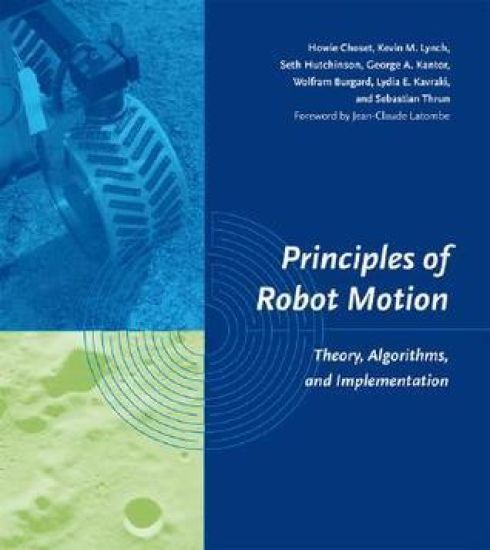
Principles of Robot Motion

Principles of Robot Motion

Howie Choset; Kevin M. Lynch; Seth Hutchinson; George A. Kantor; Wolfram Burgard; Lydia E. Kavraki; Sebastian Thrun

Bradford Books
2005
sidottu
A text that makes the mathematical underpinnings of robot motion accessible and relates low-level details of implementation to high-level algorithmic concepts. Robot motion planning has become a major focus of robotics. Research findings can be applied not only to robotics but to planning routes on circuit boards, directing digital actors in computer graphics, robot-assisted surgery and medicine, and in novel areas such as drug design and protein folding. This text reflects the great advances that have taken place in the last ten years, including sensor-based planning, probabalistic planning, localization and mapping, and motion planning for dynamic and nonholonomic systems. Its presentation makes the mathematical underpinnings of robot motion accessible to students of computer science and engineering, rleating low-level implementation details to high-level algorithmic concepts.
Explanation-Based Neural Network Learning
Lifelong learning addresses situations in which a learner faces a series of different learning tasks providing the opportunity for synergy among them. Explanation-based neural network learning (EBNN) is a machine learning algorithm that transfers knowledge across multiple learning tasks. When faced with a new learning task, EBNN exploits domain knowledge accumulated in previous learning tasks to guide generalization in the new one. As a result, EBNN generalizes more accurately from less data than comparable methods. Explanation-Based Neural Network Learning: A Lifelong Learning Approach describes the basic EBNN paradigm and investigates it in the context of supervised learning, reinforcement learning, robotics, and chess. `The paradigm of lifelong learning - using earlier learned knowledge to improve subsequent learning - is a promising direction for a new generation of machine learning algorithms. Given the need for more accurate learning methods, it is difficult to imagine a future for machine learning that does not include this paradigm.' From the Foreword by Tom M. Mitchell.