Kirjojen hintavertailu – 12 903 725 kirjaa ja 27 kauppaa

Kirjailija

Sebastien Rossignol

Kirjat ja teokset yhdessä paikassa: 5 kirjaa, julkaisuja vuosilta 2019–2025, suosituimpiin kuuluu Maiestas Principum: Herzogsurkunden ALS Medien Der Herrschaftsreprasentation in Schlesien, Pommern Und Pommerellen (1200-1325). Vertaile teosten hintoja ja tarkista saatavuus suomalaisista kirjakaupoista.

Nimi esiintyy myös muodoissa: Sébastien Rossignol

5 kirjaa

Kirjojen julkaisuvuodet: 2019–2025.

Medieval East Central and Eastern Europe

Medieval East Central and Eastern Europe

Florin Curta; Sebastien Rossignol

UNIVERSITY OF TORONTO PRESS
2025
pokkari

Halvin toimitettuna 57,50 €

From Bohemia to Rus’ and from the White Sea to the Balkans, Medieval East Central and Eastern Europe by Florin Curta and Sébastien Rossignol covers the medieval history of a large area. This groundbreaking textbook is an important introduction for students and an essential tool for instructors of courses on the Middle Ages and the entire eastern half of Europe. With elements of medieval archaeology, Medieval East Central and Eastern Europe includes dynastic characters, political legacies, and a list of suggested readings for anyone interested in learning more about the history of these regions. Written in an accessible style that appeals to a general reader, this textbook explicates the diversity of historical experiences available in these parts of Europe during the Middle Ages – from the influence of Byzantine traditions in the Balkans to the integration of Western cultures and the impact of the Eurasian steppe lands. This text highlights the distinct social and cultural characteristics that shaped these societies, including the persistence of nomadic groups, the limited reach of feudalism, and the enduring presence of pagan, Jewish, and Muslim communities. Structured with chronological overviews and thematic chapters, Medieval East Central and Eastern Europe is an invaluable resource on underrepresented regions for specialists and non-specialists alike.
Medieval East Central and Eastern Europe

Medieval East Central and Eastern Europe

Florin Curta; Sebastien Rossignol

UNIVERSITY OF TORONTO PRESS
2025
sidottu
From Bohemia to Rus’ and from the White Sea to the Balkans, Medieval East Central and Eastern Europe by Florin Curta and Sébastien Rossignol covers the medieval history of a large area. This groundbreaking textbook is an important introduction for students and an essential tool for instructors of courses on the Middle Ages and the entire eastern half of Europe. With elements of medieval archaeology, Medieval East Central and Eastern Europe includes dynastic characters, political legacies, and a list of suggested readings for anyone interested in learning more about the history of these regions. Written in an accessible style that appeals to a general reader, this textbook explicates the diversity of historical experiences available in these parts of Europe during the Middle Ages – from the influence of Byzantine traditions in the Balkans to the integration of Western cultures and the impact of the Eurasian steppe lands. This text highlights the distinct social and cultural characteristics that shaped these societies, including the persistence of nomadic groups, the limited reach of feudalism, and the enduring presence of pagan, Jewish, and Muslim communities. Structured with chronological overviews and thematic chapters, Medieval East Central and Eastern Europe is an invaluable resource on underrepresented regions for specialists and non-specialists alike.
Medieval Silesia

Medieval Silesia

Sébastien Rossignol

TAYLOR FRANCIS LTD
2025
nidottu
This book presents an innovative retelling of the history of medieval Silesia, by providing a truly inclusive narrative that considers a variety of perspectives. Silesia, the land on the Odra, at the crossroads of the German lands, Poland, and Bohemia, played a key role in the history of medieval Europe, bridging various cultures. The transformations of the thirteenth century, which included the migration of German, Francophone, and Jewish settlers in new towns and villages and legal, technological, and environmental innovations, had profound effects on language, culture, and the economy; proximity to Bohemia forced a reaction to the Hussite movement in the fifteenth century. This book combines a more familiar history with that of women and of other cultural and religious minority groups – Francophones, Jews, religious dissenters – who shared the territory of Silesia in the Middle Ages. This study will be an ideal resource for students of medieval Europe or anyone seeking an introduction to medieval Silesia and its diversity of cultures.
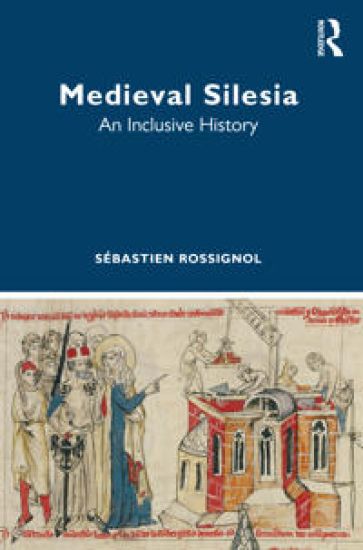
Medieval Silesia

Medieval Silesia

Sébastien Rossignol

TAYLOR FRANCIS LTD
2025
sidottu
This book presents an innovative retelling of the history of medieval Silesia, by providing a truly inclusive narrative that considers a variety of perspectives. Silesia, the land on the Odra, at the crossroads of the German lands, Poland, and Bohemia, played a key role in the history of medieval Europe, bridging various cultures. The transformations of the thirteenth century, which included the migration of German, Francophone, and Jewish settlers in new towns and villages and legal, technological, and environmental innovations, had profound effects on language, culture, and the economy; proximity to Bohemia forced a reaction to the Hussite movement in the fifteenth century. This book combines a more familiar history with that of women and of other cultural and religious minority groups – Francophones, Jews, religious dissenters – who shared the territory of Silesia in the Middle Ages. This study will be an ideal resource for students of medieval Europe or anyone seeking an introduction to medieval Silesia and its diversity of cultures.
Maiestas Principum: Herzogsurkunden ALS Medien Der Herrschaftsreprasentation in Schlesien, Pommern Und Pommerellen (1200-1325)
English Summary: Since Heinrich Fichtenau, historical research has tended to see the official documents of medieval rulers as a medium of princely propaganda. Research has focused especially on how such documents convey visual impressions as well as on the depiction of various aspects of rule and authority in specific areas on official forms, especially the arenga. This study by Sebastien Rossignol focuses on the reconstruction of reception processes in medieval documents, which has so far been a neglected area of research. Representation is understood as a communication process that can only be meaningfully put into practice when several communicants participate in the process. The study focuses on questions as to why and in what way, by whom and for whom medieval documents were used for the representation of domination. In so doing it examines the intitulations, the arenga and, in Peter Ruck's words, the "visual rhetoric" of the rulers of Silesia, Pomerania and Pomerania up to the beginning of the 14th century. In order to describe the process of representation, this study socially and culturally contextualizes the conception of forms of representation, along with their message and their contemporary perception. German Description: Mittelalterliche Herrscherurkunden wurden in der historischen Forschung seit Heinrich Fichtenau als Medien furstlicher Propaganda verstanden. Betrachtet wurden dabei besonders die Vermittlung von visuellen Eindrucken durch die Urkunden oder die Darstellung verschiedener Aspekte von Herrschaft und Autoritat in spezifischen Bestandteilen, vor allem in den Arengen der Urkundenformulare. Die vorliegende Studie von Sebastien Rossignol widmet sich der in der Forschung bisher vernachlassigten Rekonstruktion von Rezeptionsvorgangen bei mittelalterlichen Urkunden. Reprasentation wird hier als ein Kommunikationsprozess verstanden, der nur sinnvoll realisiert werden kann, wenn mehrere Kommunizierende am Vorgang partizipieren. Die Frage, warum und auf welche Weise, von wem und fur wen mittelalterliche Urkunden zur Reprasentation von Herrschaft verwendet wurden, bildet den Fokus der vorliegenden Studie. Untersucht werden dabei die Intitulationes, die Arengen und die, in Peter Rucks Worten, "visuelle Rhetorik" der Herrscherurkunden Schlesiens, Pommerns und Pommerellens bis zum Anfang des 14. Jahrhunderts. Um den Reprasentationsvorgang herauszustellen wird die Konzipierung von Reprasentationsmitteln, deren Botschaft und deren zeitgenossische Wahrnehmung sozial und kulturell kontextualisiert.