Kirjojen hintavertailu – 12 859 819 kirjaa ja 27 kauppaa

Kirjailija

Sébastien Wohlhauser

Kirjat ja teokset yhdessä paikassa: 5 kirjaa, julkaisuja vuosilta 2019–2025, suosituimpiin kuuluu The Terrestrial Protected Areas of Madagascar – Their History, Description, and Biota. Vertaile teosten hintoja ja tarkista saatavuus suomalaisista kirjakaupoista.

5 kirjaa

Kirjojen julkaisuvuodet: 2019–2025.

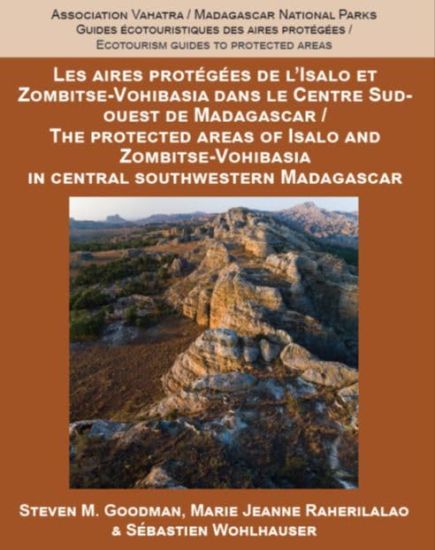
The Protected Areas of Isalo and Zombitse-Vohibasia in Central Southwestern Madagascar

The Protected Areas of Isalo and Zombitse-Vohibasia in Central Southwestern Madagascar

Steven M. Goodman; Marie Jeanne Raharilalao; Sébastien Wohlhauser

Association Vahatra in Antananarivo
2025
nidottu
An up-to-date synthesis designed for tourists that focuses on different aspects of two protected areas in central western Madagascar. This bilingual French-English tourist pocket guide covers two protected areas in central western Madagascar. These sites are excellent examples of the natural ecosystems of western inland areas of the island and include two national parks, the extensively visited Isalo (often referred to as the "Grand Canyon" of Madagascar), and the transitional dry deciduous forests of Zombitse-Vohibasia. Ecotourists can experience at both sites Malagasy forest ecosystems in all of their splendors. Both parks are near the national road that links Antananarivo (Tananarive) to the southwestern city of Toliara (Tulear). Tourists visiting the fascinating central-western portion of the island and interested in the natural world will find this guide indispensable to understanding and appreciating the regional ecological complexity and beauty.
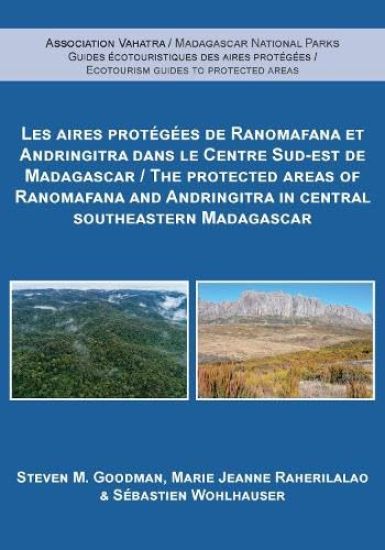
The Protected Areas of Ranomafana and Andringitra in Central Southeastern Madagascar

The Protected Areas of Ranomafana and Andringitra in Central Southeastern Madagascar

Steven M. Goodman; Marie Jeanne Raharilalao; Sébastien Wohlhauser

Association Vahatra in Antananarivo
2024
nidottu
An up-to-date pocket guide of two Malagasy protected areas. This bilingual French-English pocket guide covers two protected areas in southeastern Madagascar: the evergreen forests of Ranomafana and the high mountain zone of Andringitra. Given the proximity of the two parks to the national road that links Antananarivo (Tananarive) to the southwestern city of Toliara (Tulear) and its knowledgeable local guides, ecotourists can easily experience these largely untouched Malagasy ecosystems in all their splendor. With this book in hand, ecotourists traveling across this portion of the island and interested in the natural world will be able to discover and marvel at the region’s ecological complexity and beauty.
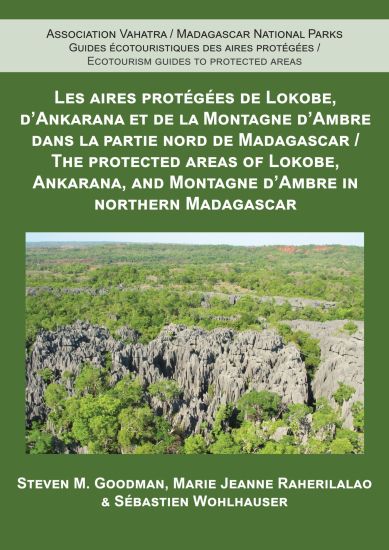
The Protected Areas of Lokobe, Ankarana, and Montagne d'Ambre in Northern Madagascar

The Protected Areas of Lokobe, Ankarana, and Montagne d'Ambre in Northern Madagascar

Steven M. Goodman; Marie Jeanne Raherilalo; Sébastien Wohlhauser

Association Vahatra in Antananarivo
2023
nidottu
The latest research into the biodiversity of three protected areas of northern Madagascar. This bilingual French-English pocket guide covers three protected areas in northern Madagascar that form a sort of natural tourist circuit for those traveling from Nosy Be to Antsiranana (Diego Suarez) or in the opposite direction. These sites encapsulate an important portion of the terrestrial biotic diversity of this ecologically diverse area of the island and include the lowland moist evergreen forests of Lokobe on the adjacent island of Nosy Be; the dry deciduous, humid semi-deciduous, and tsingy forests of Ankarana, north of Ambilobe; and the montane moist evergreen forests of Montagne d’Ambre, in close proximity to Antsiranana. As the result of varying geological formations and history, superimposed on differing climatic regimes, the flora and fauna of these three protected areas are dramatically different from one another, while their proximity enables visitors to the region to view and experience these contrasting biodiversity treasures. The manner and range of different details presented for each site allow ecotourists, whether nationals or people coming from overseas, to understand some of the unique aspects of each site and better enjoy their visits to them.
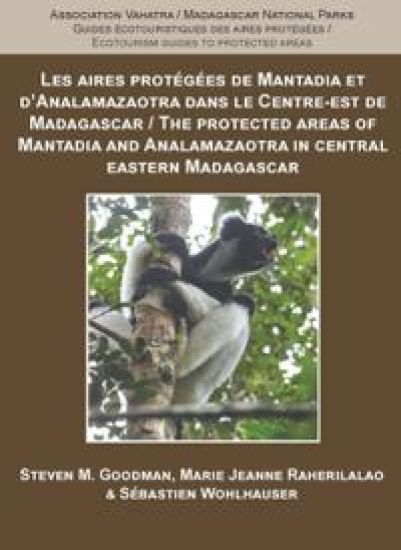
The Protected Areas of Mantadia and Analamazaotra in Central Eastern Madagascar

The Protected Areas of Mantadia and Analamazaotra in Central Eastern Madagascar

Steven M. Goodman; Marie Jeanne Raharilalao; Sébastien Wohlhauser

Association Vahatra in Antananarivo
2023
nidottu
The latest research on the biodiversity of two protected areas in central eastern Madagascar. This bilingual French-English pocket guide covers two protected areas in central eastern Madagascar that are adjacent to each another. These sites encapsulate the biotic diversity of the medium altitude moist evergreen forests of the island and include two national parks, the extensively visited Analamazaotra, where a range of lemur species are well habituated to visitors, and the forests of Mantadia, a place ecotourists can experience a largely untouched Malagasy forest ecosystem and all of its splendors. Both parks are relatively close to Moramanga and near the main road linking Antananarivo (Tananarive) to the coastal city of Toamasina (Tamatave). Tourists visiting this fascinating area of Madagascar and interested in the natural world will be able to discover and marvel at the regional ecological complexity and beauty, and the combination of easy road access, excellent local guides speaking many different European languages, and a range of local accommodations visiting easy.
The Terrestrial Protected Areas of Madagascar – Their History, Description, and Biota

The Terrestrial Protected Areas of Madagascar – Their History, Description, and Biota

Steven M. Goodman; Marie Jeanne Raherilalao; Sébastien Wohlhauser; Fanja Andriamialisoa

Association Vahatra in Antananarivo
2019
sidottu
In 1989, a book written by Martin E. Nicoll and Olivier Langrand was published on the protected areas of Madagascar, which heralded in a new era of conservation for this island nation. In the subsequent three decades, there was an important increase in inventories and studies on Madagascar’s terrestrial biota. This work led to significant changes in the systematics of Malagasy plants and animals, a large percentage unique to the island, and a notable augmentation in knowledge on Malagasy biodiversity. In addition, the considerable expansion of the protected area network, reinforcement of legal tools, and the development of new management modes and tools have contributed to a modernization of the protected area network. The purpose of these bilingual, French-English books is to present a large-scale update of information available from 98 terrestrial protected areas, various analyses to understand general trends in the conservation of these sites, and a synthesis to assess the needs for future scientific programs. Beautifully illustrated throughout with color maps, graphs, and photos, these three volumes will be an important reference for students, researchers, protected area managers, conservationists, and visiting ecotourists.