Kirjojen hintavertailu – 12 859 828 kirjaa ja 27 kauppaa

Kirjailija

Seifudein Adem

Kirjat ja teokset yhdessä paikassa: 8 kirjaa, julkaisuja vuosilta 2005–2024, suosituimpiin kuuluu Postcolonial Constructivism. Vertaile teosten hintoja ja tarkista saatavuus suomalaisista kirjakaupoista.

8 kirjaa

Kirjojen julkaisuvuodet: 2005–2024.

Africa’s Quest for Modernity

Africa’s Quest for Modernity

Seifudein Adem

Springer International Publishing AG
2024
nidottu
This monograph addresses the complexity of China-Africa and Japan-Africa relations from a comparative perspective. The volume is divided into five sections. Section I focuses on the divergent perspectives that are reflected in the discourse on China-Africa relations. Section II discusses Japan’s economic modernization and its potential lessons for Africa. Section III compares the foreign policies of Japan and China in Africa and analyzes their supposed rivalries on the continent. Section IV explores the relationship between Southeast Asia and China and its relevance to Africa-China relations. Section V provides an in-depth case study of Ethiopia-China relations over the last century. The book fills a major gap in the existing literature on the triad of Africa, China, and Japan. Under the guidance of the disciplines of African studies, international relations, political sociology, and international political economy, this volume elucidates and examines the complexities of theforeign policies of the two Asian powers toward Africa as well as their economic, political, and cultural underpinnings.
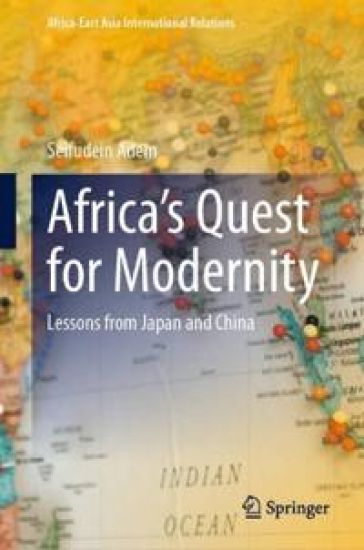
Africa’s Quest for Modernity

Africa’s Quest for Modernity

Seifudein Adem

Springer International Publishing AG
2023
sidottu
This monograph addresses the complexity of China-Africa and Japan-Africa relations from a comparative perspective. The volume is divided into five sections. Section I focuses on the divergent perspectives that are reflected in the discourse on China-Africa relations. Section II discusses Japan’s economic modernization and its potential lessons for Africa. Section III compares the foreign policies of Japan and China in Africa and analyzes their supposed rivalries on the continent. Section IV explores the relationship between Southeast Asia and China and its relevance to Africa-China relations. Section V provides an in-depth case study of Ethiopia-China relations over the last century. The book fills a major gap in the existing literature on the triad of Africa, China, and Japan. Under the guidance of the disciplines of African studies, international relations, political sociology, and international political economy, this volume elucidates and examines the complexities of theforeign policies of the two Asian powers toward Africa as well as their economic, political, and cultural underpinnings.
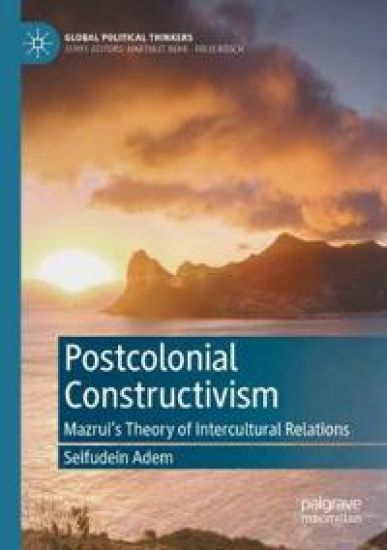
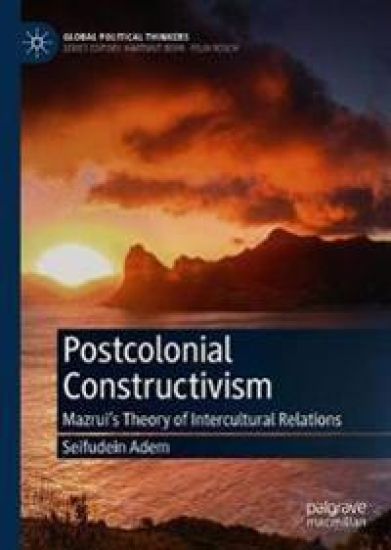
Postcolonial Constructivism

Postcolonial Constructivism

Seifudein Adem

Springer Nature Switzerland AG
2022
nidottu
This book introduces Ali Mazrui’s delightfully stimulating scholarship about intercultural relations, calling it Postcolonial Constructivism, and shares elements of his intellectual vitality in an original way. It begins with a chronicle of Mazrui’s eventful, sixty-year journey as a scholar of International Relations. It then proceeds to present some of the most remarkable yet least remarked up on features of his intellectualism, including his paradoxes, his perceptive typologies, his neologisms as well as his interactions with historical figures. The book draws on materials which were either unavailable until now or were found scattered in time and space. Designed as an invitation to a wider audience to the supermarket of Mazrui’s ideas, this book also seeks to underscore the timeliness and possible durability of many of his observations about intercultural relations. Thorough, comprehensive and up-to-date, this book is a concise account of the core of Mazrui’s vast body of work.
Postcolonial Constructivism

Postcolonial Constructivism

Seifudein Adem

Springer Nature Switzerland AG
2021
sidottu
This book introduces Ali Mazrui’s delightfully stimulating scholarship about intercultural relations, calling it Postcolonial Constructivism, and shares elements of his intellectual vitality in an original way. It begins with a chronicle of Mazrui’s eventful, sixty-year journey as a scholar of International Relations. It then proceeds to present some of the most remarkable yet least remarked up on features of his intellectualism, including his paradoxes, his perceptive typologies, his neologisms as well as his interactions with historical figures. The book draws on materials which were either unavailable until now or were found scattered in time and space. Designed as an invitation to a wider audience to the supermarket of Mazrui’s ideas, this book also seeks to underscore the timeliness and possible durability of many of his observations about intercultural relations. Thorough, comprehensive and up-to-date, this book is a concise account of the core of Mazrui’s vast body of work.
Anarchy, Order and Power in World Politics
This title was first published in 2002: Questioning the most fundamental assumptions of international relations theory, this absorbing work compares and contrasts domestic and international politics regarding the issues of order and disorder taking into account aspects of the two realms which have been neglected by scholarship until now. Challenging the view that there exists a one-to-one correspondence between the absence of a world government and international anarchy and that durable and genuine cooperation among sovereign states becomes extremely difficult, if not impossible, under the circumstances, this text is suitable for upper-level undergraduates, graduates and scholars of international relations.
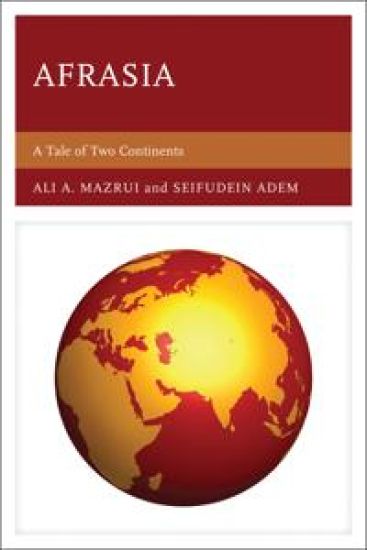
Afrasia

Afrasia

Seifudein Adem; Ali A. Mazrui

University Press of America
2013
nidottu
Is there a new scramble for Africa involving China, Japan, and India in competition with each other and with the Western world? In the second half of the twentieth century, Mao’s China and Jawaharlal Nehru’s India were political players in Africa, while Japan limited itself to trade and investment in Africa. Africa and Asia have historically been allies against Western exploitation and have also been rivals as producers of raw materials. India and West Asia have led the way in the soft power of culture and religion in Africa while Japan and China have engaged in the harder disciplines of the economy and the construction of infrastructure. This book explores the historical and unfolding dynamic interactions among China, India, Japan, and Africa and their ramifications.
Hegemony and Discourse

Hegemony and Discourse

Seifudein Adem

University Press of America
2005
nidottu
Hegemony and Discourse examines contemporary theories and practices of international relations from a non-Western perspective and suggests some tentative and intriguing conclusions about the complex relationship between discourse and hegemony. The first part of the book examines the burning global issues in, what the author calls, the post post-Cold War period. These are issues arising from recent developments that have consequences on an international scale, including September 2001 terrorist attacks in the U. S.; the subsequent war in Afghanistan; and the Anglo-American invasion and occupation of Iraq in 2003. The second part of the book scrutinizes the political ideas of a 14th century Afro-Muslim thinker, Ibn-Khaldun. These works are analyzed in the context of the discourse on modernity in order to demonstrate a longstanding tradition of hegemonic discourse in Western historiography and the contemporary relevancy of Ibn-Khaldun's ideas.