Kirjailija
Seneca
Kirjat ja teokset yhdessä paikassa: 198 kirjaa, julkaisuja vuosilta 1917–2026, suosituimpiin kuuluu Cartas a Lucílio. Vertaile teosten hintoja ja tarkista saatavuus suomalaisista kirjakaupoista.
Nimi esiintyy myös muodoissa: Séneca, Sêneca
198 kirjaa
Kirjojen julkaisuvuodet: 1917–2026.
The volume includes Trojan Women, Thyestes, Phaedra, Medea, and Agamemnon, plus a preface.
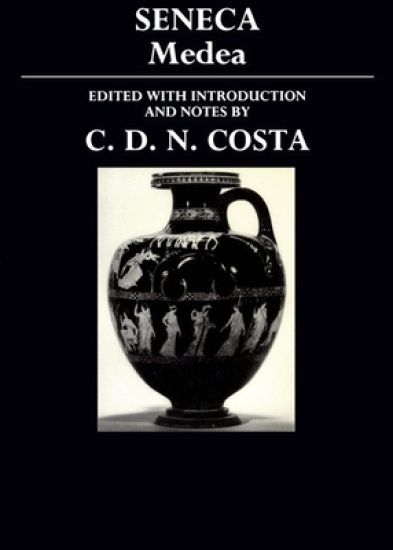
This paperback edition of the Medea is the first full-scale edition with introduction, text, apparatus criticus, and commentary, of any play by Seneca. Its purpose is primarily to elucidate the play itself, but at the same time it is easily accessible to students of English and French literature since Costa clarifies several of the links between the ancient play and the work of later European playwrights. That Seneca's work influenced European literature is well attested, but his Medea is particularly interesting as it was preceded by Euripides' version and followed by many plays on the subject in English, French, and German, derived more or less closely from Seneca's.
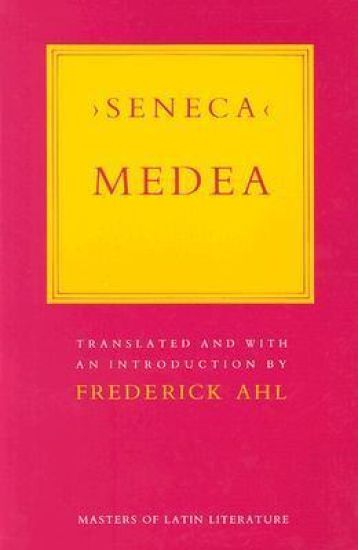
Ahl's translations of three Senecan tragedies will gratify and challenge readers and performers. With stage performance specifically in mind, Ahl renders Seneca's dramatic force in a modern idiom and style that move easily between formality and colloquialism as the text demands, and he strives to reproduce the richness of the original Latin, to retain the poetic form, images, wordplays, enigmas, paradoxes, and dark humor of Seneca's tragedies. In this powerful and imaginative translation of Medea, Frederick Ahl retains the compelling effects of the monologues, as well as the special feeling and pacing of Seneca's choruses.
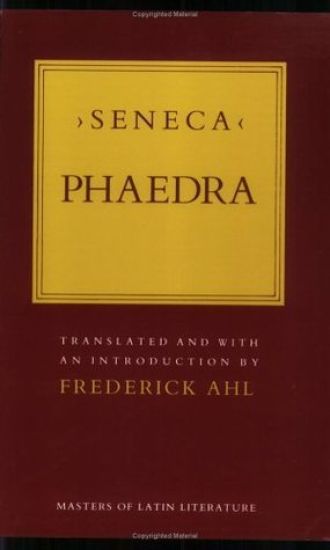
Ahl's translations of three Senecan tragedies will gratify and challenge readers and performers. With stage performance specifically in mind, Ah1 renders Seneca's dramatic force in a modern idiom and style that move easily between formality and colloquialism as the text demands, and he strives to reproduce the richness of the original Latin, to retain the poetic form, images, wordplays, enigmas, paradoxes, and dark humor of Seneca's tragedies. Here is a moving and accomplished translation of this complex play dealing the the violent passions stirred by innocence and beauty and the terrible power of ideology, hatred, and misunderstanding.
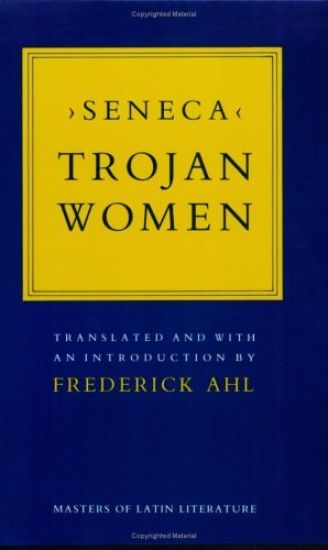
This free and eloquent translation skillfully reproduces the imagery, power, and frequent irony and sarcasm of Seneca's language.
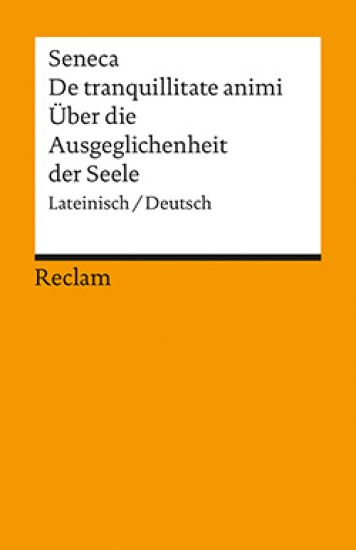
Über die Ausgeglichenheit der Seele / De tranquillitate animi
Seneca
Reclam Philipp Jun.
1984
pokkari
Following nature in pursuit of ethics. Seneca, Lucius Annaeus, born at Corduba (Cordova) ca. 4 BC, of a prominent and wealthy family, spent an ailing childhood and youth at Rome in an aunt’s care. He became famous in rhetoric, philosophy, money-making, and imperial service. After some disgrace during Claudius’ reign he became tutor and then, in AD 54, advising minister to Nero, some of whose worst misdeeds he did not prevent. Involved (innocently?) in a conspiracy, he killed himself by order in 65. Wealthy, he preached indifference to wealth; evader of pain and death, he preached scorn of both; and there were other contrasts between practice and principle. We have Seneca’s philosophical or moral essays (ten of them traditionally called Dialogues)—on providence, steadfastness, the happy life, anger, leisure, tranquility, the brevity of life, gift-giving, forgiveness—and treatises on natural phenomena. Also extant are 124 epistles, in which he writes in a relaxed style about moral and ethical questions, relating them to personal experiences; a skit on the official deification of Claudius, Apocolocyntosis (in LCL 15); and nine rhetorical tragedies on ancient Greek themes. Many epistles and all his speeches are lost. The treatises on natural phenomena, Naturales Quaestiones, are collected in Volumes VII and X of the Loeb Classical Library’s ten-volume edition of Seneca.

Topics in Stoicism. Seneca, Lucius Annaeus, born at Corduba (Cordova) ca. 4 BC, of a prominent and wealthy family, spent an ailing childhood and youth at Rome in an aunt’s care. He became famous in rhetoric, philosophy, money-making, and imperial service. After some disgrace during Claudius’ reign he became tutor and then, in AD 54, advising minister to Nero, some of whose worst misdeeds he did not prevent. Involved (innocently?) in a conspiracy, he killed himself by order in 65. Wealthy, he preached indifference to wealth; evader of pain and death, he preached scorn of both; and there were other contrasts between practice and principle. We have Seneca’s philosophical or moral essays (ten of them traditionally called Dialogues)—on providence, steadfastness, the happy life, anger, leisure, tranquility, the brevity of life, gift-giving, forgiveness—and treatises on natural phenomena. Also extant are 124 epistles, in which he writes in a relaxed style about moral and ethical questions, relating them to personal experiences; a skit on the official deification of Claudius, Apocolocyntosis (in LCL 15); and nine rhetorical tragedies on ancient Greek themes. Many epistles and all his speeches are lost. His moral essays are collected in Volumes I–III of the Loeb Classical Library’s ten-volume edition of Seneca.
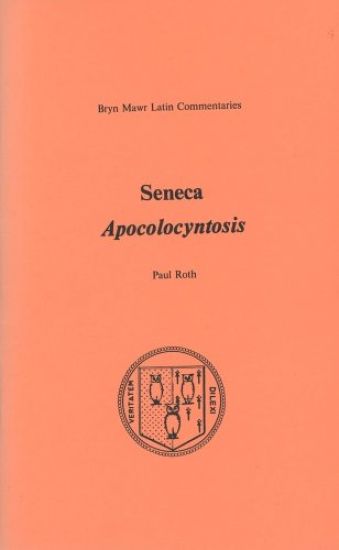
Meditative missives. Seneca, Lucius Annaeus, born at Corduba (Cordova) ca. 4 BC, of a prominent and wealthy family, spent an ailing childhood and youth at Rome in an aunt’s care. He became famous in rhetoric, philosophy, money-making, and imperial service. After some disgrace during Claudius’ reign he became tutor and then, in AD 54, advising minister to Nero, some of whose worst misdeeds he did not prevent. Involved (innocently?) in a conspiracy, he killed himself by order in 65. Wealthy, he preached indifference to wealth; evader of pain and death, he preached scorn of both; and there were other contrasts between practice and principle. We have Seneca’s philosophical or moral essays (ten of them traditionally called Dialogues)—on providence, steadfastness, the happy life, anger, leisure, tranquility, the brevity of life, gift-giving, forgiveness—and treatises on natural phenomena. Also extant are 124 epistles, in which he writes in a relaxed style about moral and ethical questions, relating them to personal experiences; a skit on the official deification of Claudius, Apocolocyntosis (in LCL 15); and nine rhetorical tragedies on ancient Greek themes. Many epistles and all his speeches are lost. The 124 epistles are collected in Volumes IV–VI of the Loeb Classical Library’s ten-volume edition of Seneca.