Kirjojen hintavertailu – 12 903 725 kirjaa ja 27 kauppaa

Kirjailija

Seppo Pohjolainen

Kirjat ja teokset yhdessä paikassa: 4 kirjaa, julkaisuja vuosilta 2016–2020, suosituimpiin kuuluu Mathematical Modelling. Vertaile teosten hintoja ja tarkista saatavuus suomalaisista kirjakaupoista.

4 kirjaa

Kirjojen julkaisuvuodet: 2016–2020.

Modern Mathematics Education for Engineering Curricula in Europe

Modern Mathematics Education for Engineering Curricula in Europe

Sergey Sosnovsky; Christian Mercat; Seppo Pohjolainen

Saint Philip Street Press
2020
sidottu
This open access book provides a comprehensive overview of the core subjects comprising mathematical curricula for engineering studies in five European countries and identifies differences between two strong traditions of teaching mathematics to engineers. The collective work of experts from a dozen universities critically examines various aspects of higher mathematical education. The two EU Tempus-IV projects - MetaMath and MathGeAr - investigate the current methodologies of mathematics education for technical and engineering disciplines. The projects aim to improve the existing mathematics curricula in Russian, Georgian and Armenian universities by introducing modern technology-enhanced learning (TEL) methods and tools, as well as by shifting the focus of engineering mathematics education from a purely theoretical tradition to a more applied paradigm. MetaMath and MathGeAr have brought together mathematics educators, TEL specialists and experts in education quality assurance form 21 organizations across six countries. The results of a comprehensive comparative analysis of the entire spectrum of mathematics courses in the EU, Russia, Georgia and Armenia has been conducted, have allowed the consortium to pinpoint and introduce several modifications to their curricula while preserving the generally strong state of university mathematics education in these countriesThe book presents the methodology, procedure and results of this analysis. This book is a valuable resource for teachers, especially those teaching mathematics, and curriculum planners for engineers, as well as for a general audience interested in scientific and technical higher education. This work was published by Saint Philip Street Press pursuant to a Creative Commons license permitting commercial use. All rights not granted by the work's license are retained by the author or authors.
Modern Mathematics Education for Engineering Curricula in Europe

Modern Mathematics Education for Engineering Curricula in Europe

Sergey Sosnovsky; Christian Mercat; Seppo Pohjolainen

Saint Philip Street Press
2020
pokkari
This open access book provides a comprehensive overview of the core subjects comprising mathematical curricula for engineering studies in five European countries and identifies differences between two strong traditions of teaching mathematics to engineers. The collective work of experts from a dozen universities critically examines various aspects of higher mathematical education. The two EU Tempus-IV projects - MetaMath and MathGeAr - investigate the current methodologies of mathematics education for technical and engineering disciplines. The projects aim to improve the existing mathematics curricula in Russian, Georgian and Armenian universities by introducing modern technology-enhanced learning (TEL) methods and tools, as well as by shifting the focus of engineering mathematics education from a purely theoretical tradition to a more applied paradigm. MetaMath and MathGeAr have brought together mathematics educators, TEL specialists and experts in education quality assurance form 21 organizations across six countries. The results of a comprehensive comparative analysis of the entire spectrum of mathematics courses in the EU, Russia, Georgia and Armenia has been conducted, have allowed the consortium to pinpoint and introduce several modifications to their curricula while preserving the generally strong state of university mathematics education in these countriesThe book presents the methodology, procedure and results of this analysis. This book is a valuable resource for teachers, especially those teaching mathematics, and curriculum planners for engineers, as well as for a general audience interested in scientific and technical higher education. This work was published by Saint Philip Street Press pursuant to a Creative Commons license permitting commercial use. All rights not granted by the work's license are retained by the author or authors.
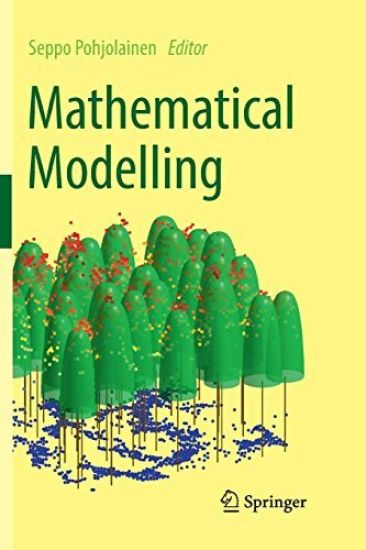
Mathematical Modelling

Mathematical Modelling

Matti Heiliö; Timo Lähivaara; Erkki Laitinen; Timo Mantere; Jorma Merikoski; Seppo Pohjolainen; Kimmo Raivio; Risto Silvennoinen; Antti Suutala; Tanja Tarvainen; Timo Tiihonen; Jukka Tuomela; Esko Turunen; Marko Vauhkonen

Springer International Publishing AG
2018
nidottu
This book provides a thorough introduction to the challenge of applying mathematics in real-world scenarios. Modelling tasks rarely involve well-defined categories, and they often require multidisciplinary input from mathematics, physics, computer sciences, or engineering. In keeping with this spirit of modelling, the book includes a wealth of cross-references between the chapters and frequently points to the real-world context. The book combines classical approaches to modelling with novel areas such as soft computing methods, inverse problems, and model uncertainty. Attention is also paid to the interaction between models, data and the use of mathematical software. The reader will find a broad selection of theoretical tools for practicing industrial mathematics, including the analysis of continuum models, probabilistic and discrete phenomena, and asymptotic and sensitivity analysis.
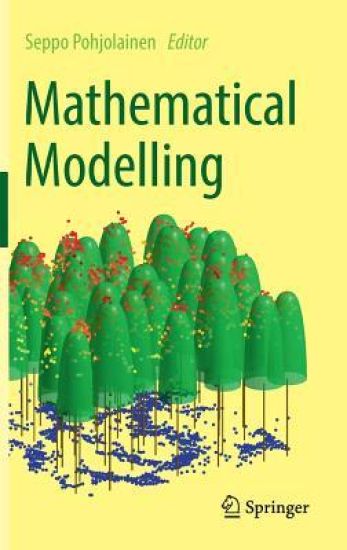
Mathematical Modelling

Mathematical Modelling

Matti Heiliö; Timo Lähivaara; Erkki Laitinen; Timo Mantere; Jorma Merikoski; Seppo Pohjolainen; Kimmo Raivio; Risto Silvennoinen; Antti Suutala; Tanja Tarvainen; Timo Tiihonen; Jukka Tuomela; Esko Turunen; Marko Vauhkonen

Springer International Publishing AG
2016
sidottu
This book provides a thorough introduction to the challenge of applying mathematics in real-world scenarios. Modelling tasks rarely involve well-defined categories, and they often require multidisciplinary input from mathematics, physics, computer sciences, or engineering. In keeping with this spirit of modelling, the book includes a wealth of cross-references between the chapters and frequently points to the real-world context. The book combines classical approaches to modelling with novel areas such as soft computing methods, inverse problems, and model uncertainty. Attention is also paid to the interaction between models, data and the use of mathematical software. The reader will find a broad selection of theoretical tools for practicing industrial mathematics, including the analysis of continuum models, probabilistic and discrete phenomena, and asymptotic and sensitivity analysis.