Kirjojen hintavertailu – 12 903 725 kirjaa ja 27 kauppaa

Kirjailija

Sergei O. Prokofieff

Kirjat ja teokset yhdessä paikassa: 33 kirjaa, julkaisuja vuosilta 2004–2023, suosituimpiin kuuluu Rudolf Steiner and the Masters of Esoteric Christianity. Vertaile teosten hintoja ja tarkista saatavuus suomalaisista kirjakaupoista.

Nimi esiintyy myös muodoissa: Sergei O Prokofieff

33 kirjaa

Kirjojen julkaisuvuodet: 2004–2023.

Rudolf Steiner's Research into Karma

Rudolf Steiner's Research into Karma

Sergei O. Prokofieff

Temple Lodge Publishing
2010
pokkari
In this inspiring lecture, addressed primarily to the anthroposophic movement, Prokofieff gives an overview of how the spiritual hierarchies and Christ, the Lord of Karma, work in the ordering of human karma. We are led to the karma and mission of the Anthroposophical Society, with indications as to what needs to happen before that karmic mission can be fulfilled. Prokofieff explains why true modern Christian research into karma does not arise out of intellectual speculation, curiosity or nebulous mystical experiences. The process of karmic research based on spiritual science should lead to a fundamental transformation of human nature, leading to a full experience of the cosmos.
The Whitsun Impulse and Christ's Activity in Social Life

The Whitsun Impulse and Christ's Activity in Social Life

Sergei O. Prokofieff

Temple Lodge Publishing
2010
nidottu

Halvin toimitettuna 18,40 €

What is Whitsun, and how can its impulse be furthered for the future of society? How can social life become the bearer of the Christ impulse, and how can Christ Himself enter directly into social life? In this small booklet Prokofieff speaks of the significance of spiritual work conducted in a social setting, and its crucial role in preparing for the future epoch of the Spirit-Self. The spiritual-social tasks set before us, he says, '...can only be achieved through mutual efforts with one another.' And for such social activity, the General Anthroposophical Society, '...with all of its different groups and branches, which unite all anthroposophists in the world', plays a fundamental role. Thus, concludes Prokofieff, '...the spiritual tasks of the General Anthroposophical Society are gradually combined with the tasks of all mankind.' This booklet, consisting of a report of a lecture supplemented with an essay, is an important companion to the publication by the same author, The Esoteric Significance of Spiritual Work in Anthroposophical Groups.
The Mystery of the Resurrection in the Light of Anthroposophy

The Mystery of the Resurrection in the Light of Anthroposophy

Sergei O. Prokofieff

Temple Lodge Publishing
2010
nidottu

Halvin toimitettuna 29,80 €

The Mystery of the Resurrection approaches the deepest mysteries of the Turning Point of Time through Rudolf Steiner's spiritual research. At its heart stands the question of the restoration of the 'phantom' of the physical body, and its transformation into the resurrected body of Christ through the Mystery of Golgotha. The author draws a broad and differentiated picture of the tasks and possibilities that the Easter event, as well as Ascension and Whitsun, present - both for the individual and humanity. The final chapter considers the mystery of Easter Saturday, through which the two polar aspects of the Mystery of Golgotha - death and resurrection - interconnect, at the same time explaining the relationship of the Earth Spirit to the interior of the Earth. An appendix tackles the phenomenon of stigmatization from a spiritual-scientific perspective.
The East in the Light of the West

The East in the Light of the West

Sergei O. Prokofieff

Temple Lodge Publishing
2009
nidottu
This major work comprises a comprehensive study of Eastern and Western esoteric streams and the occult powers that stand behind them. In Part 1 Prokofieff discusses the spiritual movement of Agni Yoga, presented to the world by Helena Roerich and her husband, the painter Nicholas Roerich. Part 2 focuses on the teachings developed by Alice Bailey, whilst Part 3 considers the relationship between Eastern and Western spiritual masters and the occult streams they represent. The first two Parts of the book give descriptions of both the Roerichs' and Alice Bailey's philosophy, based on their own perspective, together with anthroposophical commentaries that give an understanding of these two streams in the light of modern Christian esotericism. As Prokofieff points out, both the Roerichs and Bailey were convinced that the occult teachers who inspired them were the same as those referred to by the founder of Theosophy, Helena Blavatsky. Part 3 deals directly with the mystery of the Eastern teachers, or mahatmas, and their relationship to Christian esotericism. On the basis of extensive research, Prokofieff comes to the startling conclusion that the occultists whom both the Roerichs and Alice Bailey named as their leaders actually have nothing in common with Blavatsky's Eastern mahatmas. In Prokofieff's words: 'Hence...one has to do not with the Eastern mahatmas but with quite different occultists who had illicitly appropriated their names and then tried - while deliberately misleading their followers - to attain their highly dubious occult political aims with the help of the occult movements which had already been initiated.' Prokofieff argues that this appropriation led to a distortion of the age-old Eastern philosophies, giving them an anti-Christian character, and led to phenomena such as 'occult materialism', insidious political goals, and prophecies of a physically incarnating 'Messiah'. Previously available only in German as three separate books, with just an early version of Part 1 published in English, this long-awaited translation of Prokofieff's incisive study offers a fine schooling in discernment, judgement and spiritual insight.
Anthroposophy and the Philosophy of Freedom

Anthroposophy and the Philosophy of Freedom

Sergei O. Prokofieff

Temple Lodge Publishing
2009
nidottu
Some people's path to anthroposophy leads them directly to Rudolf Steiner's early work and The Philosophy of Freedom, and this becomes the philosophical basis for their future exploration. Rudolf Steiner referred to this as a 'safe' approach. But many people's destiny leads them directly to anthroposophy itself, or via one of its practical initiatives, making it difficult sometimes for them to relate to the cognitive basis of anthroposophy. In this unique study Sergei O. Prokofieff offers fresh means of access to Rudolf Steiner's crucially important book, The Philosophy of Freedom. Prokofieff indicates why The Philosophy of Freedom is so important to anthroposophy. It is here that Rudolf Steiner lays the foundations for his method of research. In Steiner's own words: "One who is willing can indeed find the basic principles of anthroposophy in my Philosophy of Freedom". Prokofieff discusses the Christian nature of the anthroposophical method of cognition, and how it is integrally related to freedom and love. This in turn reveals the deeply Christian roots of The Philosophy of Freedom and its importance for modern Christian esotericism. In fact, says Prokofieff, the book holds a 'central position ...in the spiritual history of the Occident'. In considering its multifaceted 'cosmic-human dimension', the author discusses The Philosophy of Freedom in relation to the Mystery of the Resurrection, the Working of the Hierarchies, the Being Anthroposophia, the Fifth Gospel, Rudolf Steiner's Path of Initiation, the Rosicrucian and Michaelic Impulses, the Life Between Death and Rebirth, the Foundation Stone, the Christian Mysteries of Karma and the Science of the Grail.
Relating to Rudolf Steiner

Relating to Rudolf Steiner

Sergei O. Prokofieff

Temple Lodge Publishing
2008
nidottu
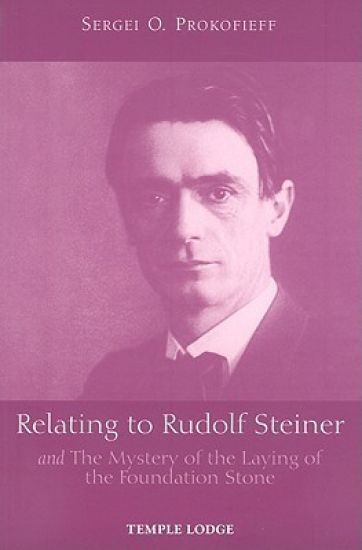
Even within the Anthroposophical Society and movement, people's relationship to Rudolf Steiner is weakening and dissipating. This is problematic, says Prokofieff, as the future of both the Society and movement is dependent on a sufficient number of people aspiring to and realizing a true spiritual connection with anthroposophy's founder, Rudolf Steiner. Prokofieff deals in detail with the issues surrounding this concern, and asks the question, "Can one be an anthroposophist without being Rudolf Steiner's pupil?" In the second part of this book Prokofieff elaborates on the mysteries surrounding the laying of the spiritual Foundation Stone at the Society's Christmas Meeting of 1923-24. This event, he suggests, ensured that a personal relationship to Rudolf Steiner "would not remain within the realm of the generally abstract or intellectual, but would become a real inner deed". Thus Rudolf Steiner gave each of us the possibility of connecting with him by way of free inner work on the Foundation Stone. Both parts of this book are integrally linked in the sense that once a relationship to Rudolf Steiner is established, an inner longing to work with the new Mysteries will inevitably follow. In Prokofieff's words: "...the will to take the foundation of the New Mysteries seriously leads to a real, inner connection with Rudolf Steiner". Also included is an important essay that assesses the difficulties connected with the recent digital publication of Rudolf Steiner's most important esoteric texts, as well as the occult background to the internet and electronic media as a whole. In response to readers' questions as to how one might counteract the damaging consequences of these developments, the author has expanded and developed his original essay on the subject.
The Esoteric Significance of Spiritual Work in Anthroposophical Groups
"The anthroposophical community seeks to lift human souls into supersensible realms so that they may enter the company of Angels." - Rudolf Steiner. Prokofieff traces the three stages of heavenly preparation of anthroposophy: the 'spiritual thunderstorm', the Michael School in the Sun sphere, and the 'imagination-based cultus' in the spiritual word nearest to the Earth. These events involved the nine spiritual hierarchies, associating them with the karma of the anthroposophical movement. Prokofieff elaborates the tasks of the Anthroposophical Society and indicates how these are connected with the spiritual hierarchies, the Michael movement, the Grail mysteries, the work of new Group Souls, and the Foundation Stone Meditation. He shows that the General Anthroposophical Society was, in an esoteric sense, created in order that human beings might learn to work with the Gods themselves. This is a vital booklet for anybody who cares deeply about the future of the Anthroposophical Society, or the future of mankind itself.
The Foundation Stone Meditation

The Foundation Stone Meditation

Sergei O. Prokofieff

Temple Lodge Publishing
2006
nidottu
Meditative reflection - the strengthening of thinking and feeling through the will - is one of the main methods of experiencing Anthroposophy. 'The best path to this goal', says Sergei Prokofieff, 'is inner work with the Foundation Stone Meditation, because this meditation is the quintessence of the whole of Anthroposophy, given in meditatively inspired form by means of earthly words.' Rudolf Steiner characterized the content of the Foundation Stone Meditation as having been spoken by him 'out of the will of the spiritual world', as 'verses heard from the Cosmic Word'. Due to its spiritual-mantric form, its text represents the characteristics of an archetype, and for that reason is a key to the most diverse areas of world and human existence. Depending on 'which spiritual portal is opened with this key', explains Sergei Prokofieff, 'one arrives at one result or another, and one and the same line of the meditation becomes a reply to the most varied questions'. Prokofieff applies the above method in this impressive work, illuminating various dimensions of spiritual science in the process. His research embraces, among other aspects, the relationship of the Foundation Stone Meditation to the being Anthroposophia, the spiritual hierarchies, human karma, the Rosicrucian, Michaelic and Grail streams, the Mystery of Golgotha, the two Jesus boys, the three spiritual sources of Anthroposophy, and even the Constitution of the Anthroposophical Society.

The Heavenly Sophia and the Being Anthroposophia

The Heavenly Sophia and the Being Anthroposophia

Sergei O. Prokofieff

Temple Lodge Publishing
2006
nidottu

Halvin toimitettuna 29,80 €

Based on the author's own experience of the supersensible being who stands behind the science of the spirit known as Anthroposophy, "The Heavenly Sophia" is the culmination of 25 years of work by Sergei Prokofieff on Rudolf Steiner's spiritual impulse. The being Anthroposophia, he shows, is not a poetic image or an abstract concept, but is an actual spiritual entity who works in the higher worlds for the good of earthly evolution, bringing to humanity '...the new revelation of the heavenly Sophia, the divine wisdom'. In the first part of the book, the author describes the path which led him to experience the being Anthroposophia - a path which is clearly related and can be followed by the reader. In the second part, using the few statements Rudolf Steiner made on the subject as his starting point, Prokofieff studies the question of the position of the living being Anthroposophia in the hierarchic cosmos, namely her relationship to Christ, the heavenly Sophia and the Archangel Michael. Finally available in paperback, this book will be of interest to anybody with a close connection to Rudolf Steiner's Anthroposophy.
What is Anthroposophy?

What is Anthroposophy?

Sergei O. Prokofieff

Temple Lodge Publishing
2006
nidottu
Unlike other works on this theme, Sergei Prokofieff's short book is not a straightforward introduction. Presupposing an acquaintance with the basic principles of anthroposophy, it focuses instead on the central Christological insights which form the core of Rudolf Steiner's philosophy. "What is Anthroposophy?" is a personal work in the sense that it reflects an individual's own endeavors to build a connection to anthroposophy. As the author states in his Preface: '...as soon as we comprehend anthroposophy as something living, we are concerned not merely with defining it intellectually but, rather, with developing a real relationship to it...' He elaborates: 'The content [of this book] will probably reveal more about the author and his relationship to anthroposophy than about it itself, for its nature is basically beyond description and consequently evades any purely intellectual definition.' This is a valuable addition to the introductory literature on anthroposophy from an established and well-respected author.
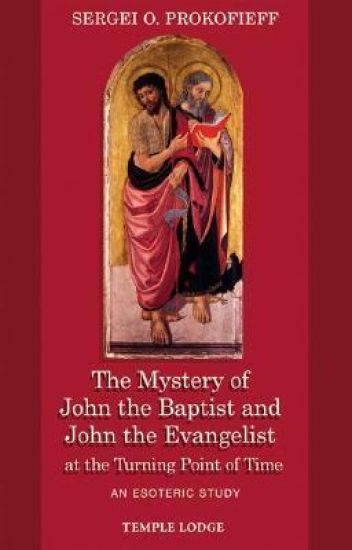
The Mystery of John the Baptist and John the Evangelist at the Turning Point of Time
'We have shown how in the course of time the being who was present in Elijah appeared again at the most important moments of human evolution on Earth - appeared again so that Christ Jesus Himself could give him the initiation he was to receive for the evolution of mankind. For the being of Elijah reappeared in Lazarus-John - who are in truth one and the same figure ...' Thus spoke Rudolf Steiner in his 'Last Address' to members of the Anthroposophical Society. This was his first and only indication of the connection between John the Baptist and John the Evangelist. As Prokofieff points out, Steiner intended to develop and bring to full clarity the short comment reproduced above, but his terminal illness prevented him from doing so. In this brief but enlightening booklet, Sergei O. Prokofieff addresses the mystery of the 'two Johns', solving many unanswered questions. In particular, he throws light on issues of 'incarnation and incorporation', the nature of John the Baptist's and John the Evangelist's respective initiations, the significance of their mutual work at the 'Turning Point of Time', and its relevance to our present day.
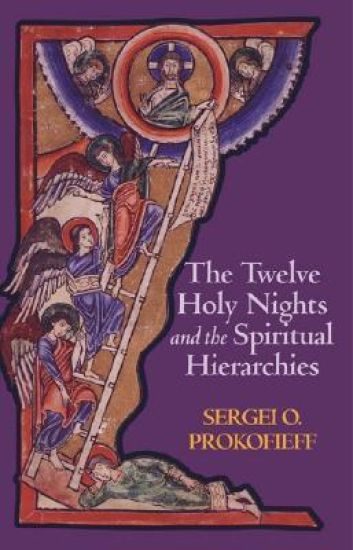
The Twelve Holy Nights and the Spiritual Hierarchies

The Twelve Holy Nights and the Spiritual Hierarchies

Sergei O. Prokofieff

Temple Lodge Publishing
2004
nidottu
Prokofieff draws on the whole extent of Rudolf Steiner's work and combines it with his own original spiritual research to form an intricate picture of the cosmic forces at play between Christmas and Epiphany. We are led on a tour through the circle of the zodiac and spiritual hierarchies, and shown how they form a path from Jesus to Christ. The author further explains that the Starry Script is a key to anthroposophical Christology, and shows how it relates to the conception of the First Goetheanum. Prokofieff guides us imaginatively through the interior of Steiner's architectural masterpiece, destroyed by fire in 1922, whose structure and decorations are seen to constitute a coherent esoteric map. Our task now, he suggests, is to build the First Goetheanum in ourselves and, through a new schooling of the self, strive for a truly modern path of initiation. Supplementary essays focus on the cosmic aspects of Sophia as well as the being of Michael. Prokofieff's seminal study offers a rich source of inspiration for those wishing to penetrate the mysteries of the Twelve Holy Nights and their relation to spiritual beings.
The Occult Significance of Forgiveness

The Occult Significance of Forgiveness

Sergei O. Prokofieff

Temple Lodge Publishing
2004
nidottu

Halvin toimitettuna 24,60 €

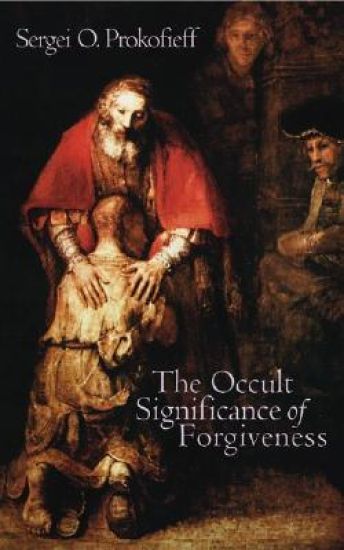
A survey of recent history reveals a gloomy picture: an ongoing series of conflicts, wars and general turmoil. As a result of all this, the human emotional landscape has become littered with angry, bitter and vengeful feelings. The modern justice system, preoccupied as it is with finding and proving guilt, does little to remedy this tragic situation. However, many individuals and groups are seeking ways to break the never-ending cycle of recrimination. When faced with the question of what we can do to change and improve the world, one of the most radical and challenging answers is to learn to begin forgiving others for what they have done to us. In this powerful and moving book, Prokofieff shows how the forces which lead to forgiveness can be consciously and freely developed. Without preaching a morality of forgiveness, he sets before us the spiritual facts which speak for themselves. From Tsarist Russia to the concentration camps of Nazi Germany, to the battles taking place in the early history of the Anthroposophical Society, the author gives striking examples of people who have been able to forgive often terrible crimes. He provides multilayered analysis, pointing to the beneficial consequences of every single act of forgiveness. As he develops his theme, the importance of forgiving, not simply for personal salvation, but for the furtherance of humanity's evolution, is revealed in all its healing truth.