
Kirjojen hintavertailu – 12 903 735 kirjaa ja 27 kauppaa

Kirjailija

Sergey Repin

Kirjat ja teokset yhdessä paikassa: 2 kirjaa, julkaisuja vuosilta 2013–2016, suosituimpiin kuuluu Accuracy Verification Methods. Vertaile teosten hintoja ja tarkista saatavuus suomalaisista kirjakaupoista.

2 kirjaa

Kirjojen julkaisuvuodet: 2013–2016.

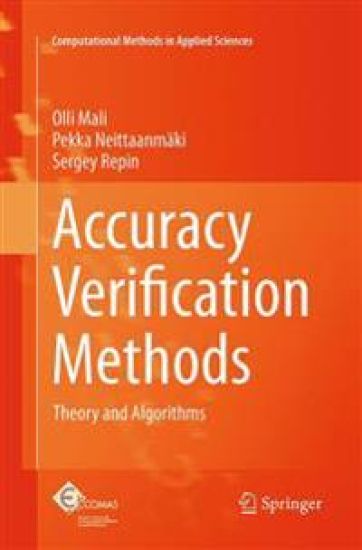
Accuracy Verification Methods

Accuracy Verification Methods

Olli Mali; Pekka Neittaanmäki; Sergey Repin

Springer
2016
nidottu
The importance of accuracy verification methods was understood at the very beginning of the development of numerical analysis. Recent decades have seen a rapid growth of results related to adaptive numerical methods and a posteriori estimates. However, in this important area there often exists a noticeable gap between mathematicians creating the theory and researchers developing applied algorithms that could be used in engineering and scientific computations for guaranteed and efficient error control. The goals of the book are to (1) give a transparent explanation of the underlying mathematical theory in a style accessible not only to advanced numerical analysts but also to engineers and students; (2) present detailed step-by-step algorithms that follow from a theory; (3) discuss their advantages and drawbacks, areas of applicability, give recommendations and examples.
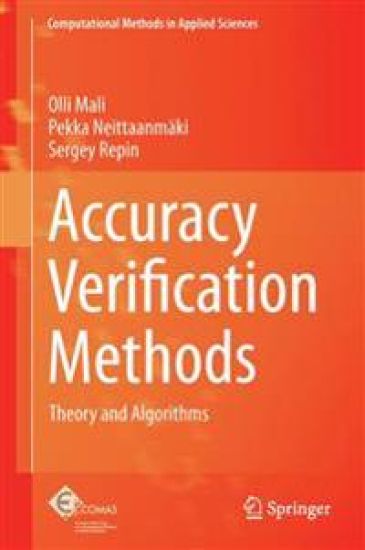
Accuracy Verification Methods

Accuracy Verification Methods

Olli Mali; Pekka Neittaanmäki; Sergey Repin

Springer
2013
sidottu
The importance of accuracy verification methods was understood at the very beginning of the development of numerical analysis. Recent decades have seen a rapid growth of results related to adaptive numerical methods and a posteriori estimates. However, in this important area there often exists a noticeable gap between mathematicians creating the theory and researchers developing applied algorithms that could be used in engineering and scientific computations for guaranteed and efficient error control. The goals of the book are to (1) give a transparent explanation of the underlying mathematical theory in a style accessible not only to advanced numerical analysts but also to engineers and students; (2) present detailed step-by-step algorithms that follow from a theory; (3) discuss their advantages and drawbacks, areas of applicability, give recommendations and examples.