Kirjojen hintavertailu – 12 903 724 kirjaa ja 27 kauppaa
Kirjailija
Seth Hutchinson
Kirjat ja teokset yhdessä paikassa: 3 kirjaa, julkaisuja vuosilta 2005–2021, suosituimpiin kuuluu A Roadmap for US Robotics – From Internet to Robotics 2020 Edition. Vertaile teosten hintoja ja tarkista saatavuus suomalaisista kirjakaupoista.
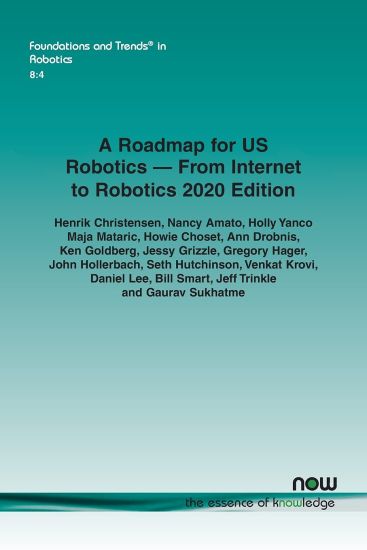
Henrik Christensen; Nancy Amato; Holly Yanco; Maja Mataric; Howie Choset; Ann Drobnis; Ken Goldberg; Jessy Grizzle; Gregory Hager; John Hollerbach; Seth Hutchinson; Venkat Krovi; Daniel Lee; Bill Smart; Jeff Trinkle; Gaurav Sukhatme
Recently the robotics industry celebrated its 60-year anniversary. We have used robots for more than six decades to empower people to do things that are typically dirty, dull and/or dangerous. The industry has progressed significantly over the period from basic mechanical assist systems to fully autonomous cars, environmental monitoring and exploration of outer space. We have seen tremendous adoption of IT technology in our daily lives for a diverse set of support tasks. Through use of robots we are starting to see a new revolution, as we not only will have IT support from tablets, phones, computers but also systems that can physically interact with the world and assist with daily tasks, work, and leisure activities. The “old” robot systems were largely mechanical support systems. Through the gradual availability of inexpensive computing, user interfaces, and sensors it is possible to build robot systems that were difficult to imagine before. The confluence of technologies is enabling a revolution in use and adoption of robot technologies for all aspects of daily life. Thirteen years ago, the process to formulate a roadmap was initiated at the Robotics Science and Systems (RSS) conference in Atlanta. Through support from the Computing Community Consortium (CCC) a roadmap was produced by a group of 120 people from industry and academia. The roadmap has been updated 2013 and 2016 prior to this update. The present document is a summary of the main societal opportunities identified, the associated challenges to deliver desired solutions and a presentation of efforts to be undertaken to ensure that US will continue to be a leader in robotics both in terms of research innovation, adoption of the latest technology, and adoption of appropriate policy frameworks that ensure that the technology is utilized in a responsible fashion.
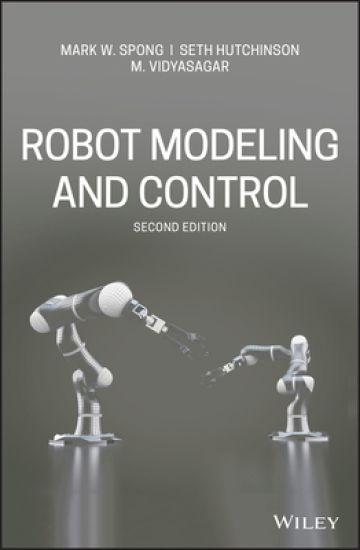
A New Edition Featuring Case Studies and Examples of the Fundamentals of Robot Kinematics, Dynamics, and Control In the 2nd Edition of Robot Modeling and Control, students will cover the theoretical fundamentals and the latest technological advances in robot kinematics. With so much advancement in technology, from robotics to motion planning, society can implement more powerful and dynamic algorithms than ever before. This in-depth reference guide educates readers in four distinct parts; the first two serve as a guide to the fundamentals of robotics and motion control, while the last two dive more in-depth into control theory and nonlinear system analysis. With the new edition, readers gain access to new case studies and thoroughly researched information covering topics such as: ? Motion-planning, collision avoidance, trajectory optimization, and control of robots ? Popular topics within the robotics industry and how they apply to various technologies ? An expanded set of examples, simulations, problems, and case studies ? Open-ended suggestions for students to apply the knowledge to real-life situations A four-part reference essential for both undergraduate and graduate students, Robot Modeling and Control serves as a foundation for a solid education in robotics and motion planning.
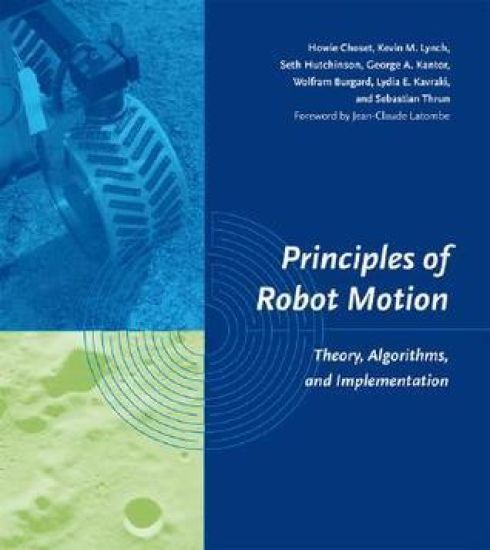
A text that makes the mathematical underpinnings of robot motion accessible and relates low-level details of implementation to high-level algorithmic concepts. Robot motion planning has become a major focus of robotics. Research findings can be applied not only to robotics but to planning routes on circuit boards, directing digital actors in computer graphics, robot-assisted surgery and medicine, and in novel areas such as drug design and protein folding. This text reflects the great advances that have taken place in the last ten years, including sensor-based planning, probabalistic planning, localization and mapping, and motion planning for dynamic and nonholonomic systems. Its presentation makes the mathematical underpinnings of robot motion accessible to students of computer science and engineering, rleating low-level implementation details to high-level algorithmic concepts.