Kirjojen hintavertailu – 12 903 725 kirjaa ja 27 kauppaa

Kirjailija

Seumas Miller

Kirjat ja teokset yhdessä paikassa: 26 kirjaa, julkaisuja vuosilta 1999–2025, suosituimpiin kuuluu The Ethics of National Security Intelligence Institutions. Vertaile teosten hintoja ja tarkista saatavuus suomalaisista kirjakaupoista.

26 kirjaa

Kirjojen julkaisuvuodet: 1999–2025.

Terrorism and Counter-Terrorism

Terrorism and Counter-Terrorism

Seumas Miller

Wiley-Blackwell (an imprint of John Wiley Sons Ltd)
2008
sidottu
Undoubtedly, the events of September 11, 2001 served as a wake-up call to the scourge of global terrorism facing twenty-first century societies. But was the attack on the World Trade Center a crime or an act of war? Is seemingly indiscriminate violence inflicted on civilians ever morally justified? And should society's response always be in kind – with blind, destructive violence? For that matter, are all civilians truly ‘innocent’? The answers are not always so simple. Terrorism and Counter-Terrorism: Ethics and Liberal Democracy provides sobering analyses of the nature of terrorism and the moral justification – or lack thereof – of terrorist actions and counter-terrorism measures in today's world. Utilizing a variety of thought-provoking philosophical arguments, the historic roots of terrorism and its contemporary incarnations are explored in depth. Detailed analyses of organizations such as the IRA, the ANC, Hamas and Al-Qaeda will reveal the many faces of terrorism and its disparate motives and tactics. Discussion of the nature and scope of terrorism and whether it can ever be morally justified is balanced with analysis of counter-terrorism strategies and the methods and moral limits of counter-terrorism. Terrorism and Counter-Terrorism will greatly broaden our understanding of the nature and morality of terrorism and counter-terrorist pursuits – a crucial precondition for establishing any form of enduring peace between nations in the twenty-first century world.
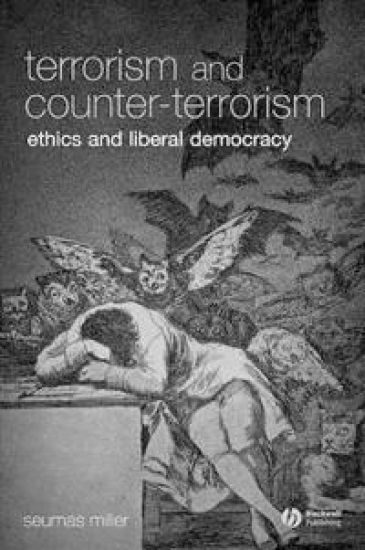
Terrorism and Counter-Terrorism

Terrorism and Counter-Terrorism

Seumas Miller

Wiley-Blackwell (an imprint of John Wiley Sons Ltd)
2008
nidottu
Undoubtedly, the events of September 11, 2001 served as a wake-up call to the scourge of global terrorism facing twenty-first century societies. But was the attack on the World Trade Center a crime or an act of war? Is seemingly indiscriminate violence inflicted on civilians ever morally justified? And should society's response always be in kind – with blind, destructive violence? For that matter, are all civilians truly ‘innocent’? The answers are not always so simple. Terrorism and Counter-Terrorism: Ethics and Liberal Democracy provides sobering analyses of the nature of terrorism and the moral justification – or lack thereof – of terrorist actions and counter-terrorism measures in today's world. Utilizing a variety of thought-provoking philosophical arguments, the historic roots of terrorism and its contemporary incarnations are explored in depth. Detailed analyses of organizations such as the IRA, the ANC, Hamas and Al-Qaeda will reveal the many faces of terrorism and its disparate motives and tactics. Discussion of the nature and scope of terrorism and whether it can ever be morally justified is balanced with analysis of counter-terrorism strategies and the methods and moral limits of counter-terrorism. Terrorism and Counter-Terrorism will greatly broaden our understanding of the nature and morality of terrorism and counter-terrorist pursuits – a crucial precondition for establishing any form of enduring peace between nations in the twenty-first century world.
Ethical Issues in Policing

Ethical Issues in Policing

Seumas Miller; John Blackler

Ashgate Publishing Limited
2005
sidottu
Police Studies constitute an important area of academic inquiry and policing raises a large number of ethical questions, yet to date there has been a paucity of research on the subject. This significant volume provides an integrated mix of ethico-philosophical analysis combined with practitioner knowledge and experience to examine and address the large number of difficult ethical questions involved in modern-day policing. Key features: ¢ Outlines a distinctive philosophical theory of policing which promotes the human rights dimension of police work. ¢ Analyzes the phenomenon of noble cause corruption and ways to combat it. ¢ Examines the role of restorative justice. ¢ Discusses the related notions of police authority and police discretion. ¢ Assesses the use of coercive and deadly force. ¢ Provides a detailed discussion of recent issues such as privacy and confidentiality in the context of new communication and information technologies, and entrapment. Philosophical in approach and written in an accessible style, the book will be a valuable guide for all those with an interest or involvement in Police Studies, Criminology, Philosophy and Ethics.
Social Action

Social Action

Seumas Miller

Cambridge University Press
2001
sidottu
Social action is central to social thought. This centrality reflects the overwhelming causal significance of action for social life, the centrality of action to any account of social phenomena, and the fact that conventions and normativity are features of human activity. This book provides philosophical analyses of fundamental categories of human social action, including cooperative action, conventional action, social norm governed action, and the actions of the occupants of organizational roles. A distinctive feature of the book is that it applies these theories of social action categories to some important moral issues that arise in social contexts such as the collective responsibility for environmental pollution, humanitarian intervention, and dealing with the rights of minority groups. Avoiding both the excessively atomistic individualism of rational choice theorists and implausible collectivist assumptions, this important book will be widely read by philosophers of the social sciences, political scientists and sociologists.
Violence and Police Culture

Violence and Police Culture

Tony Coady; Steven James; Seumas Miller

MELBOURNE UNIV PR
1999
pokkari
Violence and policing are inevitably associated. Criminals use violence, not only against innocent members of the public, but also against the police themselves. For our own protection and theirs, we have given police the right to use damaging, even lethal, force. But this licence for violence has become fraught with risk to the community. The disturbing record of police shootings in Victoria, and irresponsible police violence elsewhere in recent years, vividly illustrate this risk. In Violence and Police Culture, eminent contributors argue that there are features of police culture which foster abuse of the right to use violence. The book makes positive suggestions about institutional changes that might alleviate the problems bedevilling what the philosopher Thomas Hobbes called 'the right of the sword'. This book should be read by anyone who is concerned about continuing levels of unacceptable police violence in our society.