Kirjojen hintavertailu – 12 859 828 kirjaa ja 27 kauppaa

Kirjailija

Seyi S. Stephen

Kirjat ja teokset yhdessä paikassa: 8 kirjaa, julkaisuja vuosilta 2021–2025, suosituimpiin kuuluu Risk Management Practices in Construction. Vertaile teosten hintoja ja tarkista saatavuus suomalaisista kirjakaupoista.

8 kirjaa

Kirjojen julkaisuvuodet: 2021–2025.

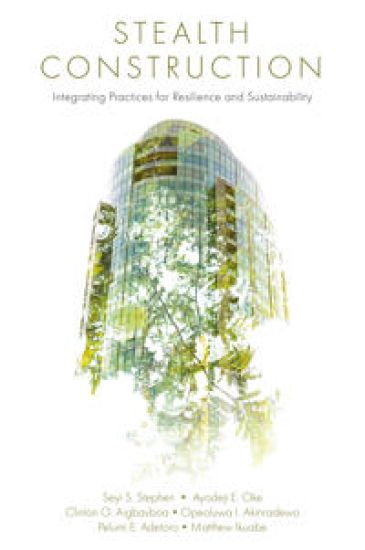
Stealth Construction

Stealth Construction

Seyi S. Stephen; Ayodeji E. Oke; Clinton Ohis Aigbavboa; Opeoluwa I. Akinradewo; Pelumi E. Adetoro; Matthew Ikuabe

Emerald Publishing Limited
2025
sidottu
Historically known for its significant environmental footprint, the construction industry faces increasing pressure to evolve in a landscape where environmental concerns, resource efficiency, and adaptability are paramount. Stealth Construction explores a strategic amalgamation of diverse construction practices and technologies into resilient construction with the aim of improving construction environmental protection, safety, speed (project delivery), economy, and aesthetics. A pivotal publication at the nexus of construction innovation, the book empowers its readers to adapt to the changing landscape and contribute to shaping a more resilient and sustainable built environment.
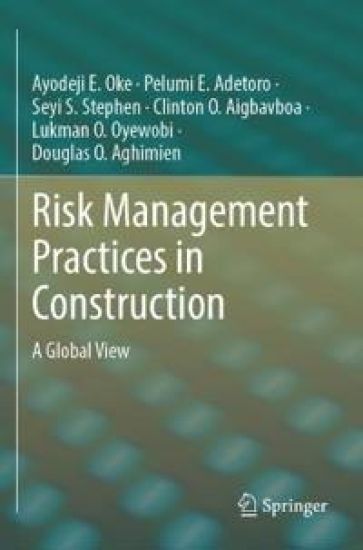
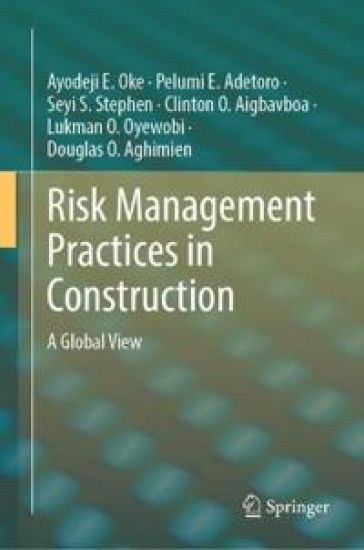
Risk Management Practices in Construction

Risk Management Practices in Construction

Ayodeji E. Oke; Pelumi E. Adetoro; Seyi S. Stephen; Clinton O. Aigbavboa; Lukman O. Oyewobi; Douglas O. Aghimien

Springer International Publishing AG
2024
nidottu
This volume describes risk management practices in the construction industry in selected countries, with an emphasis on developing countries and how these countries can learn from the practices in more developed ones. Risk management in the construction industry can be difficult to understand due to the various complex procedures that are involved and to the unique concerns and contexts associated with each project. The industry has been a key contributor to the economic and social development of many countries of the world and is increasingly incorporating sustainability into its practices. However it is plagued by various risks that can affect the quality, cost, time and overall sustainability of projects. Therefore, there is need to effectively manage risk in order to ensure timely completion of construction projects in good quality and within budget, which in turn results in more efficient and often more sustainable practices. The book is divided into four parts. The first section features a primer on risk management practices as they pertain to the construction industry. The second part dives in to describe risk management in selected developing countries, including Malaysia, Qatar, Saudi-Arabia, South Africa, Sri-Lanka and Tanzania, as well as the city of Hong Kong. The third section describes the construction risk management practices of a selection of more developed countries with known risk management institutes and established practices of risk management. These countries include Australia, Canada, Sweden and United States of America. The fourth part offers a general overview of the definition, concepts and process of risk management based on reviewed literature. It also discusses the benefits of effective risk management to clients and to project teams, especially from the perspective of ensuring sustainability. This last section also summarizes the risk management practices in both developing and developed countries for the purpose of improving the practices in the former by learning from the latter.
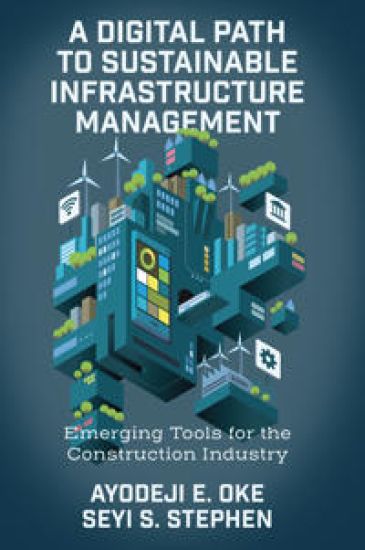
A Digital Path to Sustainable Infrastructure Management

A Digital Path to Sustainable Infrastructure Management

Ayodeji E. Oke; Seyi S. Stephen

Emerald Publishing Limited
2024
sidottu
As urbanization, digitalization, rising social expectations, and the quest for greener development become increasingly important and called for, a need to transform infrastructure and its management has become more pronounced. A Digital Path for Sustainable Infrastructure Management delivers the much sought-after guidance that the industry seeks to embrace technological advancements, establish new sustainable working practices, and foster socially valuable collaborations. Oke and Stephen open with a discussion on key sustainability concepts and the crucial measures that the construction sector must effectively establish to keep up with modern-day challenges. Moving to investigating multiple theoretical and practical aspects of novel digital tools, they analyse how these services can contribute to building and maintaining infrastructure better while aiding the impactful realization of globally recognized sustainability goals. Through an easy-to-follow and iterative structure, readers in both academic and professional settings are equipped with a comprehensive overview of the state of the art. This is a vital reference resource for future works in the area.
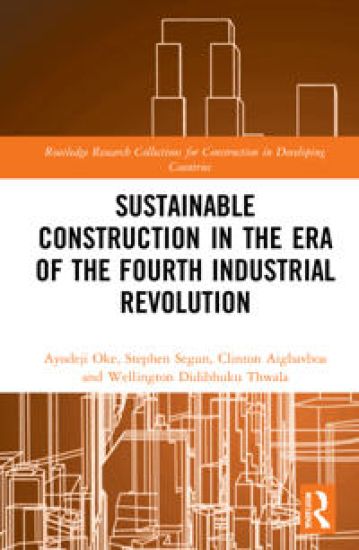
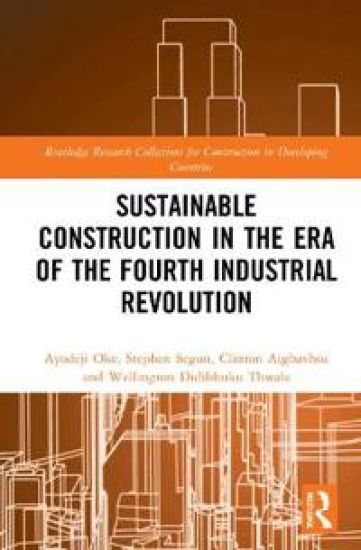
Sustainable Construction in the Era of the Fourth Industrial Revolution

Sustainable Construction in the Era of the Fourth Industrial Revolution

Ayodeji Emmanuel Oke; Clinton Aigbavboa; Seyi S. Stephen; Wellington Didibhuku Thwala

TAYLOR FRANCIS LTD
2023
nidottu
This book provides readers with an understanding of various concepts, benefits, and practices that the adoption of Fourth Industrial Revolution (4IR) technolo>gies can bring when working towards sustainable construction goals. As digitalization continues to advance rapidly, the pressures on stakeholders in the architecture, engineering, construction, and operation (AECO) industry to revamp and restructure their activities and outputs become increasingly prev>alent. This research book explains the importance of various digital tools and principles to achieve sustainable construction projects. It adopts various stand>ards and concepts to highlight how 4IR technologies could assist and accelerate construction sustainability. It is the first book to link construction management with various digital tools to enhance construction projects’ sustainability. It also provides an in-depth insight into the concept of sustainable construction 4.0 across both developing and developed countries for construction professionals, sustainability experts, researchers, educators, and other stakeholders. The book can be adopted as a research guide, framework, and reference on sustainable construction, the concept of sustainable projects, digitalization in the construction industry, and the 4IR.
Risk Management Practices in Construction

Risk Management Practices in Construction

Ayodeji E. Oke; Pelumi E. Adetoro; Seyi S. Stephen; Clinton O. Aigbavboa; Lukman O. Oyewobi; Douglas O. Aghimien

Springer International Publishing AG
2023
sidottu
This volume describes risk management practices in the construction industry in selected countries, with an emphasis on developing countries and how these countries can learn from the practices in more developed ones. Risk management in the construction industry can be difficult to understand due to the various complex procedures that are involved and to the unique concerns and contexts associated with each project. The industry has been a key contributor to the economic and social development of many countries of the world and is increasingly incorporating sustainability into its practices. However it is plagued by various risks that can affect the quality, cost, time and overall sustainability of projects. Therefore, there is need to effectively manage risk in order to ensure timely completion of construction projects in good quality and within budget, which in turn results in more efficient and often more sustainable practices. The book is divided into four parts. The first section features a primer on risk management practices as they pertain to the construction industry. The second part dives in to describe risk management in selected developing countries, including Malaysia, Qatar, Saudi-Arabia, South Africa, Sri-Lanka and Tanzania, as well as the city of Hong Kong. The third section describes the construction risk management practices of a selection of more developed countries with known risk management institutes and established practices of risk management. These countries include Australia, Canada, Sweden and United States of America. The fourth part offers a general overview of the definition, concepts and process of risk management based on reviewed literature. It also discusses the benefits of effective risk management to clients and to project teams, especially from the perspective of ensuring sustainability. This last section also summarizes the risk management practices in both developing and developed countries for the purpose of improving the practices in the former by learning from the latter.
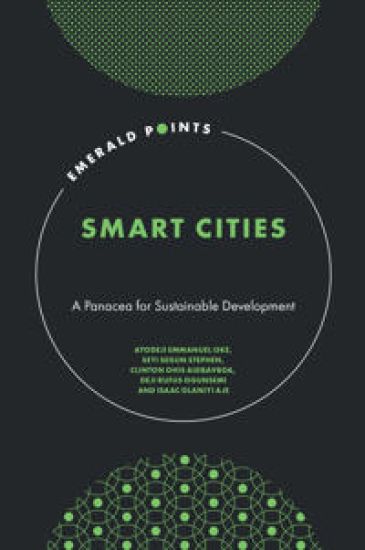
Smart Cities

Smart Cities

Ayodeji E. Oke; Seyi S. Stephen; Clinton Ohis Aigbavboa; Deji Ogunsemi; Isaac Aje

Emerald Publishing Limited
2022
sidottu
Professionals in the construction industry must respond quickly to meet the increasing pressures of heightened urban migration, and provide sustainable alternatives to resource scarcity in established cities – Smart Cities offers solutions to the demands of rising urban populations. The smartness of a city stems from the relationship between construction stakeholders and the citizens, with the shared goal to improve all standards and support social, physical, and economic growth. Surplus and reusable are key terminologies when striving towards sustainable development. Smart Cities aims to provide necessary information on the adoption of smart cities concepts towards achieving sustainable development, with a view to ensuring socially cohesive and resilient urban districts for both the current and future generations.
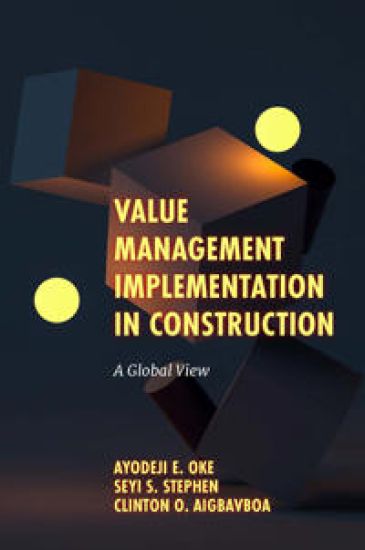
Value Management Implementation in Construction

Value Management Implementation in Construction

Ayodeji E. Oke; Seyi S. Stephen; Clinton Ohis Aigbavboa

Emerald Publishing Limited
2022
sidottu
Value management has been applied to construction projects throughout the world, but in some regions, it is just gaining popularity. Therefore, it is necessary to create awareness of value management among stakeholders and understand various obstacles to its implementation. Value Management Implementation in Construction addresses various factors that can enhance the application of the discipline as well as its adoption among concerned stakeholders. This book discusses the practice of value management in various developed and developing countries by exposing the techniques and models that can be employed in value management exercises, with a view to achieving sustainable development while delivering projects to the satisfaction of clients. This book provides guidance on value management as a tool for improving the delivery of infrastructural projects for construction professionals, employers of labour, researchers and students alike with evidence from various countries around the world.
Sustainable Construction in the Era of the Fourth Industrial Revolution

Sustainable Construction in the Era of the Fourth Industrial Revolution

Ayodeji Emmanuel Oke; Clinton Aigbavboa; Seyi S. Stephen; Wellington Didibhuku Thwala

Taylor Francis Ltd
2021
sidottu
This book provides readers with an understanding of various concepts, benefits, and practices that the adoption of Fourth Industrial Revolution (4IR) technolo>gies can bring when working towards sustainable construction goals. As digitalization continues to advance rapidly, the pressures on stakeholders in the architecture, engineering, construction, and operation (AECO) industry to revamp and restructure their activities and outputs become increasingly prev>alent. This research book explains the importance of various digital tools and principles to achieve sustainable construction projects. It adopts various stand>ards and concepts to highlight how 4IR technologies could assist and accelerate construction sustainability. It is the first book to link construction management with various digital tools to enhance construction projects’ sustainability. It also provides an in-depth insight into the concept of sustainable construction 4.0 across both developing and developed countries for construction professionals, sustainability experts, researchers, educators, and other stakeholders. The book can be adopted as a research guide, framework, and reference on sustainable construction, the concept of sustainable projects, digitalization in the construction industry, and the 4IR.