Kirjojen hintavertailu – 12 903 724 kirjaa ja 27 kauppaa

Kirjailija

Shadi Hamid

Kirjat ja teokset yhdessä paikassa: 8 kirjaa, julkaisuja vuosilta 2014–2026, suosituimpiin kuuluu The Case for American Power. Vertaile teosten hintoja ja tarkista saatavuus suomalaisista kirjakaupoista.

8 kirjaa

Kirjojen julkaisuvuodet: 2014–2026.

The Case for American Power

The Case for American Power

Shadi Hamid

SIMON SCHUSTER
2026
pokkari
A provocative case for why a better world is only possible with American power by Washington Post columnist Shadi Hamid. From acclaimed author Shadi Hamid comes an urgent and deeply personal argument for why American dominance, despite its many flaws, remains the world’s best hope. Hamid traces his journey from opposing America’s role in the world to reluctantly embracing it—while grappling with how recent events, from Russia’s invasion of Ukraine to Israel’s devastating war in Gaza, have challenged his convictions. Drawing on his unique perspective as both an American and a Muslim who came of age in the shadow of the September 11 attacks, Hamid contends with the contradictions of American power: how a nation founded on moral purpose so often fails to live up to its ideals. Hamid confronts head-on America’s failures, from the war in Iraq to support for authoritarian regimes across the Middle East. Yet, he argues that in a world where power is a fact and someone must wield it, the alternative to American leadership isn’t a morally perfect superpower—it’s the brutal authoritarianism of countries like China and Russia. At once idealistic and pragmatic, this is a book about embracing our power as the only moral option in a world beset by tragedy. Because America is a democracy, it retains the potential to correct past mistakes and change for the better. That part is up to us. Bracing and timely, The Case for American Power is an ambitious work on what may be the most fundamental question facing America today: how should we think about the power we have—while we still have it?

The Case for American Power

The Case for American Power

Shadi Hamid

SIMON SCHUSTER
2025
sidottu

Halvin toimitettuna 32,90 €

A provocative case for why a better world is only possible with American power by Washington Post columnist Shadi Hamid. From acclaimed author Shadi Hamid comes an urgent and deeply personal argument for why American dominance, despite its many flaws, remains the world's best hope. Hamid traces his journey from opposing America's role in the world to reluctantly embracing it--while grappling with how recent events, from Russia's invasion of Ukraine to Israel's devastating war in Gaza, have challenged his convictions. Drawing on his unique perspective as both an American and a Muslim who came of age in the shadow of the September 11 attacks, Hamid contends with the contradictions of American power: how a nation founded on moral purpose so often fails to live up to its ideals. Hamid confronts head-on America's failures, from the war in Iraq to support for authoritarian regimes across the Middle East. Yet, he argues that in a world where power is a fact and someone must wield it, the alternative to American leadership isn't a morally perfect superpower--it's the brutal authoritarianism of countries like China and Russia. At once idealistic and pragmatic, this is a book about embracing our power as the only moral option in a world beset by tragedy. Because America is a democracy, it retains the potential to correct past mistakes and change for the better. That part is up to us. Bracing and timely, The Case for American Power is an ambitious work on what may be the most fundamental question facing America today: How should we think about the power we have--while we still have it?
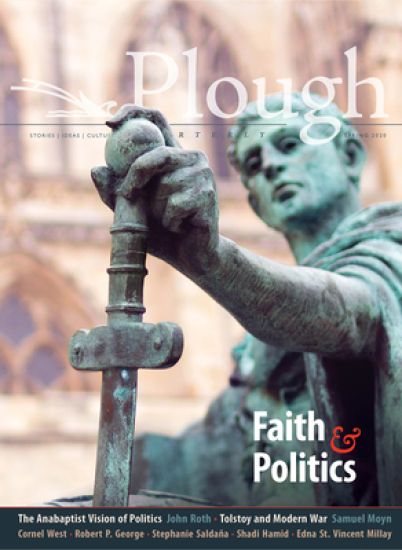
Plough Quarterly No. 24 – Faith and Politics

Plough Quarterly No. 24 – Faith and Politics

Cornel West; Robert P. Geroge; Stephanie Saldaña; Samuel Moyn; Shadi Hamid; Sally Thomas; John D. Roth; John Huleatt; D. L. Mayfield; Julian Peters; Abraham Joshua Heschel; Mesissa Ohden

Plough Publishing House
2020
pokkari
No matter who wins the next election, Caesar will remain Caesar, doing some good and some bad. But Christians report to a different king. This issue starts with a provocation. In his opening letter, editor Peter Mommsen suggests Christians are too excited about the wrong politics: “Questions of public justice should matter deeply to Christians. We dare not be indifferent about securing healthcare for all and ending interventionist wars; we must seek to reduce abortions and strengthen families. When an election comes, we should pray and then, perhaps, lend our support to a candidate we judge may, on balance, advance social righteousness. But if the early Christians and the Anabaptists are right, this isn’t the politics that matters most. And so, as a matter of faithfulness, we should question how much it deserves of our passion and time. Our allegiance belongs elsewhere.” In contrast to an election campaign, this politics may feel grittier and less glamorous. This issue of Plough Quarterly explores what this alternate vision of faithful Christian witness in the political sphere might look like. You’ll find articles on: What two leading political theorists of left and right agree on What persecution taught Anabaptists about politics The Bruderhof’s interactions with the state Tolstoy’s case against making war more humane How some Christians read Romans 13 under fascism
Militants, Criminals, and Warlords

Militants, Criminals, and Warlords

Vanda Felbab-Brown; Harold Trinkunas; Shadi Hamid

Brookings Institution
2017
sidottu
"Conventional political theory holds that the sovereign state is the legitimate source of order and provider of public services in any society, whether democratic or not. But Hezbollah and ISIS in the Middle East, pirate clans in Africa, criminal gangs in South America, and militias in Southeast Asia are examples of nonstate actors that control local territory and render public services that the nation-state cannot or will not provide. This fascinating book takes the reader around the world to areas where national governance has broken down—or never really existed. In these places, the vacuum has been filled by local gangs, militias, and warlords, some with ideological or political agendas and others focused primarily on economic gain. Many of these actors have substantial popularity and support among local populations and have developed their own enduring institutions, often undermining the legitimacy of the national state. The authors show that the rest of the world has more than a passing interest in these situations, in part because transborder crime and terrorism often emerge but also because failed states threaten international interests from trade to security. This book also poses, and offers answers for, the question: How should the international community respond to local orders dominated by armed nonstate actors? In many cases outsiders have taken the short-term route—accepting unsavory local actors out of expediency—but at the price of long-term instability or damage to human rights and other considerations. From Africa and the Middle East to Asia and Latin America, the local situations highlighted in this book are, and will remain, high on today's international agenda. The book makes a unique contribution to global understanding of how those situations developed and what can be done about them. This title is part of the Geopolitics in the 21st Century series."
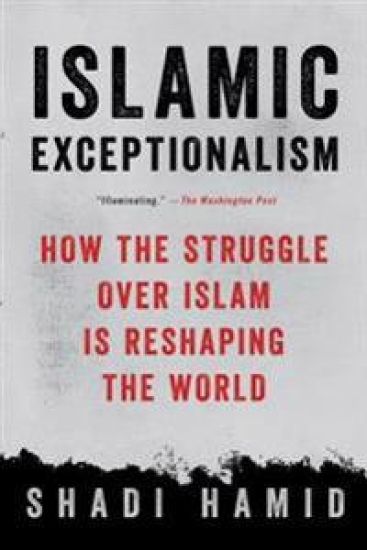
Islamic Exceptionalism

Islamic Exceptionalism

Shadi Hamid

St Martin's Press
2017
nidottu
Hamid argues for a new understanding of how Islam and Islamism shape politics by examining different models of reckoning with the problem of religion and state, including the terrifying - and alarmingly successful - example of ISIS. With unprecedented access to Islamist activists and leaders across the region, Hamid offers a panoramic and ambitious interpretation of the region's descent into violence. Islamic Exceptionalism is a vital contribution to our understanding of Islam's past and present, and its out sized role in modern politics. We don't have to like it, but we have to understand it - because Islam, as a religion and as an idea, will continue to be a force that shapes not just the region, but the West as well in the decades to come.
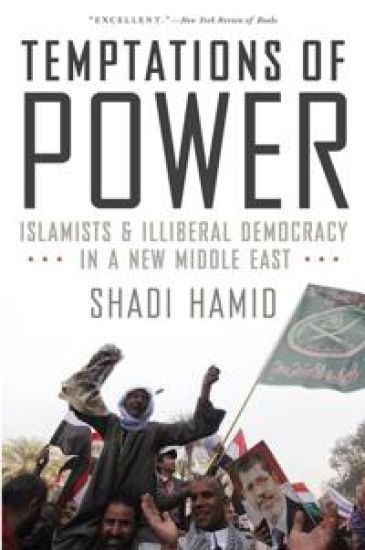
Temptations of Power

Temptations of Power

Shadi Hamid

Oxford University Press Inc
2015
nidottu
In 1989, Francis Fukuyama famously announced the "end of history." The Berlin Wall had fallen; liberal democracy had won out. But what of illiberal democracy--the idea that popular majorities, working through the democratic process, might reject gender equality, religious freedoms, and other norms that Western democracies take for granted? Nowhere have such considerations become more relevant than in the Middle East, where the uprisings of 2011 swept the Muslim Brotherhood and other Islamist groups to power. In Temptations of Power, Shadi Hamid draws on hundreds of interviews with leaders and activists from across the region to advance a new understanding of how Islamist movements change over time. He puts forward the bold thesis that repression "forced" Islamists to moderate their politics, work in coalitions, de-emphasize Islamic law, and set aside the dream of an Islamic state. Meanwhile, democratic openings in the 1980s--and again during the Arab Spring--pushed Islamists back toward their original conservatism. With the uprisings of 2011, Islamists found themselves in an enviable position, but one for which they were unprepared. Groups like the Brotherhood combine the features of both political parties and religious movements, leading to an inherent tension they have struggled to resolve. However pragmatic they may be, their ultimate goal remains the Islamization of society. When the electorate they represent is conservative as well, they can push their own form of illiberal democracy while insisting they are carrying out the popular will. This can lead to overreach and significant backlash. Yet, while the Egyptian coup and the subsequent crackdown were a devastating blow for the Islamist "project," obituaries of political Islam are premature. As long as the battle over the role of religion in public life continues, Islamist parties in countries as diverse as Egypt, Tunisia, and Jordan will remain an important force whether in the ranks of opposition or the halls of power. But what are the key factors driving their evolution? A timely and provocative reassessment, Hamid's account serves as an essential compass for those trying to understand where the region's varied Islamist groups have come from and where they might be headed.
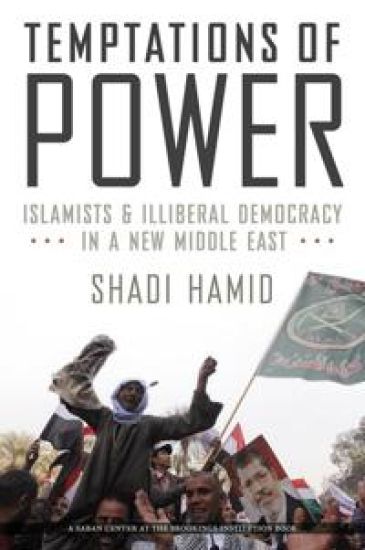
Temptations of Power

Temptations of Power

Shadi Hamid

Oxford University Press Inc
2014
sidottu
In 1989, Francis Fukuyama famously declared that we had reached "the end of history," and that liberal democracy would be the reigning ideology from now on. But Fukuyama failed to reckon with the idea of illiberal democracy. What if majorities, working through the democratic process, decide they would rather not accept gender equality and other human rights norms that Western democracies take for granted? Nowhere have such considerations become more relevant than in the Middle East, where the Arab uprisings of 2011 swept the Muslim Brotherhood and other Islamist parties into power. Since then, one question has been on everyone's mind: what do Islamists really want? In Temptations of Power, noted Brookings scholar Shadi Hamid draws on hundreds of interviews with Islamist leaders and rank-and-file activists to offer an in-depth look at the past, present, and future of Islamist parties across the Arab world. The oldest and most influential of these groups, the Muslim Brotherhood, initially dismissed democracy as a foreign import, but eventually chose to participate in Egyptian and Jordanian party politics in the 1980s. These political openings proved short-lived. As repression intensified, though, Islamist parties did not -- as one may have expected -- turn to radicalism. Rather, they embraced the tenets of democratic life, putting aside their dreams of an Islamic state, striking alliances with secular parties, and reaching out to Western audiences for the first time. When the 2011 revolutions took place, Islamists found themselves in an enviable position, but one they were unprepared for. Up until then, the prospect of power had seemed too remote. But, now, freed from repression and with the political arena wide open, they found themselves with an unprecedented opportunity to put their ideas into practice across the region. Groups like the Brotherhood combine the features of political parties and religious movements. However pragmatic they may be, their ultimate goal remains the Islamization of society and the state. When the electorate they represent is conservative as well, they can push their own form of illiberal democracy while insisting they are carrying out the popular will. This can lead to overreach and, at times, significant backlash, as the tragic events in Egypt following the military takeover demonstrated. While the coup and the subsequent crackdown were a devastating blow for the Islamist "project," premature obituaries of political Islam, a running feature of commentary since the 1950s, usually turn out to be just that - premature. In countries as diverse as Tunisia, Libya, Syria, Egypt, and Yemen, Islamist groups will remain an important force whether in the ranks of opposition or the halls of power. Drawing from interviews with figures like ousted Egyptian president Mohammed Morsi, Hamid's account will serve as an essential compass for those trying to understand where the region's varied Islamist groups have come from, and where they might be headed.