Kirjojen hintavertailu – 12 859 824 kirjaa ja 27 kauppaa
Kirjailija
Shahidul Islam
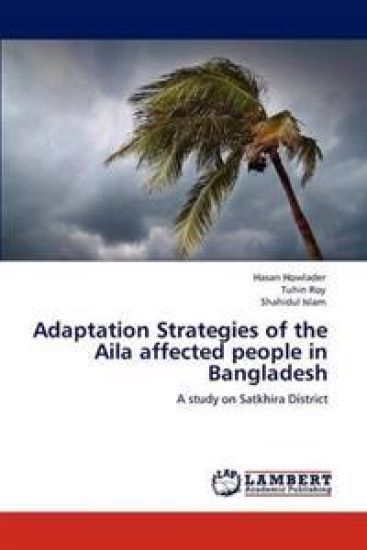
Kirjat ja teokset yhdessä paikassa: 5 kirjaa, julkaisuja vuosilta 2010–2021, suosituimpiin kuuluu Adaptation Strategies of the Aila affected people in Bangladesh. Vertaile teosten hintoja ja tarkista saatavuus suomalaisista kirjakaupoista.
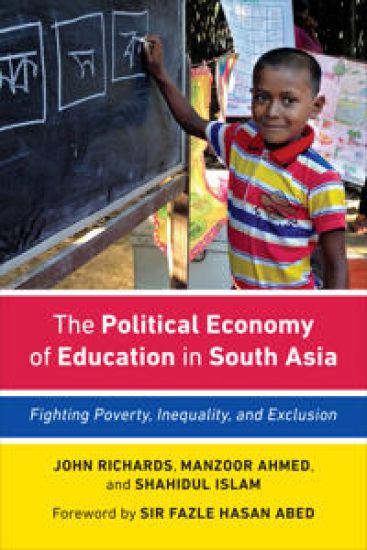
With the exception of Sri Lanka, South Asian countries have not achieved quality basic education – an essential measure for escaping poverty, inequality, and social exclusion. In The Political Economy of Education in South Asia, John Richards, Manzoor Ahmed, and Shahidul Islam emphasize the importance of a dynamic system for education policy. The Political Economy of Education in South Asia documents the weak core competency (reading and math) outcomes in government primary schools in India, Pakistan, Bangladesh, and Nepal, and the consequent rapid growth of non-government schools over the last two decades. It compares the training, hiring, and management of teachers in South Asian schools to successful national systems ranging from Singapore to Finland. Discussing reform options, it makes the case public good and public priorities are better served when both public and non-government providers come under a strong public policy and accountability framework. The Political Economy of Education in South Asia draws on the authors' broad engagement in education research and practice in South Asia, as well as analysis by prominent professors of education and NGO leaders, to place basic education in a broad context and make the case that universal literacy and numeracy are necessary foundations for economic growth.
This autobiographical book is a description of incidences chronologically happened in author's life in 2001-2019. Reason for writing up this book stemmed when the author fail to pursue his Ph. D in Chemical Engineering at the University of Sydney, Australia in 2004. To the best of the author's knowledge, this happened in his life because he was discriminated on the basis of gender, race, ethnicity and religious identity. The author also pointed out his own faults but these were outweighed by stressful activities of the concerned authorities. The University of Sydney created a negative report about the author in data base of Australian police in 2003. The Australian police shared this information with common data base of worldwide integrated security system. As a result of this, the author experienced continuous harassment even when he left the Australia. After this incident, the author faced hardship in getting a suitable job in his profession in Bangladesh in 2004-2008. In 2008, the author got chance to pursue his unfinished Ph. D at the Hong Kong University of Science and Technology for the second time. But the author experienced similar hardship here again. As a result his Ph. D remained incomplete here as well. After that the author returned to Sweden in 2010 due to his personal necessities. But the author experienced similar difficulties what he faced in the Australia and Hong Kong. After a series of un-favorable incidences, the author was able to complete his unfinished Ph. D at Atlantic International University (AIU), Hawaii, USA in 2013. But he could not avoid misfortune in his working career. Still he is facing hardship in getting a suitable job in his profession in Sweden. The author pointed out reason behind this. The reason is problem with security system of the local police which is biased by the common data base of worldwide integrated security system. After each real life incidence and corresponding hardship, the author analyzed the reasons behind these. Despite hardship, the author showed his highest level of patience and resilience to overcome the difficulties he faced. This book is a nice demonstration of real incidences happened in the author's life mainly in his Ph. D studies. The author's hardship was also carried over in his personal and working life afterwards. Every incidence described in this book was spontaneous and in every moment there was a chance to turn it around. This will help the readers to keep their concentration throughout the book. Last but not least the author would like to convey this message that person should not be discriminated on the basis of gender, race, ethnicity and religious identity to retain global balance of worldwide sustainability. This is the ultimate message of this book.