Kirjojen hintavertailu – 12 859 829 kirjaa ja 27 kauppaa

Kirjailija

Shahrokh Fardoust

Kirjat ja teokset yhdessä paikassa: 3 kirjaa, julkaisuja vuosilta 2014–2023, suosituimpiin kuuluu Towards a Better Global Economy. Vertaile teosten hintoja ja tarkista saatavuus suomalaisista kirjakaupoista.

3 kirjaa

Kirjojen julkaisuvuodet: 2014–2023.

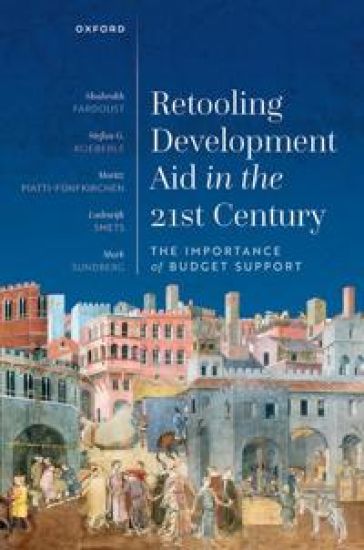
Retooling Development Aid in the 21st Century

Retooling Development Aid in the 21st Century

Shahrokh Fardoust; Stefan G. Koeberle; Moritz Piatti-Fünfkirchen; Lodewijk Smets; Mark Sundberg

Oxford University Press
2023
sidottu
Aid instruments need to adjust to new challenges and priorities. Global pandemics, climate change, increased inequality, low economic growth, and conflict have made it increasingly difficult for developing countries to achieve the Sustainable Development Goals. Retooling Development Aid in the 21st Century: The Importance of Budget Support examines the critical role of budget support by both multilateral and bilateral aid agencies to address the 21st century's development goals of eliminating poverty and protecting our global commons. Timely and smartly designed budget support remains a powerful tool to help address the new reality developing countries face, providing fast disbursing finance in support of critical reforms. Set against the background of a dramatically changing international financial architecture, the volume examines how budget support has evolved from its controversial past, addresses the evidence on performance and debates over conditionality, and it reflects on unmet expectations from the 2005 Paris Declaration. With the global financial crisis, the Covid pandemic, and the spillovers from conflict and climate change, budget support re-emerged as a key financing instrument to support policy reforms and catalyze private capital. Drawing on the lessons of the last two decades, the volume proposes a retooling of budget support as a versatile instrument to address both essential global public goods and tackle country-specific development challenges.
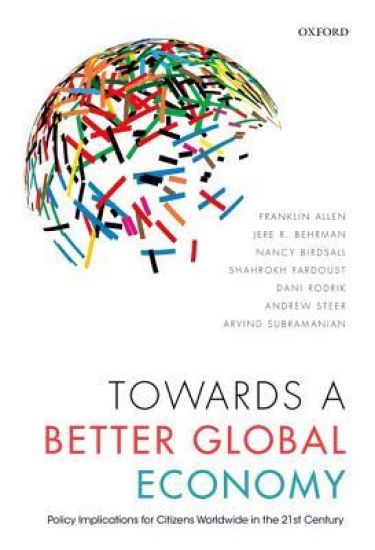
Towards a Better Global Economy

Towards a Better Global Economy

Franklin Allen; Jere R. Behrman; Nancy Birdsall; Shahrokh Fardoust; Dani Rodrik; Andrew Steer; Arvind Subramanian

Oxford University Press
2016
nidottu
Substantial progress in the fight against extreme poverty was made in the last two decades. But the slowdown in global economic growth and significant increases in income inequality in many developed and developing countries raise serious concerns about the continuation of this trend into the 21st century. The time has come to seriously think about how improvements in official global governance, coupled with and reinforced by rising activism of 'global citizens' can lead to welfare-enhancing and more equitable results for global citizens through better national and international policies. This book examines the factors that are most likely to facilitate the process of beneficial economic growth in low-, middle-, and high-income countries. It examines past, present, and future economic growth; demographic changes; the hyperglobalization of trade; the effect of finance on growth; climate change and resource depletion; and the sense of global citizenship and the need for global governance in order to draw longer-term implications, identify policy options for improving the lives of average citizens around the world, and make the case for the need to confront new challenges with truly global policy responses. The book documents how demographic changes, convergence, and competition are likely to bring about massive shifts in the sectoral and geographical composition of global output and employment, as the center of gravity of the global economy moves toward Asia and emerging economies elsewhere. It shows that the legacies of the 2008-09 crisis-high unemployment levels, massive excess capacities, and high debt levels-are likely to reduce the standard of living of millions of people in many countries over a long period of adjustment and that fluctuations in international trade, financial markets, and commodity prices, as well as the tendency of institutions at both the national and international level to favor the interests of the better-off and more powerful pose substantial risks for citizens of all countries. The chapters and their policy implications are intended to stimulate public interest and facilitate the exchange of ideas and policy dialogue.
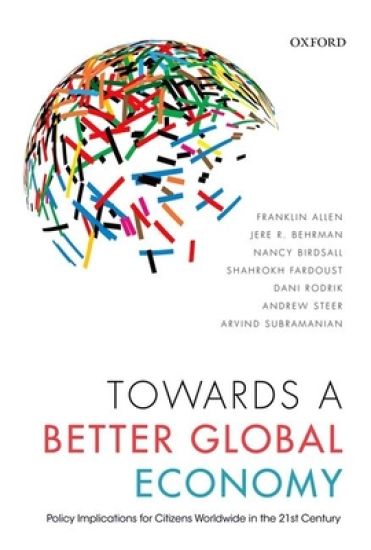
Towards a Better Global Economy

Towards a Better Global Economy

Franklin Allen; Jere R. Behrman; Nancy Birdsall; Shahrokh Fardoust; Dani Rodrik; Andrew Steer; Arvind Subramanian

Oxford University Press
2014
sidottu
Substantial progress in the fight against extreme poverty was made in the last two decades. But the slowdown in global economic growth and significant increases in income inequality in many developed and developing countries raise serious concerns about the continuation of this trend into the 21st century. The time has come to seriously think about how improvements in official global governance, coupled with and reinforced by rising activism of 'global citizens' can lead to welfare-enhancing and more equitable results for global citizens through better national and international policies. This book examines the factors that are most likely to facilitate the process of beneficial economic growth in low-, middle-, and high-income countries. It examines past, present, and future economic growth; demographic changes; the hyperglobalization of trade; the effect of finance on growth; climate change and resource depletion; and the sense of global citizenship and the need for global governance in order to draw longer-term implications, identify policy options for improving the lives of average citizens around the world, and make the case for the need to confront new challenges with truly global policy responses. The book documents how demographic changes, convergence, and competition are likely to bring about massive shifts in the sectoral and geographical composition of global output and employment, as the center of gravity of the global economy moves toward Asia and emerging economies elsewhere. It shows that the legacies of the 2008-09 crisis-high unemployment levels, massive excess capacities, and high debt levels-are likely to reduce the standard of living of millions of people in many countries over a long period of adjustment and that fluctuations in international trade, financial markets, and commodity prices, as well as the tendency of institutions at both the national and international level to favor the interests of the better-off and more powerful pose substantial risks for citizens of all countries. The chapters and their policy implications are intended to stimulate public interest and facilitate the exchange of ideas and policy dialogue.