Kirjojen hintavertailu – 12 859 829 kirjaa ja 27 kauppaa

Kirjailija

Shailaja Fennell

Kirjat ja teokset yhdessä paikassa: 5 kirjaa, julkaisuja vuosilta 2007–2018, suosituimpiin kuuluu Gender Education and Equality in a Global Context. Vertaile teosten hintoja ja tarkista saatavuus suomalaisista kirjakaupoista.

5 kirjaa

Kirjojen julkaisuvuodet: 2007–2018.

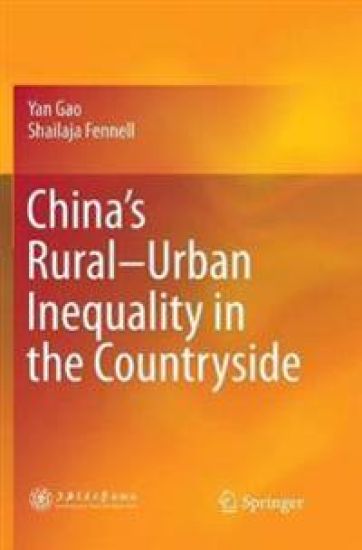
China’s Rural–Urban Inequality in the Countryside

China’s Rural–Urban Inequality in the Countryside

Yan Gao; Shailaja Fennell

Springer Verlag, Singapore
2018
nidottu
This book approaches the issue of rural-urban inequality through fieldwork conducted in a specific township (Zuogang) in Qinggang County, part of Heilongjiang Province in northeastern China. Presenting painstaking fieldwork in a single location, it successfully illuminates fundamental aspects of the reality and the complexity of rural-urban inequality that cannot be found in macro-level studies, most of which are prepared by economists. The book offers a unique combination of rigorous economic analysis with insightful social and anthropological analysis, as well as revealing interviews with local government officials. This approach provides a rich tapestry of rural perceptions of rural-urban inequality. With in-depth analysis and empirical evidence on questions concerning the development and root causes of urban-rural disparities, the book significantly enriches our understanding of the widely discussed issue of rural-urban income inequality, but from the unique perspective of rural China.
China’s Rural–Urban Inequality in the Countryside

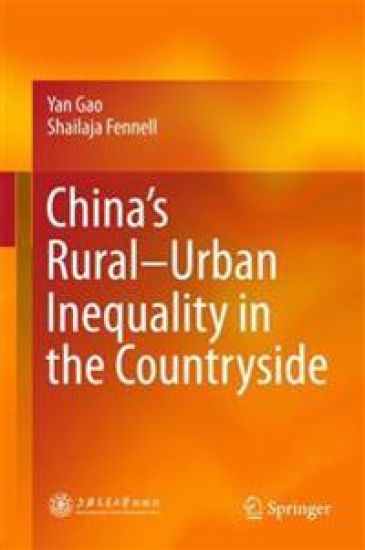
China’s Rural–Urban Inequality in the Countryside

Yan Gao; Shailaja Fennell

Springer Verlag, Singapore
2018
sidottu
This book approaches the issue of rural-urban inequality through fieldwork conducted in a specific township (Zuogang) in Qinggang County, part of Heilongjiang Province in northeastern China. Presenting painstaking fieldwork in a single location, it successfully illuminates fundamental aspects of the reality and the complexity of rural-urban inequality that cannot be found in macro-level studies, most of which are prepared by economists. The book offers a unique combination of rigorous economic analysis with insightful social and anthropological analysis, as well as revealing interviews with local government officials. This approach provides a rich tapestry of rural perceptions of rural-urban inequality. With in-depth analysis and empirical evidence on questions concerning the development and root causes of urban-rural disparities, the book significantly enriches our understanding of the widely discussed issue of rural-urban income inequality, but from the unique perspective of rural China.
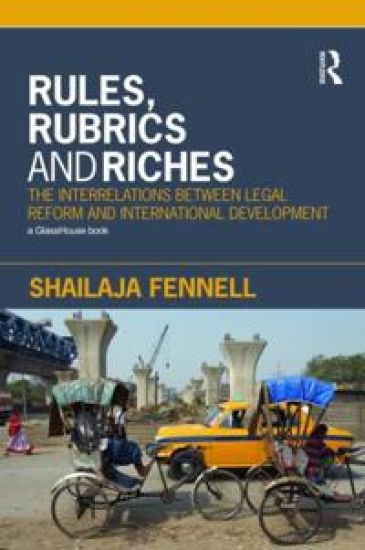
Rules, Rubrics and Riches

Rules, Rubrics and Riches

Shailaja Fennell

Routledge Cavendish
2009
nidottu
Rules, Rubrics and Riches highlights the limitations of existing approaches to understanding the relationship of the law to the process of development. It interrogates neoclassical economic thinking that draws on the narrow rubric of self-interest to understand the acquisition of riches. It takes issue with both the traditional ‘law and development’ movement, that was unable to shake colonial overtones, and the more recent ‘law and economics’ school that continues to emphasise the centrality of rational man at the micro level and the superiority of linear models of economic progress at the macro level. Written as an analysis of and commentary on the contribution of the law to international development, using legal cases and development trajectories in China, India and Malaysia, the book makes the case that individuals do not operate in a vacuum but rather within the social contexts of larger human structures such as family, community and nation. Rules, Rubrics and Riches is distinctive in the view that demanding equality for the individual is inappropriate if this occurs without looking at the broader context of the need for equity: within families, communities and nations. The book offers a new frame for 'law and development' thinking that point to a new set of rules, using a broader rubrics to ensure a sustainable accumulation of riches. It will be of interest to students and scholars working in the fields of law and development, development studies and international and comparative law.
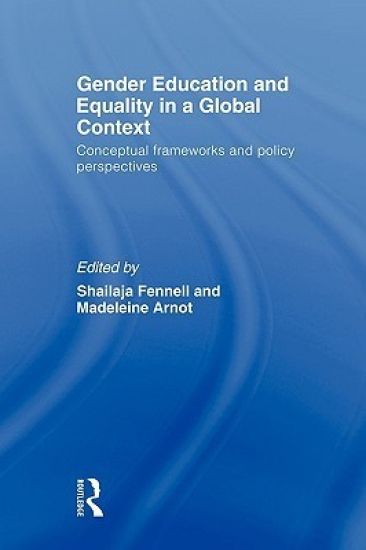
Gender Education and Equality in a Global Context

Gender Education and Equality in a Global Context

Shailaja Fennell; Madeleine Arnot

Routledge
2009
nidottu
The Millennium Development Goals aim to achieve basic education for all by 2015. But can such global agendas address national and local gender inequalities and will they empower women through education? This thought-provoking book offers an opportunity to engage critically with existing and emergent conceptual frameworks and methodological approaches to this global debate. It is divided into three sections that: reconceptualise the definitions of gender equality used by various social scientific disciplines, international organisations and policy makers; illustrate the methodologies used to collect the voices of young men and women and their teachers telling stories of their success in lifting the burdens of poverty and negotiating traditional gender relations; trace the impact of global gender agendas on national education policies, such as citizenship education, poverty reduction strategies, and feminist activism around adult women’s learning. Gender Education and Equality in a Global Context is an invaluable introduction to the range of conceptual frameworks and innovative research methods that address issues of gender education and development.
Gender Education and Equality in a Global Context

Gender Education and Equality in a Global Context

Shailaja Fennell; Madeleine Arnot

Routledge
2007
sidottu
The Millennium Development Goals aim to achieve basic education for all by 2015. But can such global agendas address national and local gender inequalities and will they empower women through education? This thought-provoking book offers an opportunity to engage critically with existing and emergent conceptual frameworks and methodological approaches to this global debate. It is divided into three sections that: reconceptualise the definitions of gender equality used by various social scientific disciplines, international organisations and policy makers; illustrate the methodologies used to collect the voices of young men and women and their teachers telling stories of their success in lifting the burdens of poverty and negotiating traditional gender relations; trace the impact of global gender agendas on national education policies, such as citizenship education, poverty reduction strategies, and feminist activism around adult women’s learning. Gender Education and Equality in a Global Context is an invaluable introduction to the range of conceptual frameworks and innovative research methods that address issues of gender education and development.