Kirjojen hintavertailu – 12 859 829 kirjaa ja 27 kauppaa

Kirjailija

Shane Kilcommins

Kirjat ja teokset yhdessä paikassa: 5 kirjaa, julkaisuja vuosilta 2007–2020, suosituimpiin kuuluu Criminal Law in Ireland 2nd edition. Vertaile teosten hintoja ja tarkista saatavuus suomalaisista kirjakaupoista.

5 kirjaa

Kirjojen julkaisuvuodet: 2007–2020.

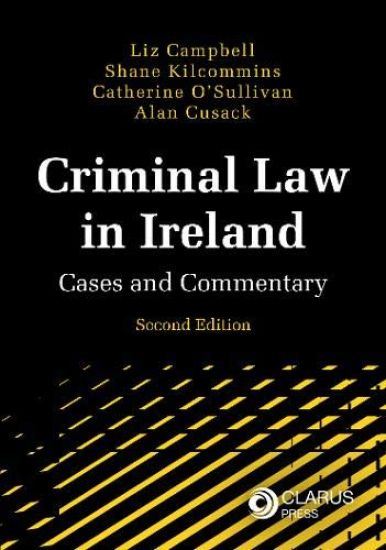
Criminal Law in Ireland 2nd edition

Criminal Law in Ireland 2nd edition

Liz Campbell; Shane Kilcommins; Catherine O'Sullivan; Alan Cusack

Clarus Press Ltd
2020
nidottu
Criminal Law: Cases and Commentary, Second Edition is a thoroughly revised, updated and expanded edition of this now established criminal law text book staple. This Second Edition includes new chapters on the following topics: Road Traffic Offences, Drugs Offences, Regulatory Offences and Victims’ Rights. Recent legislative changes are considered including the Criminal Law (Sexual Offences) Act 2017 and the Criminal Justice (Victims of Crime) Act 2017, as well as significant Supreme Court cases in the areas of the presumption of innocence (Forsey), reasonable access to a lawyer (Doyle), joint enterprise (Dekker), the right to silence (Sweeney), the exclusionary rule (JC) provocation (MacNamara), duress (Gleeson) and mistake (Casey). It provides students with a broad range of perspectives including formal case law, statutory and constitutional provisions, academic commentaries and Law Reform Commission policy recommendations. It combines domestic law with ECHR jurisprudence and persuasive authorities from other jurisdictions. Through a careful combination of the criminal rules along with excerpts from cases, articles, notes and texts, this book seeks to inform the user of the formal criminal law and provide a gateway to some of the more conceptual debates in the subject area.
Criminal Law in Ireland

Criminal Law in Ireland

Liz Campbell; Shane Kilcommins; Catherine O'Sullivan

Clarus Press Ltd
2010
nidottu
Criminal Law: Cases and Commentary is designed to help law students to understand the fundamental rules, principles and policy considerations that govern the criminal law in Ireland.
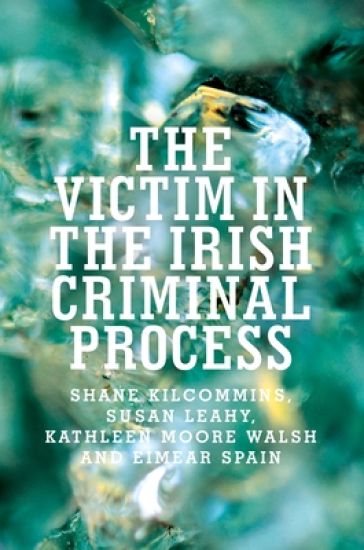
The Victim in the Irish Criminal Process

The Victim in the Irish Criminal Process

Shane Kilcommins; Susan Leahy; Kathleen Moore Walsh; Eimear Spain

Manchester University Press
2018
nidottu
Concern for crime victims has been a growing political issue in improving the legitimacy and success of the criminal justice system through the rhetoric of rights. Since the 1970s there have been numerous reforms and policy documents produced to enhance victims’ satisfaction in the criminal justice system. The Republic of Ireland has seen a sea-change in more recent years from a focus on services for victims to a greater emphasis on procedural rights. The purpose of this book is to chart these reforms against the backdrop of wider political and regional changes emanating from the European Union and the European Court of Human Rights, and to critically examine whether the position of crime victims has actually ameliorated. The book discusses the historical and theoretical concern for crime victims in the criminal justice system, examins the variety of forms of legal and service provision inclusion, amd concludes by analysing the various needs of victims which continue to be unmet.
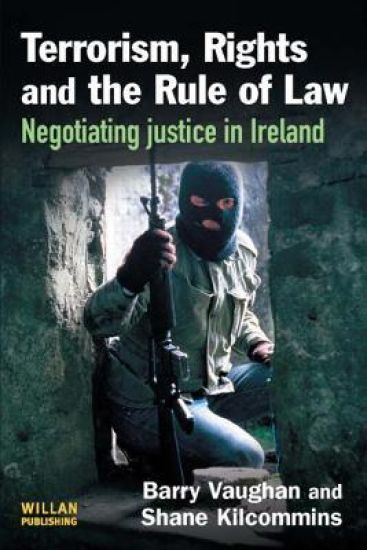
Terrorism, Rights and the Rule of Law

Terrorism, Rights and the Rule of Law

Barry Vaughan; Shane Kilcommins

Willan Publishing
2007
nidottu
The rule of law is becoming a victim of the struggle against terrorism. Many countries are reviewing their security procedures and questioning whether due process rights hinder them in the war on terror. There is increasing emphasis on preventive detention or strategies of disablement that cut into the liberties of suspects who may not have committed a crime. The focus of this book is the Republic of Ireland, where the risk of political violence has constantly threatened the Irish state. To ensure its survival, the state has resorted to emergency laws that weaken due process rights. The effects of counter-terrorism campaigns upon the rule of law governing criminal justice in Ireland are a central feature of this book. Globalization has supported this crossover, as organized crime seems immune to conventional policing tactics. But globalization fragments the authority of the state by introducing a new justice network. New regulatory agencies are entrusted with powers to control novel risks and social movements adopt a human rights discourse to contest state power and emergency laws. The result of this conflux of actors and risks is are negotiation of the model of justice that citizens can expect. Terrorism, Rights and the Rule of Law contributes to current debates about civil liberties in the war on terror, how counter-terrorism can contaminate criminal justice, and how globalization challenges a state-centred view of criminal justice. It will be of key interest to students of criminology, law, human rights and sociology,as well as legal and other practitioners and policy-makers.
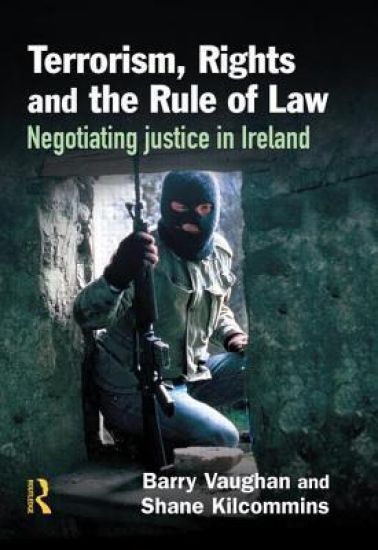
Terrorism, Rights and the Rule of Law

Terrorism, Rights and the Rule of Law

Barry Vaughan; Shane Kilcommins

Willan Publishing
2007
sidottu
The rule of law is becoming a victim of the struggle against terrorism. Many countries are reviewing their security procedures and questioning whether due process rights hinder them in the war on terror. There is increasing emphasis on preventive detention or strategies of disablement that cut into the liberties of suspects who may not have committed a crime. The focus of this book is the Republic of Ireland, where the risk of political violence has constantly threatened the Irish state. To ensure its survival, the state has resorted to emergency laws that weaken due process rights. The effects of counter-terrorism campaigns upon the rule of law governing criminal justice in Ireland are a central feature of this book. Globalization has supported this crossover, as organized crime seems immune to conventional policing tactics. But globalization fragments the authority of the state by introducing a new justice network. New regulatory agencies are entrusted with powers to control novel risks and social movements adopt a human rights discourse to contest state power and emergency laws. The result of this conflux of actors and risks is are negotiation of the model of justice that citizens can expect. Terrorism, Rights and the Rule of Law contributes to current debates about civil liberties in the war on terror, how counter-terrorism can contaminate criminal justice, and how globalization challenges a state-centred view of criminal justice. It will be of key interest to students of criminology, law, human rights and sociology,as well as legal and other practitioners and policy-makers.