Kirjojen hintavertailu – 12 867 114 kirjaa ja 27 kauppaa

Kirjailija

Shannon J. Linning

Kirjat ja teokset yhdessä paikassa: 4 kirjaa, julkaisuja vuosilta 2021–2026, suosituimpiin kuuluu Cutting Crime Using the Rule of the Few. Vertaile teosten hintoja ja tarkista saatavuus suomalaisista kirjakaupoista.

4 kirjaa

Kirjojen julkaisuvuodet: 2021–2026.

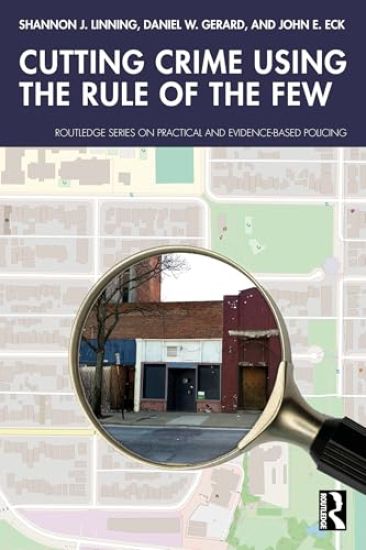
Cutting Crime Using the Rule of the Few

Cutting Crime Using the Rule of the Few

Shannon J. Linning; Daniel W. Gerard; John E. Eck

TAYLOR FRANCIS LTD
2026
nidottu
Based on decades of research, this book reveals how the rule of the few can redirect your focus to create effective crime control policies. Many crime reduction strategies fail because they apply common crime fallacies. They assume that: solutions to crime need to be complicated, crime is widespread, residents matter the most, more arrests reduce crime, and police can solve all crime problems. At the heart of each fallacy is a failure to consider an old idea: the rule of the few. The rule of the few means a tiny fraction of inputs cause most of the outcomes. Research shows that: solving problems at smaller scales can cut crime substantially, crime is highly concentrated at a few places in any city, only a few residents can usually effect change, only a few people commit most of the crime, and a few everyday people can dismantle crime opportunities. Cutting Crime Using the Rule of the Few shows that crime is not merely a police problem. It explains how those who own or manage property and design the products we use have far more power to suppress crime opportunities than they realize. Cutting Crime reveals how to use the rule of the few to identify and solve crime problems. It provides a set of tools and spells out specific strategies the police, property owners, business owners, and government agencies can use to reduce crime. Just as it only takes a few to create a lot of crime, it only takes a few to prevent those crimes.
Cutting Crime Using the Rule of the Few

Cutting Crime Using the Rule of the Few

Shannon J. Linning; Daniel W. Gerard; John E. Eck

TAYLOR FRANCIS LTD
2026
sidottu
Based on decades of research, this book reveals how the rule of the few can redirect your focus to create effective crime control policies. Many crime reduction strategies fail because they apply common crime fallacies. They assume that: solutions to crime need to be complicated, crime is widespread, residents matter the most, more arrests reduce crime, and police can solve all crime problems. At the heart of each fallacy is a failure to consider an old idea: the rule of the few. The rule of the few means a tiny fraction of inputs cause most of the outcomes. Research shows that: solving problems at smaller scales can cut crime substantially, crime is highly concentrated at a few places in any city, only a few residents can usually effect change, only a few people commit most of the crime, and a few everyday people can dismantle crime opportunities. Cutting Crime Using the Rule of the Few shows that crime is not merely a police problem. It explains how those who own or manage property and design the products we use have far more power to suppress crime opportunities than they realize. Cutting Crime reveals how to use the rule of the few to identify and solve crime problems. It provides a set of tools and spells out specific strategies the police, property owners, business owners, and government agencies can use to reduce crime. Just as it only takes a few to create a lot of crime, it only takes a few to prevent those crimes.
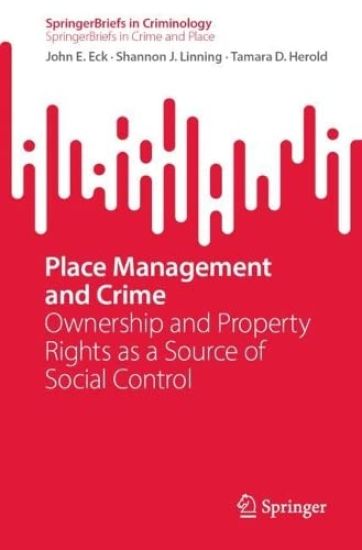
Place Management and Crime

Place Management and Crime

John E. Eck; Shannon J. Linning; Tamara D. Herold

Springer International Publishing AG
2023
nidottu
This brief describes the theory and evidence of a form of social control known as place management. Created by property owners, place management is an alternative to the two other domains of social control: formally created by the state and informally created by residents. It helps explain the high concentration of crime and disorder at a relatively small proportion of addresses and facilities. This volume examines the specifics of place management and extends it in three ways: to show how high crime places may radiate crime into their surroundings; to reveal networks of places that create crime hotspot spanning blocks; to demonstrate how networks of place managers influence crime throughout neighborhoods. Finally, it shows that the policy implications of place management extend far beyond the police and should include regulatory policies.
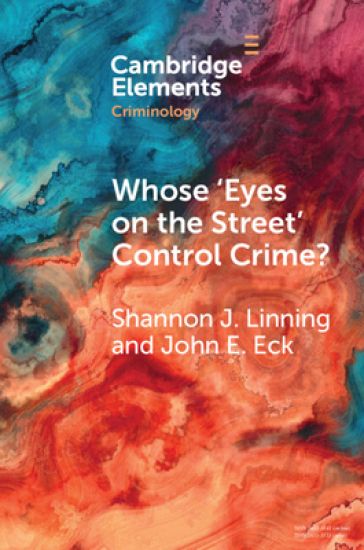
Whose 'Eyes on the Street' Control Crime?

Whose 'Eyes on the Street' Control Crime?

Shannon J. Linning; John E. Eck

Cambridge University Press
2021
pokkari
Jane Jacobs coined the phrase 'eyes on the street' to depict those who maintain order in cities. Most criminologists assume these eyes belong to residents. In this Element we show that most of the eyes she described belonged to shopkeepers and property owners. They, along with governments, wield immense power through property ownership and regulation. From her work, we propose a Neo-Jacobian perspective to reframe how crime is connected to neighborhood function through deliberate decision-making at places. It advances three major turning points for criminology. This includes turns from: 1. residents to place managers as the primary source of informal social control; 2. ecological processes to outsiders' deliberate actions that create crime opportunities; and 3. a top-down macro- to bottom-up micro-spatial explanation of crime patterns. This perspective demonstrates the need for criminology to integrate further into economics, political science, urban planning, and history to improve crime control policies.