
Kirjojen hintavertailu – 12 859 828 kirjaa ja 27 kauppaa

Kirjailija

Sharon Clough

Kirjat ja teokset yhdessä paikassa: 2 kirjaa, julkaisuja vuosilta 2020–2024, suosituimpiin kuuluu The Archaeology of Hinkley Point C Nuclear Power Station, Somerset. Excavations in 2012-16. Vertaile teosten hintoja ja tarkista saatavuus suomalaisista kirjakaupoista.

2 kirjaa

Kirjojen julkaisuvuodet: 2020–2024.

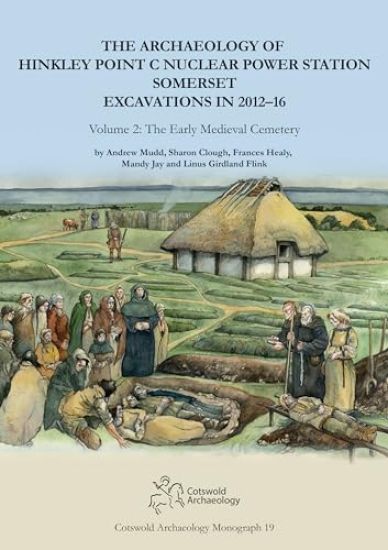
The Archaeology of Hinkley Point C Nuclear Power Station, Somerset. Excavations in 2012-16

The Archaeology of Hinkley Point C Nuclear Power Station, Somerset. Excavations in 2012-16

Andrew Mudd; Sharon Clough; Frances Healy; Mandy Jay; Linus Girdland Flink

Cotswold Archaeology
2024
sidottu
The cemetery was excavated in its entirety and contained the remains of around 300 individuals. Its form is shown to have many characteristics in common with other cemeteries of this period in the western British Isles, including the extended, supine posture of the deceased in simple earth-cut graves largely aligned in a west/east orientation. There were a limited number and range of grave accompaniments. Peculiarities included a concentration of intercutting burials within a small central rectangle, with the later re-use of this space for the deposition of fragments of carved stone, followed by the construction here of a wooden building. The deposition of seashells with a number of the burials appears to be a rite so far unique to this community. The stratigraphic sequence allied to radiocarbon dates on 51 individuals has enabled an unusually refined chronology, showing that the cemetery was used from the early 5th to the later 7th centuries. Measurements of the isotopes of strontium, oxygen, carbon, nitrogen and sulphur in various combinations from a selection of individuals provides insights into aspects of origin, movement and diet. Mitochondrial DNA has provided information on the maternal lineage of 44 individuals, some of whom were buried in the same grave as others of the same lineage. Material remains were sparse but provide insights into the burial practices at this time.
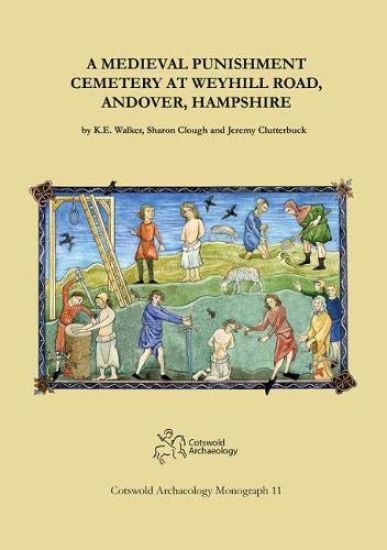
A Medieval Punishment Cemetery at Weyhill Road, Andover, Hampshire

A Medieval Punishment Cemetery at Weyhill Road, Andover, Hampshire

Karen E. Walker; Sharon Clough; Jeremy Clutterbuck

Cotswold Archaeological Trust Ltd
2020
sidottu
In 2016, a watching brief in advance of construction at a site between Andover and Weyhill, Hampshire, revealed disturbed human remains. This formerly isolated roadside location, which had been partly developed in the later 20th century, lies close to the historical boundary between Andover and Abbotts Ann Hundred. The discovery led to the excavation of a densely crowded group of partly disturbed and heavily intercut graves, and it soon became clear that this was not a normal community cemetery. The remains of some 124 individuals, mostly male and adult, were revealed, with much additional disarticulated bone. Many had clearly been buried with their hands tied behind their backs or had been interred face-down, and some had been decapitated. As might be expected with a rural ‘execution’ (or punishment) cemetery of this type, very few artefacts were recovered. In this case only one find, a silver penny dateable to AD 979-985, allowed close dating, which suggested that the site was a distinctive type of Saxon cemetery known elsewhere in Hampshire. However, radiocarbon dates from articulated burials, selected for their spatial and stratigraphic positions, demonstrate that the cemetery was in use from at least the 10th century (and possibly as early as the 8th century), and continued in use beyond the Norman Conquest to at least the 13th and possibly the 14th century. Stable isotope analysis shows that the people buried here were mostly of local origin. The significance of the site lies in this evidence for continuity, at a local level, of the organisation of judicial power from Saxon times well into the Middle Ages. It is the first site to provide clear evidence for such duration of a ‘punishment’ cemetery.