Kirjojen hintavertailu – 12 903 731 kirjaa ja 27 kauppaa

Kirjailija

Sharon Kinoshita

Kirjat ja teokset yhdessä paikassa: 4 kirjaa, julkaisuja vuosilta 2006–2024, suosituimpiin kuuluu Marie de France: A Critical Companion. Vertaile teosten hintoja ja tarkista saatavuus suomalaisista kirjakaupoista.

4 kirjaa

Kirjojen julkaisuvuodet: 2006–2024.

Marco Polo and His World

Marco Polo and His World

Sharon Kinoshita

REAKTION BOOKS
2024
sidottu

Halvin toimitettuna 25,60 €

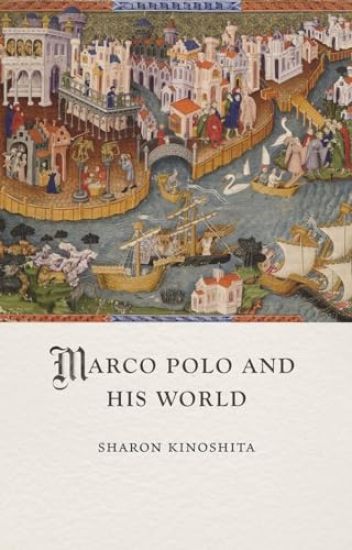
Aged seventeen, Marco Polo left his home in Venice on a continent-spanning adventure that lasted for nearly a quarter of a century. Imprisoned in Genoa five years later, he collaborated with Arthurian romance writer Rustichello of Pisa on a work they called The Description of the World. Their book recounted ‘all the greatest marvels and great diversities of Greater Armenia, Persia, the Tartars, India, and many other provinces’. In Marco Polo and His World Sharon Kinoshita brings these marvels to life, describing the rich commodities, plants, people and animals that Marco encountered and recorded. Copiously illustrated, and ranging from Venice, Genoa and Pisa to Khanbaliq, Quinsai and Zaytun, this is a vivid account of Marco Polo’s astounding adventures.
Marie de France: A Critical Companion

Marie de France: A Critical Companion

Sharon Kinoshita; Peggy McCracken

D.S. Brewer
2014
pokkari
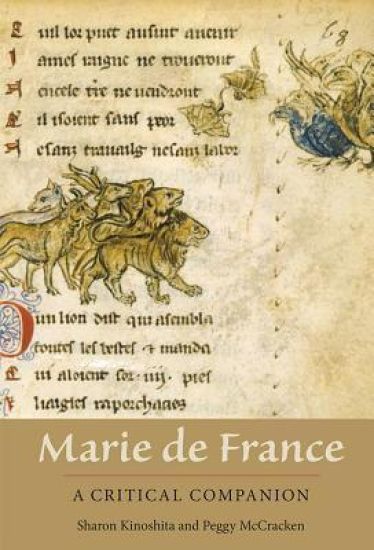
This new companion to the works of Marie de France offers fresh insights into the standard critical debates. Marie de France is the author of some of the most influential and important works to survive from the middle ages; arguably best-known for her Lais, she also translated Aesop's Fables (the Ysopë), and wrote the Espurgatoire seint Patriz (St Patrick's Purgatory), based on a Latin text. The aim of this Companion is both to provide information on what can be gleaned of her life, and on her poetry, and to rethink standard questions of interpretation, through topics with special relevance to medieval literature and culture. The variety of perspectives used highlights both the unity of Marie's oeuvre and the distinctiveness of the individual texts. Aftersituating her writings in their Anglo-Norman political, linguistic, and literary context, this volume considers her treatment of questions of literary composition in relation to the circulation, transmission, and interpretation ofher works. Her social and historical engagements are illuminated by the prominence of feudal vocabulary, while her representation of movement across different geographical and imaginary spaces opens a window on plot construction. Repetition and variation are considered as a narrative technique within Marie's work, and as a cultural practice linking her texts to a network of twelfth-century textual traditions. The Conclusion, on the posterity of her oeuvre, combines a consideration of manuscript context with the ways in which later authors rewrote Marie's works. Sharon Kinoshita is Professor of Literature, University of California, Santa Cruz; Peggy McCracken is Professor of French, Women's Studies, and Comparative Literature, University of Michigan, Ann Arbor.

Marie de France: A Critical Companion

Marie de France: A Critical Companion

Sharon Kinoshita; Peggy McCracken

D.S. Brewer
2012
sidottu
This new companion to the works of Marie de France offers fresh insights into the standard critical debates. Marie de France is the author of some of the most influential and important works to survive from the middle ages; arguably best-known for her Lais, she also translated Aesop's Fables (the Ysopë), and wrote the Espurgatoire seint Patriz (St Patrick's Purgatory), based on a Latin text. The aim of this Companion is both to provide information on what can be gleaned of her life, and on her poetry, and to rethink standard questions of interpretation, through topics with special relevance to medieval literature and culture. The variety of perspectives used highlights both the unity of Marie's oeuvre and the distinctiveness of the individual texts. Aftersituating her writings in their Anglo-Norman political, linguistic, and literary context, this volume considers her treatment of questions of literary composition in relation to the circulation, transmission, and interpretation ofher works. Her social and historical engagements are illuminated by the prominence of feudal vocabulary, while her representation of movement across different geographical and imaginary spaces opens a window on plot construction. Repetition and variation are considered as a narrative technique within Marie's work, and as a cultural practice linking her texts to a network of twelfth-century textual traditions. The Conclusion, on the posterity of her oeuvre, combines a consideration of manuscript context with the ways in which later authors rewrote Marie's works. Sharon Kinoshita is Professor of Literature, University of California, Santa Cruz; Peggy McCracken is Professor of French, Women's Studies, and Comparative Literature, University of Michigan, Ann Arbor.
Medieval Boundaries

Medieval Boundaries

Sharon Kinoshita

University of Pennsylvania Press
2006
sidottu
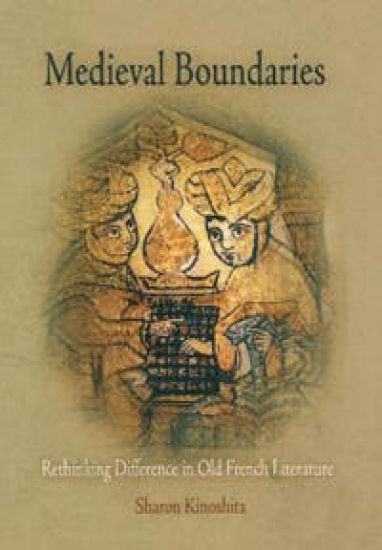
In Medieval Boundaries, Sharon Kinoshita examines the role of cross-cultural contact in twelfth- and early thirteenth-century French literature. Starting from the observation that many of the earliest and best-known works of the French literary tradition are set on or beyond the borders of the French-speaking world, she reads the Chanson de Roland, the lais of Marie de France, and a variety of other texts in an expanded geographical frame that includes the Iberian peninsula, the Welsh marches, and the eastern Mediterranean. In Kinoshita's reconceptualization of the geographical and cultural boundaries of the medieval West, such places become significant not only as sites of conflict but also as spaces of intense political, economic, and cultural negotiation. An important contribution to the emerging field of medieval postcolonialism, Kinoshita's work explores the limitations of reading the literature of the French Middle Ages as an inevitable link in the historical construction of modern discourses of Orientalism, colonialism, race, and Christian-Muslim conflict. Rather, drawing on recent historical and art historical scholarship, Kinoshita uncovers a vernacular culture at odds with official discourses of crusade and conquest. Situating each work in its specific context, she brings to light the lived experiences of the knights and nobles for whom this literature was first composed and-in a series of close readings informed by postcolonial and feminist theory-demonstrates that literary representations of cultural encounters often provided the pretext for questioning the most basic categories of medieval identity. Awarded honorable mention for the 2007 Modern Language Association Aldo and Jeanne Scaglione Prize for French and Francophone Studies