Kirjojen hintavertailu – 12 859 824 kirjaa ja 27 kauppaa

Kirjailija

Sharon Smaldino

Kirjat ja teokset yhdessä paikassa: 4 kirjaa, julkaisuja vuosilta 2013–2019, suosituimpiin kuuluu Instructional Technology and Media for Learning. Vertaile teosten hintoja ja tarkista saatavuus suomalaisista kirjakaupoista.

4 kirjaa

Kirjojen julkaisuvuodet: 2013–2019.

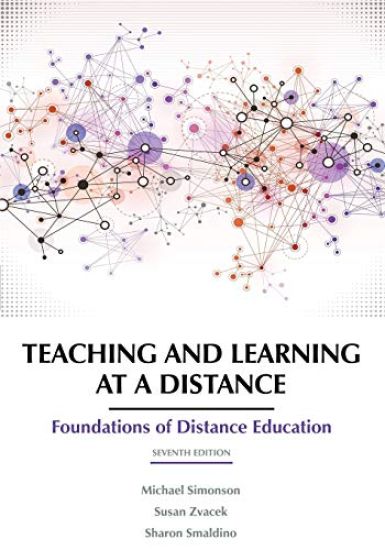
Teaching and Learning at a Distance

Teaching and Learning at a Distance

Michael Simonson; Susan Zvacek; Sharon Smaldino

Information Age Publishing
2019
nidottu
Teaching and Learning at a Distance is written for introductory distance education courses for preservice or in- service teachers, and for training programs that discuss teaching distant learners or managing distance education systems. This text provides readers with the basic information needed to be knowledgeable distance educators and leaders of distance education programs. The teacher or trainer who uses this book will be able to distinguish between appropriate uses of distance education. In this text we take the following themes:The first theme is the definition of distance education. Before we started writing the first edition of Teaching and Learning at a Distance we carefully reviewed the literature to determine the definition that would be at the foundation of our writing. This definition is based on the work of Desmond Keegan, but is unique to this book. This definition of distance education has been adopted by the Association for Educational Communications and Technology and by the Encyclopedia Britannica. The second theme of the book was the importance of research to the development of the contents of the book. The best practices presented in Teaching and Learning at a Distance are validated by scientific evidence. Certainly there are “rules of thumb”, but we have always attempted to only include recommendations that can be supported by research. The third theme of Teaching and Learning at a Distance is derived from Richard Clark’s famous quote published in the Review of Educational Research that states that media are mere vehicles that do not directly influence achievement. Clark’s controversial work is discussed in the book, but is also fundamental to the book’s advocacy for distance education – in other words, we authors did not make the claim that education delivered at a distance was inherently better than other ways people learn. Distance delivered instruction is not a “magical” approach that makes learners achieve more. The fourth theme of the book is equivalency theory. Here we presented the concept that instruction should be provided to learners that is equivalent rather than identical to what might be delivered in a traditional environment. Equivalency theory helps the instructional designer approach the development of instruction for each learner without attempting to duplicate what happens in a face to face classroom. The final theme for Teaching and Learning at a Distance is the idea that the book should be comprehensive – that it should cover as much of the various ways instruction is made available to distant learners as is possible. It should be a single source of information about the field.
Teaching and Learning at a Distance

Teaching and Learning at a Distance

Michael Simonson; Susan Zvacek; Sharon Smaldino

Information Age Publishing
2019
sidottu
Teaching and Learning at a Distance is written for introductory distance education courses for preservice or in- service teachers, and for training programs that discuss teaching distant learners or managing distance education systems. This text provides readers with the basic information needed to be knowledgeable distance educators and leaders of distance education programs. The teacher or trainer who uses this book will be able to distinguish between appropriate uses of distance education. In this text we take the following themes:The first theme is the definition of distance education. Before we started writing the first edition of Teaching and Learning at a Distance we carefully reviewed the literature to determine the definition that would be at the foundation of our writing. This definition is based on the work of Desmond Keegan, but is unique to this book. This definition of distance education has been adopted by the Association for Educational Communications and Technology and by the Encyclopedia Britannica. The second theme of the book was the importance of research to the development of the contents of the book. The best practices presented in Teaching and Learning at a Distance are validated by scientific evidence. Certainly there are “rules of thumb”, but we have always attempted to only include recommendations that can be supported by research. The third theme of Teaching and Learning at a Distance is derived from Richard Clark’s famous quote published in the Review of Educational Research that states that media are mere vehicles that do not directly influence achievement. Clark’s controversial work is discussed in the book, but is also fundamental to the book’s advocacy for distance education – in other words, we authors did not make the claim that education delivered at a distance was inherently better than other ways people learn. Distance delivered instruction is not a “magical” approach that makes learners achieve more. The fourth theme of the book is equivalency theory. Here we presented the concept that instruction should be provided to learners that is equivalent rather than identical to what might be delivered in a traditional environment. Equivalency theory helps the instructional designer approach the development of instruction for each learner without attempting to duplicate what happens in a face to face classroom. The final theme for Teaching and Learning at a Distance is the idea that the book should be comprehensive – that it should cover as much of the various ways instruction is made available to distant learners as is possible. It should be a single source of information about the field.
Revel Access Code for Instructional Technology and Media for Learning

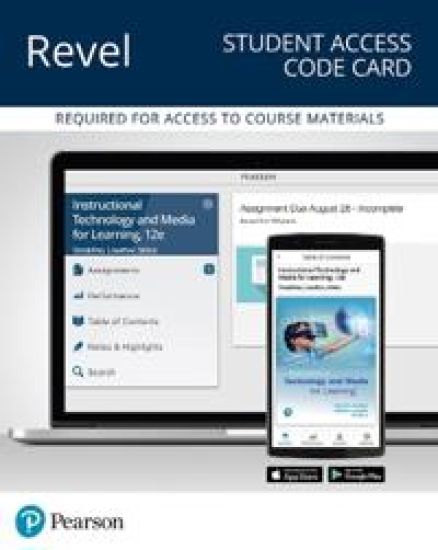
Revel Access Code for Instructional Technology and Media for Learning

Sharon Smaldino; Deborah Lowther; Clif Mims

Pearson
2018
lisenssiavain
Specific, realistic strategies for integrating technology and media into the PK-12 classroom Revel™ is Pearson’s newest way of delivering our respected content. Fully digital and highly engaging, Revel replaces the textbook and gives students everything they need for the course. Informed by extensive research on how people read, think, and learn, Revel is an interactive learning environment that enables students to read, practice, and study in one continuous experience—for less than the cost of a traditional textbook. Using the ASSURE lesson plan model, Instructional Technology and Media for Learning, 12th Edition, demonstrates how to implement a complete range of technology and media formats that can be used to support and enhance teaching and learning. Written from the viewpoint of the teacher, the text highlights everyday teaching challenges and shows educators practical solutions for incorporating technology and media into their classroom. Examples are drawn from elementary and secondary education, covering a wide range of content areas. The 12th Edition keeps readers up to date with recent innovations in technology and media, including mobile, Web 2.0, social media, copyright issues, coding as literacy, transdisciplinary learning, artificial intelligence, and augmented reality. Expanded and revised discussions help teachers consider appropriate technology that aligns with content standards while meeting the learning needs of all students. NOTE: Revel is a fully digital delivery of Pearson content. This ISBN is for the standalone Revel access card. In addition to this access card, you will need a course invite link, provided by your instructor, to register for and use Revel.