Kirjojen hintavertailu – 12 903 724 kirjaa ja 27 kauppaa

Kirjailija

Shashank Joshi

Kirjat ja teokset yhdessä paikassa: 6 kirjaa, julkaisuja vuosilta 2010–2026, suosituimpiin kuuluu Marknaden : Kapital, stater och tankar om en fri värld. Vertaile teosten hintoja ja tarkista saatavuus suomalaisista kirjakaupoista.

6 kirjaa

Kirjojen julkaisuvuodet: 2010–2026.

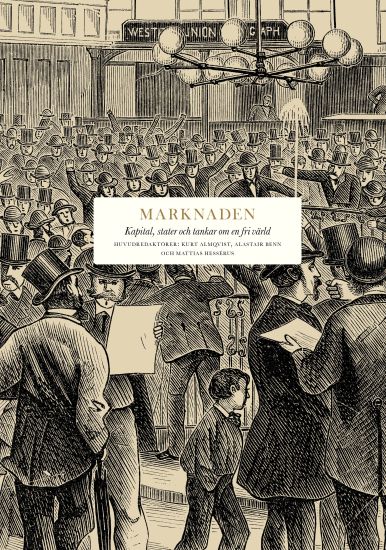
Marknaden : Kapital, stater och tankar om en fri värld

Marknaden : Kapital, stater och tankar om en fri värld

David Abulafia; Ali Ansari; Richard Bratby; Mary Bridges; Caroline Burt; David Butterfield; Edward Chancellor; Marie Kawthar Daouda; Eloise Davies; Ulrike Franke; Francis J. Gavin; Magnus Henrekson; William Inboden; Shashank Joshi; Knut N. Kjaer; Kwasi Kwarteng; Charlie Laderman; Ian Leslie; Nicklas Berild Lundblad; Iain Martin; Jade McGlynn; Mario Pisani; Alina Polyakova; Sergey Radchenko; Mick Ryan; Paul Tucker; Rikard Westerberg; Adrian Wooldridge; David Wootton; Linda Yueh

Bokförlaget Stolpe
2026
sidottu
Från det romerska torget till digitala valutor – hur har marknaden utvecklats under historiens gång och hur kan den komma att se ut i framtiden? Denna antologi gör en djupdykning i marknadsutvecklingen och tittar närmare på marknaders avgörande roll i att utforma samtiden men tar också upp den brännande frågan om hur vi ska navigera mot en hållbar framtid. I tankeväckande essäer skrivna av internationella forskare, politiker och andra sakkunniga utforskas marknadens dynamik. Med utgångspunkt i de antika torgen och i det medeltida Europas marknader undersöker författarna hur tekniska framsteg, konsumentbeteende och geopolitisk strategi – till exempel den politik som utövades under Reagan-eran – har format nutida marknader. Slutligen tar boken upp de utmaningar för stabiliteten på marknaden som utgörs av auktoritära stater och AI. Boken finns även i engelsk utgåva, The Market.
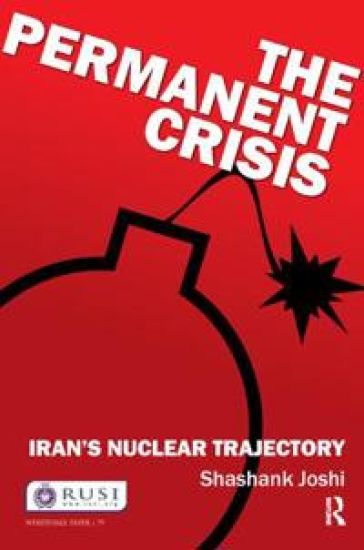
The Permanent Crisis

The Permanent Crisis

Shashank Joshi

Routledge
2017
sidottu
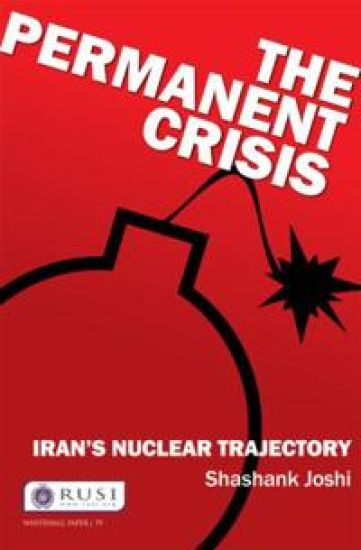
The quickening pace of Iran?s nuclear activities has produced an international sense of urgency. Sanctions have intensified, while fears of an Israeli strike abound. Talks have briefly eased the tension, before failing due to fundamental differences between Iran and the West. There seem to be dim prospects for peaceful resolution; the worry is that this long-running dispute could become a permanent crisis. This Whitehall Paper tackles the Iranian nuclear dispute in its full context to determine what possible compromises may exist and how they may be achieved. While the crisis is embedded in a set of overlapping security disputes between Iran on the one hand, and the United States, Arab regional powers, Israel and the broader ? West? on the other, it is also important to analyse it in a comparative and thematic context. Iran?s programme is not sui generis: previous experience can help to inform our assessments of how Iran will be affected by, and respond to, intense multilateral economic and political pressure, and what its nuclear posture might be. This study also examines how policy responses by the West should evolve were Iran to resume its alleged nuclear-weapons programme, continue to undertake some degree of near-weaponisation or weaponisation, or test and deploy nuclear weapons. The Permanent Crisis questions the assumptions and logic of alarmist studies ? those which see a nuclear Iran as fanatical, unresponsive to deterrence and certain to precipitate a wave of unstoppable nuclear proliferation ? whilst outlining the very real risks that would flow from such a failure of Western policy.
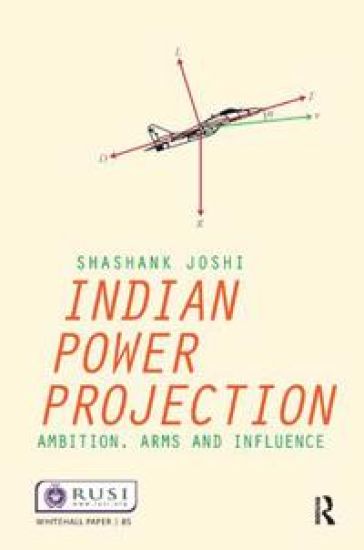
Indian Power Projection

Indian Power Projection

Shashank Joshi

Routledge
2017
sidottu
India is growing into one of Asia?s most important military powers. Its defence budget has more than doubled in the past decade, and it imports more arms than anyone else in the world. But India is still seen as a land power focused on long, disputed and militarised borders with Pakistan and China rather than the global military force it was in the first half of the twentieth century under British rule. Is this changing? India is acquiring increasing numbers of key platforms ? aircraft carriers, amphibious ships, refuelling tankers and transport aircraft ? that are extending its reach to the Indian Ocean littoral and beyond. But most accounts of this build-up have been impressionistic and partial. Indian Power Projection assesses the strength, reach and purposes of India's maturing capabilities. It offers a systematic assessment of India?s ability to conduct long-range airstrikes from land and sea, transport and convey airborne and amphibious forces, and develop the institutional and material enablers that turn platforms into capabilities. It draws extensively on the lessons of modern expeditionary operations, and considers how India?s growing interests might shape where and how it uses these evolving capabilities in the future. This study finds that Indian power projection is in a nascent stage: limited in number, primarily of use against much-weaker adversaries, and deficient in some key supporting capabilities. India?s defence posture will continue to be shaped by local threats, rather than distant interests. Indian leaders remain uncomfortable with talk of military intervention and expeditionary warfare, associating these with colonial and superpower excess. But as the country?s power, interests and capabilities all grow, it is likely that India will once more find itself using military force beyond its land borders.
Indian Power Projection

Indian Power Projection

Shashank Joshi

Routledge
2016
nidottu
India is growing into one of Asia’s most important military powers. Its defence budget has more than doubled in the past decade, and it imports more arms than anyone else in the world. But India is still seen as a land power focused on long, disputed and militarised borders with Pakistan and China rather than the global military force it was in the first half of the twentieth century under British rule. Is this changing? India is acquiring increasing numbers of key platforms – aircraft carriers, amphibious ships, refuelling tankers and transport aircraft – that are extending its reach to the Indian Ocean littoral and beyond. But most accounts of this build-up have been impressionistic and partial. Indian Power Projection assesses the strength, reach and purposes of India's maturing capabilities. It offers a systematic assessment of India’s ability to conduct long-range airstrikes from land and sea, transport and convey airborne and amphibious forces, and develop the institutional and material enablers that turn platforms into capabilities. It draws extensively on the lessons of modern expeditionary operations, and considers how India’s growing interests might shape where and how it uses these evolving capabilities in the future. This study finds that Indian power projection is in a nascent stage: limited in number, primarily of use against much-weaker adversaries, and deficient in some key supporting capabilities. India’s defence posture will continue to be shaped by local threats, rather than distant interests. Indian leaders remain uncomfortable with talk of military intervention and expeditionary warfare, associating these with colonial and superpower excess. But as the country’s power, interests and capabilities all grow, it is likely that India will once more find itself using military force beyond its land borders.
The Permanent Crisis

The Permanent Crisis

Shashank Joshi

Routledge
2012
nidottu
The quickening pace of Iran’s nuclear activities has produced an international sense of urgency. Sanctions have intensified, while fears of an Israeli strike abound. Talks have briefly eased the tension, before failing due to fundamental differences between Iran and the West. There seem to be dim prospects for peaceful resolution; the worry is that this long-running dispute could become a permanent crisis. This Whitehall Paper tackles the Iranian nuclear dispute in its full context to determine what possible compromises may exist and how they may be achieved. While the crisis is embedded in a set of overlapping security disputes between Iran on the one hand, and the United States, Arab regional powers, Israel and the broader ‘West’ on the other, it is also important to analyse it in a comparative and thematic context. Iran’s programme is not sui generis: previous experience can help to inform our assessments of how Iran will be affected by, and respond to, intense multilateral economic and political pressure, and what its nuclear posture might be. This study also examines how policy responses by the West should evolve were Iran to resume its alleged nuclear-weapons programme, continue to undertake some degree of near-weaponisation or weaponisation, or test and deploy nuclear weapons. The Permanent Crisis questions the assumptions and logic of alarmist studies – those which see a nuclear Iran as fanatical, unresponsive to deterrence and certain to precipitate a wave of unstoppable nuclear proliferation – whilst outlining the very real risks that would flow from such a failure of Western policy.
Cultural Issues in Pediatric Mental Health, An Issue of Child and Adolescent Psychiatric Clinics of North America
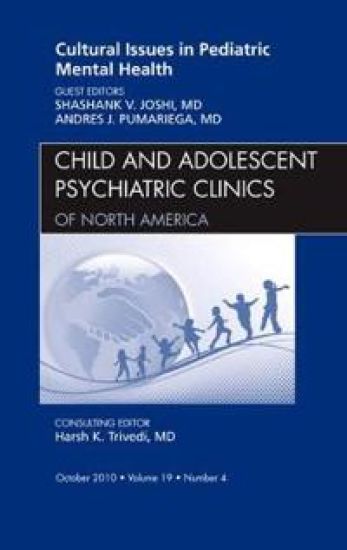
Two of the leading voices in cultural psychiatry, Dr. Shashank Joshi and Dr. Andres Pumariega, bring together a definitive line-up of reviews on cultural aspect of child and adolescent psychiatry, a vitally important subject in an increasingly diverse population. Topics include culture and development; immigrathion, acculturation, and stress; language, culture and adaptation; racial and ethnic disparities in mental health; cutural assessment and formulation; how to engender a culturally informed psychiatric practice; evidence-based cultural interventions; cultural differences in ADHD; cultural differences in Autism; trauma and diverse populations. The final section of the issue focuses on training psychiatrists to be culturally attuned, special concerns of the international medical graduate, and culturally informed approaches to psychopharmacology.