Kirjojen hintavertailu – 12 903 724 kirjaa ja 27 kauppaa

Kirjailija

Shashank Shekhar Singh

Kirjat ja teokset yhdessä paikassa: 14 kirjaa, julkaisuja vuosilta 2018–2021, suosituimpiin kuuluu Influenza della geometria di piantagione e del livello di azoto sul riso. Vertaile teosten hintoja ja tarkista saatavuus suomalaisista kirjakaupoista.

14 kirjaa

Kirjojen julkaisuvuodet: 2018–2021.

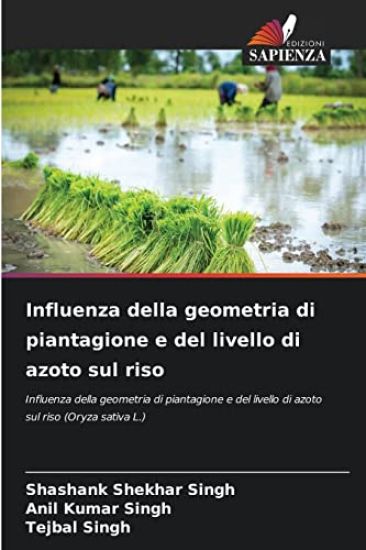
Influenza della geometria di piantagione e del livello di azoto sul riso

Influenza della geometria di piantagione e del livello di azoto sul riso

Shashank Shekhar Singh; Anil Kumar Singh; Tejbal Singh

Edizioni Sapienza
2021
pokkari
Un esperimento di campo stato condotto sul tema intitolato "Influenza della geometria di impianto e del livello di azoto sul riso (Oryza sativa L.)" durante due stagioni consecutive di kharif del 2017 e del 2018 presso l'Agronomy Research Farm, Narendra Deva University of Agriculture and Technology, Narendra Nagar (Kumarganj), Ayodhya (U. P.) L'esperimento era composto da sedici combinazioni di trattamento, vale a dire quattro geometrie di impianto e quattro livelli di azoto nel disegno split plot. Quattro geometrie di impianto cio 15x10 cm, 15x15 cm, 20x10 cm e 20x15 cm sono stati tenuti in trame principali e quattro livelli di azoto cio 0 kg N/ha, 60 kg/N ha, 120 kg N/ha e 180 kg/N ha sono stati tenuti in sottotrame. L'esperimento stato replicato tre volte. Secondo il requisito di piantine, semi NDR-359 variet di riso stato utilizzato come per il trattamento della geometria di impianto Il raccolto stato uniformemente fertilizzato con 60 kg P2O5, 40 kg K2O e azoto come da trattamenti. I risultati rivelano che la geometria di piantagione di 20 10cm stata trovata adatta per gli attributi pi alti del rendimento e la resa del riso. L'applicazione di 120 kg di azoto/ha stata trovata adatta per una maggiore produzione di riso. L'effetto di interazione tra la geometria di piantagione e il livello di azoto stato trovato significativo su grano e paglia yi
Influence de la géométrie de plantation et du niveau d'azote sur le riz

Influence de la géométrie de plantation et du niveau d'azote sur le riz

Shashank Shekhar Singh; Anil Kumar Singh; Tejbal Singh

Editions Notre Savoir
2021
pokkari
Une exp rience de terrain a t men e sur le sujet intitul "Influence de la g om trie de plantation et du niveau d'azote sur le riz (Oryza sativa L.)" pendant deux saisons kharif cons cutives de 2017 et 2018 la ferme de recherche agronomique, Narendra Deva University of Agriculture and Technology, Narendra Nagar (Kumarganj), Ayodhya (U. P.) L'exp rience tait compos e de seize combinaisons de traitement, savoir quatre g om tries de plantation et quatre niveaux d'azote dans un plan de parcelles divis es. Quatre g om tries de plantation, savoir 15x10 cm, 15x15 cm, 20x10 cm et 20x15 cm, ont t conserv es dans les parcelles principales et quatre niveaux d'azote, savoir 0 kg N/ha, 60 kg/N ha, 120 kg N/ha et 180 kg/N ha, dans les parcelles secondaires. L'exp rience a t r p t e trois fois. Selon les besoins des semis, les graines de la vari t de riz NDR-359 ont t utilis es selon le traitement de la g om trie de plantation. La culture a t uniform ment fertilis e avec 60 kg P2O5, 40 kg K2O et de l'azote selon les traitements. Les r sultats r v lent que la g om trie de plantation de 20 10cm a t jug e appropri e pour des attributs de rendement plus lev s et le rendement du riz. L'application de 120 kg d'azote/ha a t jug e appropri e pour une production plus lev e de riz. L'effet d'interaction entre la g om trie de plantation et le niveau d'azote a t trouv significatif sur le grain et la paille.
Influência da geometria de plantio e do nível de nitrogênio no arroz

Influência da geometria de plantio e do nível de nitrogênio no arroz

Shashank Shekhar Singh; Anil Kumar Singh; Tejbal Singh

Edicoes Nosso Conhecimento
2021
pokkari
Um experimento de campo foi conduzido sobre o tema "Influ ncia da geometria de plantio e n vel de nitrog nio no arroz (Oryza sativa L.)" durante duas esta es kharif consecutivas de 2017 e 2018 na Fazenda de Pesquisa Agron mica, Universidade de Agricultura e Tecnologia Narendra Deva, Narendra Nagar (Kumarganj), Ayodhya (U. P.) O experimento foi composto de dezesseis combina es de tratamento, ou seja, quatro geometrias de plantio e quatro n veis de nitrog nio no desenho de parcelas divididas. Quatro geometrias de plantio i.e. 15x10 cm, 15x15 cm, 20x10 cm e 20x15 cm foram mantidos em parcelas principais e quatro n veis de nitrog nio i.e. 0 kg N/ha, 60 kg/N ha, 120 kg N/ha e 180 kg/N ha foram mantidos em sub-parcelas. A experi ncia foi replicada tr s vezes. Como por exig ncia de pl ntulas, as sementes NDR-359 variedade de arroz foram usadas como por tratamento de geometria de plantio. A cultura foi uniformemente fertilizada com 60 kg P2O5, 40 kg K2O e nitrog nio como por tratamento. Os resultados revelam que a geometria de plantio de 20 10cm foi encontrada adequada para maiores atributos de rendimento e produ o de arroz. A aplica o de 120 kg de nitrog nio/ha foi considerada adequada para uma maior produ o de arroz. O efeito de intera o entre a geometria do plantio e o n vel de nitrog nio foi significativo nos gr os e na palha yi
Einfluss von Pflanzgeometrie und Stickstoffgehalt auf Reis

Einfluss von Pflanzgeometrie und Stickstoffgehalt auf Reis

Shashank Shekhar Singh; Anil Kumar Singh; Tejbal Singh

Verlag Unser Wissen
2021
pokkari
Ein Feldversuch mit dem Titel "Einfluss der Pflanzgeometrie und des Stickstoffgehalts auf Reis (Oryza sativa L.)" wurde in zwei aufeinanderfolgenden Erntesaisons 2017 und 2018 auf der Agronomy Research Farm, Narendra Deva University of Agriculture and Technology, Narendra Nagar (Kumarganj), Ayodhya (U. P.) durchgef hrt. Der Versuch umfasste sechzehn Behandlungskombinationen, n mlich vier Pflanzgeometrien und vier Stickstoffgehalte in einem Split-Plot-Design. Vier Pflanzgeometrien, d.h. 15x10 cm, 15x15 cm, 20x10 cm und 20x15 cm, wurden in den Hauptparzellen und vier Stickstoffgehalte, d.h. 0 kg N/ha, 60 kg/N ha, 120 kg N/ha und 180 kg/N ha, in den Unterparzellen verwendet. Der Versuch wurde dreimal wiederholt. Je nach Bedarf an Setzlingen wurde Saatgut der Reissorte NDR-359 je nach Behandlung der Pflanzgeometrie verwendet. Die Ernte wurde gleichm ig mit 60 kg P2O5, 40 kg K2O und Stickstoff je nach Behandlung ged ngt. Die Ergebnisse zeigen, dass eine Pflanzgeometrie von 20 10 cm f r h here Ertragsattribute und Ertr ge von Reis geeignet war. Die Ausbringung von 120 kg Stickstoff/ha erwies sich als geeignet f r eine h here Produktion von Reis. Der Interaktionseffekt zwischen der Pflanzgeometrie und dem Stickstoffgehalt erwies sich als signifikant f r den Korn- und Strohertrag.
Effetto del suolo e dei micro nutrienti sulla crescita, il rendimento e la resa del riso

Effetto del suolo e dei micro nutrienti sulla crescita, il rendimento e la resa del riso

Vijay Prakash Singh; Shashank Shekhar Singh; Ram Pratap Singh

Edizioni Sapienza
2021
pokkari
Il riso (Oryza sativa L.) una delle colture di cereali alimentari pi importanti per oltre il 60% della popolazione mondiale. Circa il 90% di tutto il riso coltivato nel mondo prodotto e consumato nella regione asiatica. Tra i micro nutrienti per la crescita delle piante, lo zinco, il ferro e il boro sono essenziali per una buona crescita del riso, dell'uomo e dei bambini. La carenza di multi-nutrienti apparsa in ampia diffusione nelle colture agricole a causa del suo eccessivo sfruttamento, senza l'applicazione di micro-nutrienti o l'uso squilibrato di nutrienti alla coltura del riso. Questo libro utile per ricercatori e studenti.
Efeito do solo e da aplicação foliar de Fe, Zn e B no crescimento, rendimento e atributos de rendimento do arroz(Oryza sativa L.)

Efeito do solo e da aplicação foliar de Fe, Zn e B no crescimento, rendimento e atributos de rendimento do arroz(Oryza sativa L.)

Vijay Prakash Singh; Shashank Shekhar Singh; Ram Pratap Singh

Edicoes Nosso Conhecimento
2021
pokkari
O arroz (Oryza sativa L.) uma das mais importantes culturas de cereais alimentares de mais de 60 por cento da popula o mundial. Cerca de 90% de todo o arroz cultivado no mundo produzido e consumido na regi o asi tica. Entre os micro nutrientes para o crescimento das plantas, o Zinco, o Ferro e o Boro s o essenciais para o bom crescimento do arroz, do ser humano e das crian as. A car ncia de multi-nutrientes surgiu em grande escala nas culturas agr colas devido sua explora o excessiva, sem aplica o de micro-nutrientes ou uso desequilibrado de nutrientes na cultura do arroz. Este livro til para pesquisadores e estudantes.
Einfluss der Boden- und Blattapplikation von Fe, Zn und B auf Wachstum, Ertrag und Ertragsattribute von Reis (Oryza sativa L.)
Reis (Oryza sativa L.) ist eine der wichtigsten Nahrungspflanzen f r mehr als 60 Prozent der Weltbev lkerung. Etwa 90 Prozent des weltweit angebauten Reises wird in der asiatischen Region produziert und konsumiert. Unter den Mikron hrstoffen f r das Pflanzenwachstum sind Zink, Eisen und Bor f r ein gutes Wachstum von Reis, Menschen und Kindern unerl sslich. Multin hrstoffm ngel sind in landwirtschaftlichen Kulturen weit verbreitet, da sie berm ig genutzt werden, ohne dass Mikron hrstoffe eingesetzt werden oder ein Ungleichgewicht bei der Verwendung von N hrstoffen in Reiskulturen besteht. Dieses Buch ist n tzlich f r Forscher und Studenten.
Effet du sol et des micro-nutriments sur la croissance, le rendement et la production du riz

Effet du sol et des micro-nutriments sur la croissance, le rendement et la production du riz

Vijay Prakash Singh; Shashank Shekhar Singh; Ram Pratap Singh

Editions Notre Savoir
2021
pokkari
Le riz (Oryza sativa L.) est l'une des cultures c r ali res les plus importantes pour plus de 60 % de la population mondiale. Environ 90 % du riz cultiv dans le monde est produit et consomm en Asie. Environ 90 % du riz cultiv dans le monde est produit et consomm dans la r gion asiatique. Parmi les micro-nutriments n cessaires la croissance des plantes, le zinc, le fer et le bore sont essentiels la bonne croissance du riz, des humains et des enfants. Les carences en oligo- l ments sont apparues dans de nombreuses cultures agricoles en raison de leur surexploitation, de l'absence d'application d'oligo- l ments ou d'une utilisation d s quilibr e des nutriments dans les cultures de riz. Ce livre est utile pour les chercheurs et les tudiants.
Influence of planting geometry and nitrogen level on rice

Influence of planting geometry and nitrogen level on rice

Shashank Shekhar Singh; Anil Kumar Singh; Tejbal Singh

Lap Lambert Academic Publishing
2021
pokkari
A field experiment was conducted on the topic entitled "Influence of planting geometry and nitrogen level on rice (Oryza sativa L.)" during two consecutive kharif seasons of 2017 and 2018 at Agronomy Research Farm, Narendra Deva University of Agriculture and Technology, Narendra Nagar (Kumarganj), Ayodhya (U. P.) Experiment was comprised with sixteen treatment combinations viz. four planting geometry and four nitrogen levels in split plot design. Four planting geometry i.e. 15x10 cm, 15x15 cm, 20x10 cm and 20x15 cm were kept in main plots and four nitrogen levels i.e. 0 kg N/ha, 60 kg/N ha, 120 kg N/ha and 180 kg/N ha were kept in sub plots. The experiment was replicated three times. As per requirement of seedlings, seeds NDR-359 variety of rice was used as per treatment of planting geometry Crop was uniformly fertilized with 60 kg P2O5, 40 kg K2O and nitrogen as per treatments. Results reveal that planting geometry of 20 10cm was found suitable for higher yield attributes and yield of rice. Application of 120 kg nitrogen/ha was found suitable for higher production of rice.
Effect of soil and micro nutrient on growth, yield and yield of rice

Effect of soil and micro nutrient on growth, yield and yield of rice

Vijay Prakash Singh; Shashank Shekhar Singh; Ram Pratap Singh

LAP Lambert Academic Publishing
2021
pokkari
Rice (Oryza sativa L.) is one of the most important food grain crops of more than 60 percent of the world's population. About 90 percent of all rice grown in the world is produced and consumed in the Asian region. Among the micro nutrients for plant growth, Zinc, Iron and Boron are essential for good growth of rice, human and children. Multi-nutrients deficiency appeared in wide spread in agricultural crops due to its over exploitation, without application of micro-nutrients or imbalance use of nutrients to rice crop. This book useful for researcher and students.
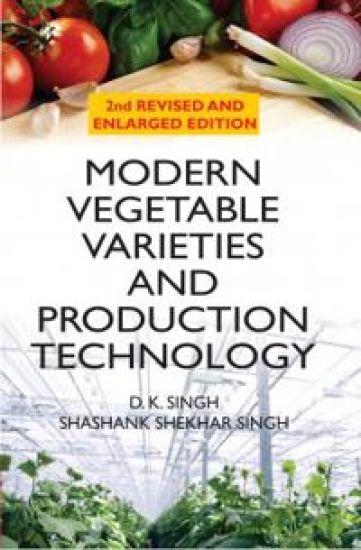
Modern Vegetable Varieties and Production Technology: 2nd Revised and Enlarged Edition

Modern Vegetable Varieties and Production Technology: 2nd Revised and Enlarged Edition

D.K. Singh; Shashank Shekhar Singh

New India Publishing Agency
2018
nidottu
The book called Modern Vegetable Varieties and Production Technology is a comprehensive collection of the wide range of vegetable varieties developed by various State Agricultural Universities (SAUs), research centers, and private seed companies. The book provides detailed information on the unique characteristics of these varieties and the production techniques involved in growing vegetable crops. In addition, the book features three introductory chapters that cover a variety of topics, including the different types of vegetables grown in India, their production and consumption, the nutritional value of vegetables, and the research that has been conducted in the field of vegetable production to date. The remaining part of the book is divided into nine chapters, each of which focuses on a specific type of vegetable, such as solanaceous vegetables, okra, cole crops, cucurbitaceous vegetables, peas and beans, bulb crops, root crops, leafy vegetables, and asparagus. Each chapter provides information on the vegetable varieties and production technology specific to that crop, making this book a valuable resource for teachers, scientists, students, extension workers, and farmers in India.
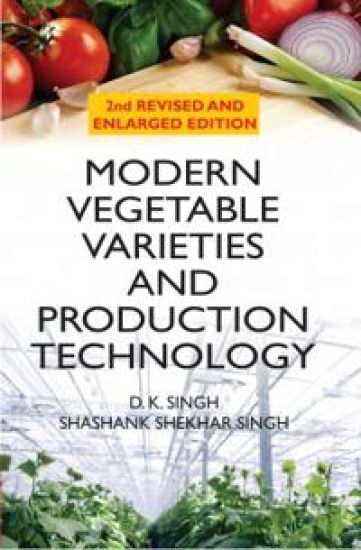
Modern Vegetable Varieties and Production Technology

Modern Vegetable Varieties and Production Technology

D.K. Singh; Shashank Shekhar Singh

New India Publishing Agency
2018
sidottu
The book Modern Vegetable Varieties and Production Technology is a comprehensive collection of nearly all the vegetable varieties developed by various State Agricultural Universities, research centers, and private seed companies. The book highlights the unique characteristics of each variety and provides information on the production technology involved in cultivating vegetable crops. In addition to this, the book features three introductory chapters that discuss the different vegetables grown in India, their area and production, the nutritional aspects of vegetables, and the research conducted in the field of vegetable cultivation to date. The book is organized into three main sections. The first section consists of three introductory chapters that provide a background on vegetable crops, the nutritional importance of vegetables, and vegetable research in India. The remaining part of the book is divided into nine chapters, each focusing on a specific group of vegetables, such as solanaceous vegetables, okra, cole crops, cucurbitaceous vegetables, peas and beans, bulb crops, root crops, leafy vegetables, and asparagus. These chapters include information on the varieties of vegetables and the production technology used to cultivate them. This book will be a valuable resource for teachers, scientists, students, extension workers, and farmers in India.