Kirjojen hintavertailu – 12 903 725 kirjaa ja 27 kauppaa

Kirjailija

Shawn J. Parry-Giles

Kirjat ja teokset yhdessä paikassa: 8 kirjaa, julkaisuja vuosilta 2001–2023, suosituimpiin kuuluu Constructing Clinton. Vertaile teosten hintoja ja tarkista saatavuus suomalaisista kirjakaupoista.

8 kirjaa

Kirjojen julkaisuvuodet: 2001–2023.

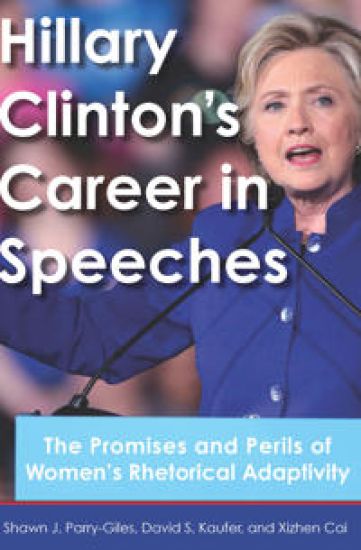
Hillary Clinton's Career in Speeches

Hillary Clinton's Career in Speeches

Shawn J. Parry-Giles; David S Kaufer; Xizhen Cai

Michigan State University Press
2023
nidottu
Women candidates are under more pressure to communicate competence and likability than men. And when women balance these rhetorical pressures, charges of inauthenticity creep in, suggesting the structural and strategic anti-woman backlash at play in presidential politics. Hillary Clinton demonstrated considerable ability to adapt her rhetoric across roles, contexts, genres, and audiences. Comparisons between Clinton’s campaign speeches and those of her presidential opponents (Barack Obama, Bernie Sanders, and Donald Trump) show that her rhetorical range exceeded theirs. And comparisons with Democratic women candidates of 2020 suggest they too exhibited a rhetorical range and faced a backlash similar to Clinton. Hillary Clinton’s Career in Speeches combines statistical text-mining methods with close reading to analyze the rhetorical highs and lows of one of the most successful political women in U. S. history. Drawing on Clinton’s oratory across governing and campaigning, the authors debunk the stereotype that she was a wooden and insufferably wonkish speaker. They marshal evidence for the argument that the sexist tactics in American politics function to turn women’s rhetorical strengths into political liabilities.
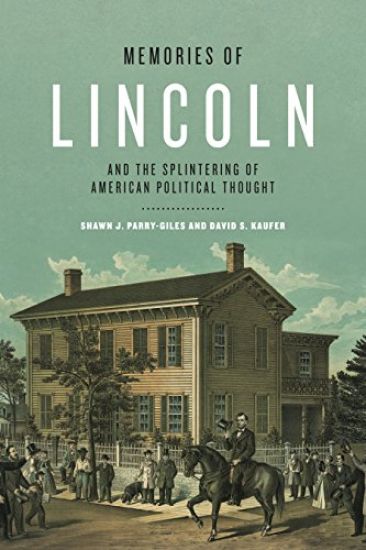
Memories of Lincoln and the Splintering of American Political Thought

Memories of Lincoln and the Splintering of American Political Thought

Shawn J. Parry-Giles; David S. Kaufer

Pennsylvania State University Press
2017
sidottu
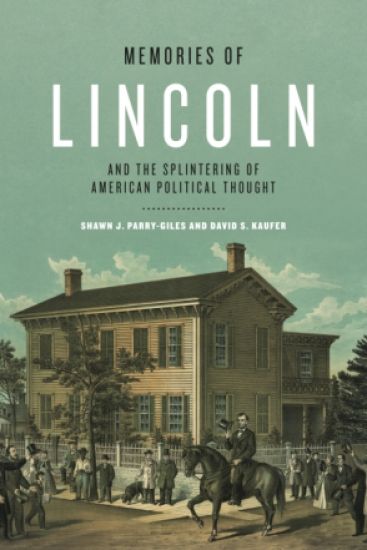
In the aftermath of the Civil War, Republicans and Democrats who advocated conflicting visions of American citizenship could agree on one thing: the rhetorical power of Abraham Lincoln’s life. This volume examines the debates over his legacy and their impact on America’s future. In the thirty-five years following Lincoln’s assassination, acquaintances of Lincoln published their memories of him in newspapers, biographies, and edited collections in order to gain fame, promote partisan aims, champion his hardscrabble past and exalted rise, and define his legacy. Shawn Parry-Giles and David Kaufer explore how style, class, and character affected these reminiscences. They also analyze the ways people used these writings to reinforce their beliefs about citizenship and presidential leadership in the United States, with specific attention to the fissure between republicanism and democracy that still exists today. Their study employs rhetorical and corpus research methods to assess more than five hundred reminiscences. A novel look at how memories of Lincoln became an important form of political rhetoric, this book sheds light on how divergent schools of U. S. political thought came to recruit Lincoln as their standard-bearer.
Memories of Lincoln and the Splintering of American Political Thought

Memories of Lincoln and the Splintering of American Political Thought

Shawn J. Parry-Giles; David S. Kaufer

Pennsylvania State University Press
2017
pokkari
In the aftermath of the Civil War, Republicans and Democrats who advocated conflicting visions of American citizenship could agree on one thing: the rhetorical power of Abraham Lincoln’s life. This volume examines the debates over his legacy and their impact on America’s future. In the thirty-five years following Lincoln’s assassination, acquaintances of Lincoln published their memories of him in newspapers, biographies, and edited collections in order to gain fame, promote partisan aims, champion his hardscrabble past and exalted rise, and define his legacy. Shawn Parry-Giles and David Kaufer explore how style, class, and character affected these reminiscences. They also analyze the ways people used these writings to reinforce their beliefs about citizenship and presidential leadership in the United States, with specific attention to the fissure between republicanism and democracy that still exists today. Their study employs rhetorical and corpus research methods to assess more than five hundred reminiscences. A novel look at how memories of Lincoln became an important form of political rhetoric, this book sheds light on how divergent schools of U. S. political thought came to recruit Lincoln as their standard-bearer.
Hillary Clinton in the News

Hillary Clinton in the News

Shawn J. Parry-Giles

University of Illinois Press
2014
nidottu
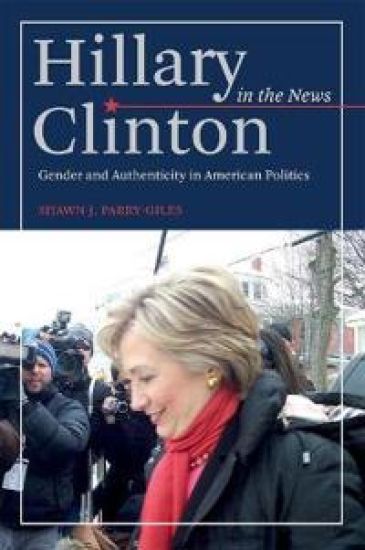
The charge of inauthenticity has trailed Hillary Clinton from the moment she entered the national spotlight and stood in front of television cameras. Hillary Clinton in the News: Gender and Authenticity in American Politics shows how the U. S. news media created their own news frames of Clinton's political authenticity and image-making, from her participation in Bill Clinton's 1992 presidential campaign through her own 2008 presidential bid. Using theories of nationalism, feminism, and authenticity, Parry-Giles tracks the evolving ways the major networks and cable news programs framed Clinton's image as she assumed roles ranging from surrogate campaigner, legislative advocate, and financial investor to international emissary, scorned wife, and political candidate. This study magnifies how the coverage that preceded Clinton's entry into electoral politics was grounded in her earliest presence in the national spotlight, and in long-standing nationalistic beliefs about the boundaries of authentic womanhood and first lady comportment. Once Clinton dared to cross those gender boundaries and vie for office in her own right, the news exuded a rhetoric of sexual violence. These portrayals served as a warning to other women who dared to enter the political arena and violate the protocols of authentic womanhood.
Hillary Clinton in the News

Hillary Clinton in the News

Shawn J. Parry-Giles

University of Illinois Press
2014
sidottu
The charge of inauthenticity has trailed Hillary Clinton from the moment she entered the national spotlight and stood in front of television cameras. Hillary Clinton in the News: Gender and Authenticity in American Politics shows how the U. S. news media created their own news frames of Clinton's political authenticity and image-making, from her participation in Bill Clinton's 1992 presidential campaign through her own 2008 presidential bid. Using theories of nationalism, feminism, and authenticity, Parry-Giles tracks the evolving ways the major networks and cable news programs framed Clinton's image as she assumed roles ranging from surrogate campaigner, legislative advocate, and financial investor to international emissary, scorned wife, and political candidate. This study magnifies how the coverage that preceded Clinton's entry into electoral politics was grounded in her earliest presence in the national spotlight, and in long-standing nationalistic beliefs about the boundaries of authentic womanhood and first lady comportment. Once Clinton dared to cross those gender boundaries and vie for office in her own right, the news exuded a rhetoric of sexual violence. These portrayals served as a warning to other women who dared to enter the political arena and violate the protocols of authentic womanhood.
The Prime-Time Presidency

The Prime-Time Presidency

Shawn J. Parry-Giles

University of Illinois Press
2006
nidottu
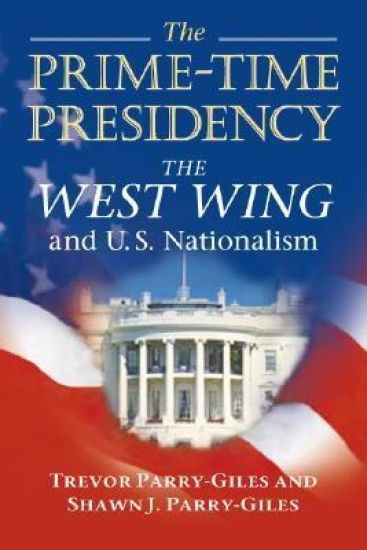
Contrasting strong women and multiculturalism with portrayals of a heroic white male leading the nation into battle, The Prime-Time Presidency explores the NBC drama The West Wing, paying particular attention to its role in promoting cultural meaning about the presidency and U. S. nationalism. Based in a careful, detailed analysis of the "first term" of The West Wing's President Josiah Bartlet, this criticism highlights the ways the text negotiates powerful tensions and complex ambiguities at the base of U. S. national identity--particularly the role of gender, race, and militarism in the construction of U. S. nationalism. Unlike scattered and disparate collections of essays, Trevor Parry-Giles and Shawn J. Parry-Giles offer a sustained, ideologically driven criticism of The West Wing. The Prime-time Presidency presents a detailed critique of the program rooted in presidential history, an appreciation of television's power as a source of political meaning, and television's contribution to the articulation of U. S. national identity.
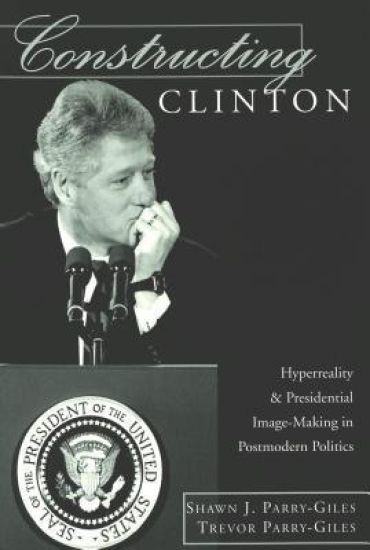
Constructing Clinton

Constructing Clinton

Shawn J. Parry-Giles; Trevor Parry-Giles

Peter Lang Publishing Inc
2002
nidottu
Bill Clinton is the embodiment and epitome of American politics in the postmodern, mediated age. Clinton's able marshaling of images, which allowed him to retain popularity and position when faced with compelling obstacles, marks him as the preeminent figure in a fluid and fluctuating era of image-politics. "Constructing Clinton: Hyperreality & Presidential Image-Making in Postmodern Politics" pays particular attention to the collection of disparate, sometimes connected, often random images that create a site of political meaning we know as -Bill Clinton, former president of the United States.- Through analyses of unique image texts - including "The Man from Hope, The War Room, Primary Colors, "MTV's "Biorhythms, "and PBS' "The American President" - "Constructing Clinton" focuses on the image of Bill Clinton as it was defined by and trapped in the hyperreality so characteristic of contemporary presidential politics."
The Rhetorical Presidency, Propaganda, and the Cold War, 1945-1955
Both Truman and Eisenhower combined bully pulpit activity with presidentially directed messages voiced by surrogates whose words were as orchestrated by the administration as those delivered by the presidents themselves. A Review of the private strategizing sessions concerning propaganda activity and the actual propaganda disseminated by the Truman and Eisenhower administrations reveals how they both militarized propaganda operations, allowing the president of the United States to serve as the commander-in-chief of propaganda activity. As the presidents minimized congressional control over propaganda operations, they institutionalized propaganda as a presidential tool, expanded the means by which they and their successors could perform the rhetorical presidency, and increased presidential power over the country's Cold War message, naturalizing the Cold War ideology that resonates yet today. Of particular interest to scholars and students of political communication, the modern presidency, and Cold War history.