Kirjojen hintavertailu – 12 903 724 kirjaa ja 27 kauppaa

Kirjailija

Shawn Michelle Smith

Kirjat ja teokset yhdessä paikassa: 9 kirjaa, julkaisuja vuosilta 1999–2020, suosituimpiin kuuluu Photographic Returns. Vertaile teosten hintoja ja tarkista saatavuus suomalaisista kirjakaupoista.

9 kirjaa

Kirjojen julkaisuvuodet: 1999–2020.

Photographic Returns

Photographic Returns

Shawn Michelle Smith

Duke University Press
2020
pokkari
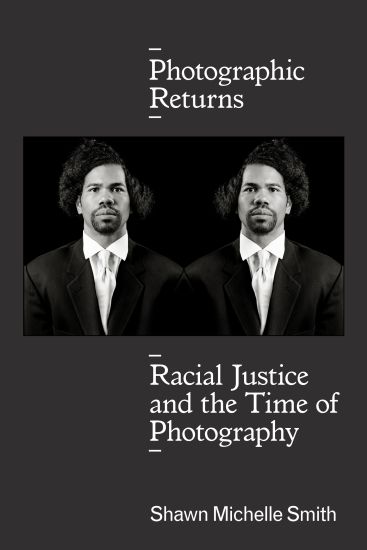
In Photographic Returns Shawn Michelle Smith traces how historical moments of racial crisis come to be known photographically and how the past continues to inhabit, punctuate, and transform the present through the photographic medium in contemporary art. Smith engages photographs by Rashid Johnson, Sally Mann, Deborah Luster, Lorna Simpson, Jason Lazarus, Carrie Mae Weems, Taryn Simon, and Dawoud Bey, among others. Each of these artists turns to the past-whether by using nineteenth-century techniques to produce images or by re-creating iconic historic photographs-as a way to use history to negotiate the present and to call attention to the unfinished political project of racial justice in the United States. By interrogating their use of photography to recall, revise, and amplify the relationship between racial politics of the past and present, Smith locates a temporal recursivity that is intrinsic to photography, in which images return to haunt the viewer and prompt reflection on the present and an imagination of a more just future.
Photographic Returns

Photographic Returns

Shawn Michelle Smith

Duke University Press
2020
sidottu
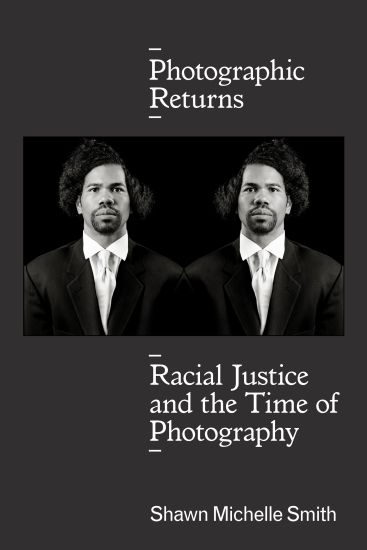
In Photographic Returns Shawn Michelle Smith traces how historical moments of racial crisis come to be known photographically and how the past continues to inhabit, punctuate, and transform the present through the photographic medium in contemporary art. Smith engages photographs by Rashid Johnson, Sally Mann, Deborah Luster, Lorna Simpson, Jason Lazarus, Carrie Mae Weems, Taryn Simon, and Dawoud Bey, among others. Each of these artists turns to the past-whether by using nineteenth-century techniques to produce images or by re-creating iconic historic photographs-as a way to use history to negotiate the present and to call attention to the unfinished political project of racial justice in the United States. By interrogating their use of photography to recall, revise, and amplify the relationship between racial politics of the past and present, Smith locates a temporal recursivity that is intrinsic to photography, in which images return to haunt the viewer and prompt reflection on the present and an imagination of a more just future.

Meridel Rubenstein

Meridel Rubenstein

Arif Khan; Meridel Rubenstein; Shawn Michelle Smith; Alan Weisman

University of New Mexico Press
2017
sidottu
Over the course of her career, internationally renowned artist and University of New Mexico alumna Meridel Rubenstein creates photographic artworks that engage the natural world and investigate humanity's place within nature. Eden Turned on Its Side looks at ecological and human processes across time that either reinforce or destroy the notion of "Eden." Focusing on poetic intersections of nature and culture in relation to ecological and social imbalance, the work consists of large-scale photographic images that tend toward immersive installation, as is characteristic of much of Rubenstein's art. It comprises three parts-Photosynthesis, Volcano Cycle, and Eden in Iraq-which respectively explore ecologies on the scales of human time, geological time, and mythical time. Eden Turned on Its Side will accompany an exhibition of the same name, organized by the University of New Mexico Art Museum and opening in February 2018.
At the Edge of Sight

At the Edge of Sight

Shawn Michelle Smith

Duke University Press
2013
sidottu
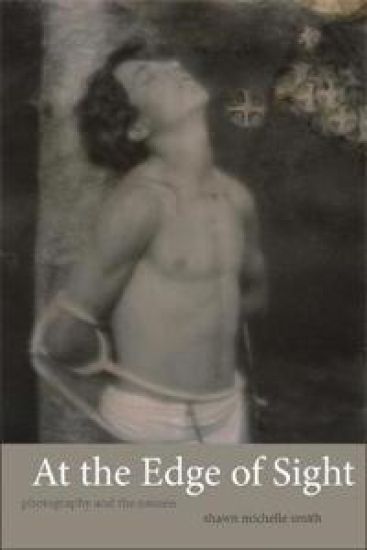
The advent of photography revolutionized perception, making visible what was once impossible to see with the human eye. In At the Edge of Sight, Shawn Michelle Smith engages these dynamics of seeing and not seeing, focusing attention as much on absence as presence, on the invisible as the visible. Exploring the limits of photography and vision, she asks: What fails to register photographically, and what remains beyond the frame? What is hidden by design, and what is obscured by cultural blindness? Smith studies manifestations of photography's brush with the unseen in her own photographic work and across the wide-ranging images of early American photographers, including F. Holland Day, Eadweard Muybridge, Andrew J. Russell, Chansonetta Stanley Emmons, and Augustus Washington. She concludes by showing how concerns raised in the nineteenth century remain pertinent today in the photographs of Abu Ghraib. Ultimately, Smith explores the capacity of photography to reveal what remains beyond the edge of sight.
At the Edge of Sight

At the Edge of Sight

Shawn Michelle Smith

Duke University Press
2013
pokkari
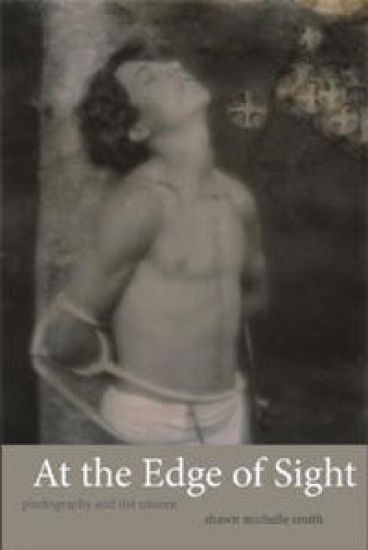
The advent of photography revolutionized perception, making visible what was once impossible to see with the human eye. In At the Edge of Sight, Shawn Michelle Smith engages these dynamics of seeing and not seeing, focusing attention as much on absence as presence, on the invisible as the visible. Exploring the limits of photography and vision, she asks: What fails to register photographically, and what remains beyond the frame? What is hidden by design, and what is obscured by cultural blindness? Smith studies manifestations of photography's brush with the unseen in her own photographic work and across the wide-ranging images of early American photographers, including F. Holland Day, Eadweard Muybridge, Andrew J. Russell, Chansonetta Stanley Emmons, and Augustus Washington. She concludes by showing how concerns raised in the nineteenth century remain pertinent today in the photographs of Abu Ghraib. Ultimately, Smith explores the capacity of photography to reveal what remains beyond the edge of sight.
Lynching Photographs

Lynching Photographs

Dora Apel; Shawn Michelle Smith

University of California Press
2008
pokkari
Why do we look at lynching photographs? What is the basis for our curiosity, rage, indignation, or revulsion? Beginning in the late nineteenth century, nearly five thousand blacks were put to death at the hands of lynch mobs throughout America. In many communities, it was a public event, to be witnessed, recorded, and made available by means of photographs. In this book, the art historian Dora Apel and the American Studies scholar Shawn Michelle Smith examine lynching photographs as a way of analyzing photography's historical role in promoting and resisting racial violence. They further suggest how these photographs continue to affect the politics of spectatorship. In clear prose, and with carefully chosen images, the authors chart the history of lynching photographs - their meanings, uses, and controversial display - and offer terms in which to understand our responsibilities as viewers and citizens.
Photography on the Color Line

Photography on the Color Line

Shawn Michelle Smith

Duke University Press
2004
sidottu
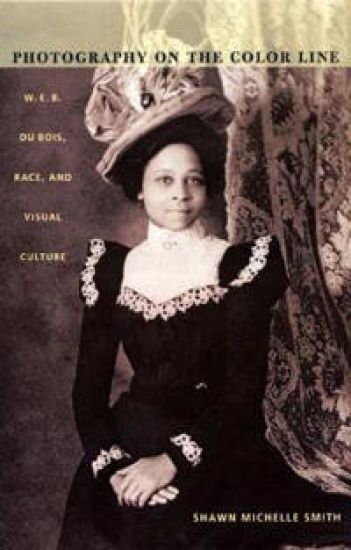
Through a rich interpretation of the remarkable photographs W. E. B. Du Bois compiled for the American Negro Exhibit at the 1900 Paris Exposition, Shawn Michelle Smith reveals the visual dimension of the color line that Du Bois famously called “the problem of the twentieth century.” Du Bois’s prize-winning exhibit consisted of three albums together containing 363 black-and-white photographs, mostly of middle-class African Americans from Atlanta and other parts of Georgia. Smith provides an extensive analysis of the images, the antiracist message Du Bois conveyed by collecting and displaying them, and their connection to his critical thought. She contends that Du Bois was an early visual theorist of race and racism and demonstrates how such an understanding makes the important concepts he developed-including double consciousness, the color line, the Veil, and second sight-available to visual culture and African American studies scholars in powerful new ways. Smith reads Du Bois’s photographs in relation to other turn-of-the-century images such as scientific typologies, criminal mugshots, racist caricatures, and lynching photographs. By juxtaposing these images with reproductions from Du Bois’s exhibition archive, Smith shows how Du Bois deliberately challenged racist representations of African Americans. Emphasizing the importance of comparing multiple visual archives, Photography on the Color Line reinvigorates understandings of the stakes of representation and the fundamental connections between race and visual culture in the United States.
Photography on the Color Line

Photography on the Color Line

Shawn Michelle Smith

Duke University Press
2004
pokkari
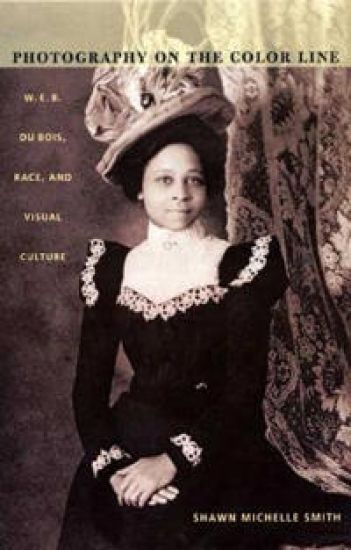
Through a rich interpretation of the remarkable photographs W. E. B. Du Bois compiled for the American Negro Exhibit at the 1900 Paris Exposition, Shawn Michelle Smith reveals the visual dimension of the color line that Du Bois famously called “the problem of the twentieth century.” Du Bois’s prize-winning exhibit consisted of three albums together containing 363 black-and-white photographs, mostly of middle-class African Americans from Atlanta and other parts of Georgia. Smith provides an extensive analysis of the images, the antiracist message Du Bois conveyed by collecting and displaying them, and their connection to his critical thought. She contends that Du Bois was an early visual theorist of race and racism and demonstrates how such an understanding makes the important concepts he developed-including double consciousness, the color line, the Veil, and second sight-available to visual culture and African American studies scholars in powerful new ways. Smith reads Du Bois’s photographs in relation to other turn-of-the-century images such as scientific typologies, criminal mugshots, racist caricatures, and lynching photographs. By juxtaposing these images with reproductions from Du Bois’s exhibition archive, Smith shows how Du Bois deliberately challenged racist representations of African Americans. Emphasizing the importance of comparing multiple visual archives, Photography on the Color Line reinvigorates understandings of the stakes of representation and the fundamental connections between race and visual culture in the United States.
American Archives

American Archives

Shawn Michelle Smith

Princeton University Press
1999
pokkari
Visual texts uniquely demonstrate the contested terms of American identity. In American Archives Shawn Michelle Smith offers a bold and disturbing account of how photography and the sciences of biological racialism joined forces in the nineteenth century to offer an idea of what Americans look like--or "should" look like. Her varied sources, which include the middle-class portrait, baby picture, criminal mugshot, and eugenicist record, as well as literary, scientific, and popular texts, enable her to demonstrate how new visual paradigms posed bodily appearance as an index to interior "essence." Ultimately we see how competing preoccupations over gender, class, race, and American identity were played out in the making of a wide range of popular and institutional photographs. Smith demonstrates that as the body was variously mapped and defined as the key to essentialized identities, the image of the white middle-class woman was often held up as the most complete American ideal. She begins by studying gendered images of middle-class domesticity to expose a transformation of feminine architectures of interiority into the "essences" of "blood," "character," and "race." She reads visual documents, as well as literary texts by Nathaniel Hawthorne, Pauline Hopkins, and Theodore Dreiser, as both indices of and forms of resistance to dominant images of gender, class, race, and national identity. Through this analysis Smith shows how the white male gaze that sought to define and constrain white women and people of color was contested and transformed over the course of the nineteenth century. Smith identifies nineteenth-century visual paradigms that continue to shape debates about the terms of American belonging today. American Archives contributes significantly to the growing field of American visual cultural studies, and it is unprecedented in explaining how practices of racialized looking and the parameters of "American looks" were established in the first place.