Kirjojen hintavertailu – 12 903 724 kirjaa ja 27 kauppaa

Kirjailija

Sheila E. Jelen

Kirjat ja teokset yhdessä paikassa: 7 kirjaa, julkaisuja vuosilta 2007–2025, suosituimpiin kuuluu Olga Lengyel, Auschwitz Survivor. Vertaile teosten hintoja ja tarkista saatavuus suomalaisista kirjakaupoista.

7 kirjaa

Kirjojen julkaisuvuodet: 2007–2025.

Olga Lengyel, Auschwitz Survivor

Olga Lengyel, Auschwitz Survivor

Peter Davies; Hannah Holtschneider; Sheila E. Jelen; Christoph Thonfeld

Springer International Publishing AG
2025
sidottu
This book arises out of a long series of conversations about one of the most intriguing, but still under-researched, aspects of testimony: how the remembering and telling of an individual Holocaust survivor changes through time, through shifting contexts and with increasing age. It comes at this issue from an interdisciplinary perspective, not with the intention to develop a synthetic method but to explore how different perspectives overlap, conflict with or complement each other. It sets its definition of 'testimony statement' very broadly, treating published texts, video testimonies, and fragmentary statements and publications as of equal interest, without a hierarchy of value. The book focuses on Olga Lengyel (1908-2001). She wrote a memoir about her imprisonment in Auschwitz, first published in French in 1946, which was translated into English with modifications in 1947, and, half a century later, in 1998, she gave video testimony for the USC Shoah Foundation’s Visual History Archive. Her testimony is well known enough to have gained a public profile and to have attracted some scholarly attention, but is not 'canonical'. Her work is internationally known, having been translated and received in a number of languages, and having been an inspiration for William Styron’s bestseller Sophie’s Choice. This book provides a condensed critical resource on Lengyel’s testimonies, addressing matters of historical veracity, of trauma, of gender, of memory, and of genre in the transmission and reception of Holocaust testimonies over time and across cultures.
Testimonial Montage

Testimonial Montage

Sheila E. Jelen

BLOOMSBURY PUBLISHING PLC
2024
sidottu
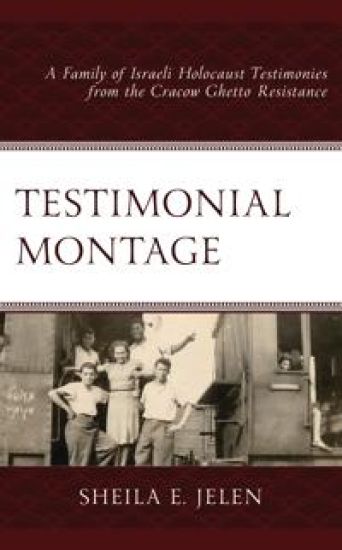
Testimonial Montage: A Family of Israeli Holocaust Testimonies from the Cracow Ghetto Resistance explores interconnected testimonies of four Holocaust survivors who were members of the Akiva youth group in Cracow, Poland, who participated in the ghetto resistance. Drawing on literary and photographic discourse, Jelen extracts the contours of personal narrative from the collective voice present in these interconnected testimonies. Attuned to stories of lost youth, sexual exploitation, and the dissolution of community and family, Jelen approaches Holocaust testimonies as one would members of a family with their shared experiences and common background, but also as individuals with their own unique voices. Departing from historical methodologies, Jelen models a different, wholistic approach to Holocaust testimonies, one which seeks to make sense of testimonies in the full breadth of their unfolding, across time, across space, and across genre.
Israeli Salvage Poetics

Israeli Salvage Poetics

Sheila E. Jelen

WAYNE STATE UNIVERSITY PRESS
2023
nidottu
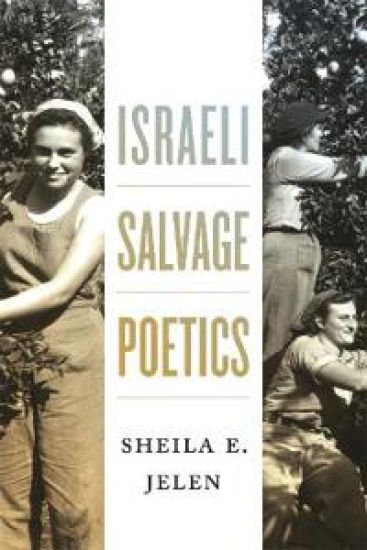
Through thoughtful analysis of twentieth- and twenty-first-century Israeli literature, Israeli Salvage Poetics interrogates the concept of the "negation of the diaspora" as addressed in Hebrew-language literature authored by well-known and lesser-known Israeli authors from the eve of the Holocaust to the present day. Author Sheila E. Jelen considers the way that Israeli writers from eastern Europe or of eastern European descent incorporate pre-Holocaust eastern European culture into their own sense of Israeliness or Jewishness. Many Israelis interested in their eastern European legacy live with an awareness of their own nation's role in the repression of that legacy, from the elevation of Hebrew over Yiddish to the ridicule and resentment directed at culture, text, and folk traditions from eastern Europe. To right the wrongs of the past and reconcile this conflict of identity, the Israeli authors discussed in this book engage in what Jelen calls "salvage poetics": they read Yiddish literature, travel to eastern Europe, and write of their personal and generational relationships with Ashkenazi culture. Israeli literary representations of eastern European Jewry strive, sometimes successfully, to recuperate eastern European Jewish pre-Holocaust culture for the edification of an audience that might feel responsible for the silencing and extinction of that culture.
Israeli Salvage Poetics

Israeli Salvage Poetics

Sheila E. Jelen

WAYNE STATE UNIVERSITY PRESS
2023
sidottu
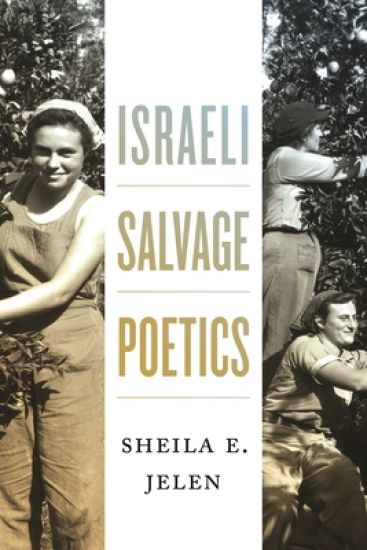
Through thoughtful analysis of twentieth- and twenty-first-century Israeli literature, Israeli Salvage Poetics interrogates the concept of the "negation of the diaspora" as addressed in Hebrew-language literature authored by well-known and lesser-known Israeli authors from the eve of the Holocaust to the present day. Author Sheila E. Jelen considers the way that Israeli writers from eastern Europe or of eastern European descent incorporate pre-Holocaust eastern European culture into their own sense of Israeliness or Jewishness. Many Israelis interested in their eastern European legacy live with an awareness of their own nation's role in the repression of that legacy, from the elevation of Hebrew over Yiddish to the ridicule and resentment directed at culture, text, and folk traditions from eastern Europe. To right the wrongs of the past and reconcile this conflict of identity, the Israeli authors discussed in this book engage in what Jelen calls "salvage poetics": they read Yiddish literature, travel to eastern Europe, and write of their personal and generational relationships with Ashkenazi culture. Israeli literary representations of eastern European Jewry strive, sometimes successfully, to recuperate eastern European Jewish pre-Holocaust culture for the edification of an audience that might feel responsible for the silencing and extinction of that culture.
Salvage Poetics

Salvage Poetics

Sheila E. Jelen

WAYNE STATE UNIVERSITY PRESS
2023
nidottu
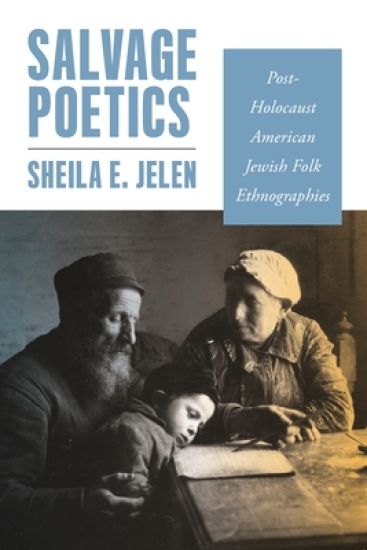
This volume explores how American Jewish post-Holocaust writers, scholars, and editors adapted pre-Holocaust works, such as Yiddish fiction and documentary photography, for popular consumption by American Jews in the post-Holocaust decades. These texts, Jelen argues, served to help clarify the role of East European Jewish identity in the construction of a post-Holocaust American one. In her analysis of a variety of "hybrid" texts—those that exist on the border between ethnography and art—Jelen traces the gradual shift from verbal to visual Jewish literacy among Jewish Americans after the Holocaust. S. Ansky's ethnographic expedition (1912–1914) and Martin Buber's adaptation and compilation of Hasidic tales (1906–1935) are presented as a means of contextualizing the role of an ethnographic consciousness in modern Jewish experience and the way in which literary adaptations and mediations create opportunities for the creation of folk ethnographic hybrid texts. Salvage Poetics looks at classical texts of the American Jewish experience in the second half of the twentieth century, such as Maurice Samuel's The World of Sholem Aleichem (1944), Abraham Joshua Heschel's The Earth Is the Lord's (1950), Elizabeth Herzog and Mark Zborowski's Life Is with People (1952), Lucy Dawidowicz's The Golden Tradition (1967), and Roman Vishniac's A Vanished World (1983), alongside other texts that consider the symbiotic relationship between pre-Holocaust aesthetic artifacts and their postwar reframings and reconsiderations. Salvage Poetics is particularly attentive to how literary scholars deploy the notion of "ethnography" in their readings of literature in languages and/or cultures that are considered "dead" or "dying" and how their definition of an "ethnographic" literary text speaks to and enhance the scientific discipline of ethnography. This book makes a fresh contribution to the fields of American Jewish cultural and literary studies and art history.
Salvage Poetics

Salvage Poetics

Sheila E. Jelen

Wayne State University Press
2020
sidottu
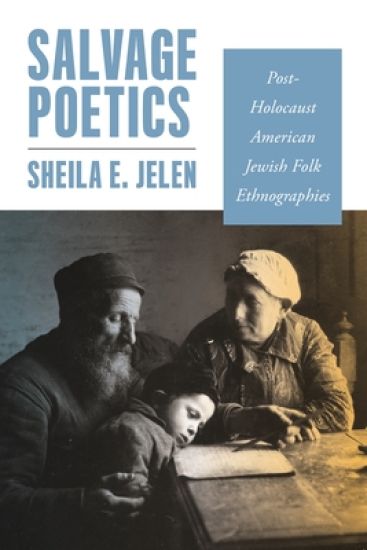
Salvage Poetics: Post-Holocaust American Jewish Folk Ethnographies explores how American Jewish post-Holocaust writers, scholars, and editors adapted pre-Holocaust works, such as Yiddish fiction and documentary photography, for popular consumption by American Jews in the post-Holocaust decades. These texts, Jelen argues, served to help clarify the role of East European Jewish identity in the construction of a post-Holocaust American one. In her analysis of a variety of "hybrid" texts-those that exist on the border between ethnography and art-Jelen traces the gradual shift from verbal to visual Jewish literacy among Jewish Americans after the Holocaust. S. Ansky's ethnographic expedition (1912-1914) and Martin Buber's adaptation and compilation of Hasidic tales (1906-1935) are presented as a means of contextualizing the role of an ethnographic consciousness in modern Jewish experience and the way in which literary adaptations and mediations create opportunities for the creation of folk ethnographic hybrid texts. Salvage Poetics looks at classical texts of the American Jewish experience in the second half of the twentieth century, such as Maurice Samuel's The World of Sholem Aleichem (1944), Abraham Joshua Heschel's The Earth Is the Lord's (1950), Elizabeth Herzog and Mark Zborowski's Life Is with People (1952), Lucy Dawidowicz's The Golden Tradition (1967), and Roman Vishniac's A Vanished World (1983), alongside other texts that consider the symbiotic relationship between pre-Holocaust aesthetic artifacts and their postwar reframings and reconsiderations. Salvage Poetics is particularly attentive to how literary scholars deploy the notion of "ethnography" in their readings of literature in languages and/or cultures that are considered "dead" or "dying" and how their definition of an "ethnographic" literary text speaks to and enhance the scientific discipline of ethnography. This book makes a fresh contribution to the fields of American Jewish cultural and literary studies and art history.
Intimations of Difference

Intimations of Difference

Sheila E. Jelen

Syracuse University Press
2007
sidottu
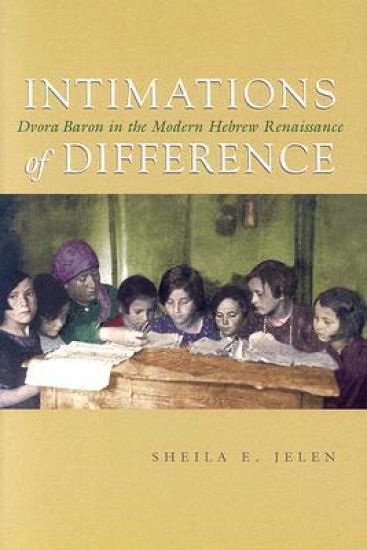
Dvora Baron (1887-1956) has been called ""the founding mother of Hebrew women's literature."" Born in a small town on the outskirts of Minsk to the community rabbi, Baron immigrated from the Jewish Pale of Settlement to Palestine in 1910. Although she was not the only woman writing in Hebrew in the first few decades of the twentieth century, Baron was the only woman to achieve recognition in the canon of Modern Hebrew fiction during that period. As such, her work reflects both the revolutionary and conservative qualities of the Modern Hebrew Renaissance. Rooted in the Jewish tradition and using the Hebrew language as its battle cry, the Modern Hebrew Renaissance can be said to have distinguished itself from its patriarchal past by fostering a woman's literary emergence. At the same time, the fact that Dvora Baron was the only woman writing in the first decades of the twentieth century who was included into the Renaissance's literary canon indicates the movement's resistance to its own potentially revolutionary nature. Sheila E. Jelen reveals how Baron viewed her own singularity and what this teaches us about the contours of the Modern Hebrew Renaissance - its imperatives and assumptions, its successes and failures. This is the first full-length, English language treatment of Baron's Hebrew corpus. It will be of interest to scholars of literary studies, gender studies, Jewish cultural studies, Jewish literary studies, and Hebrew literary studies.